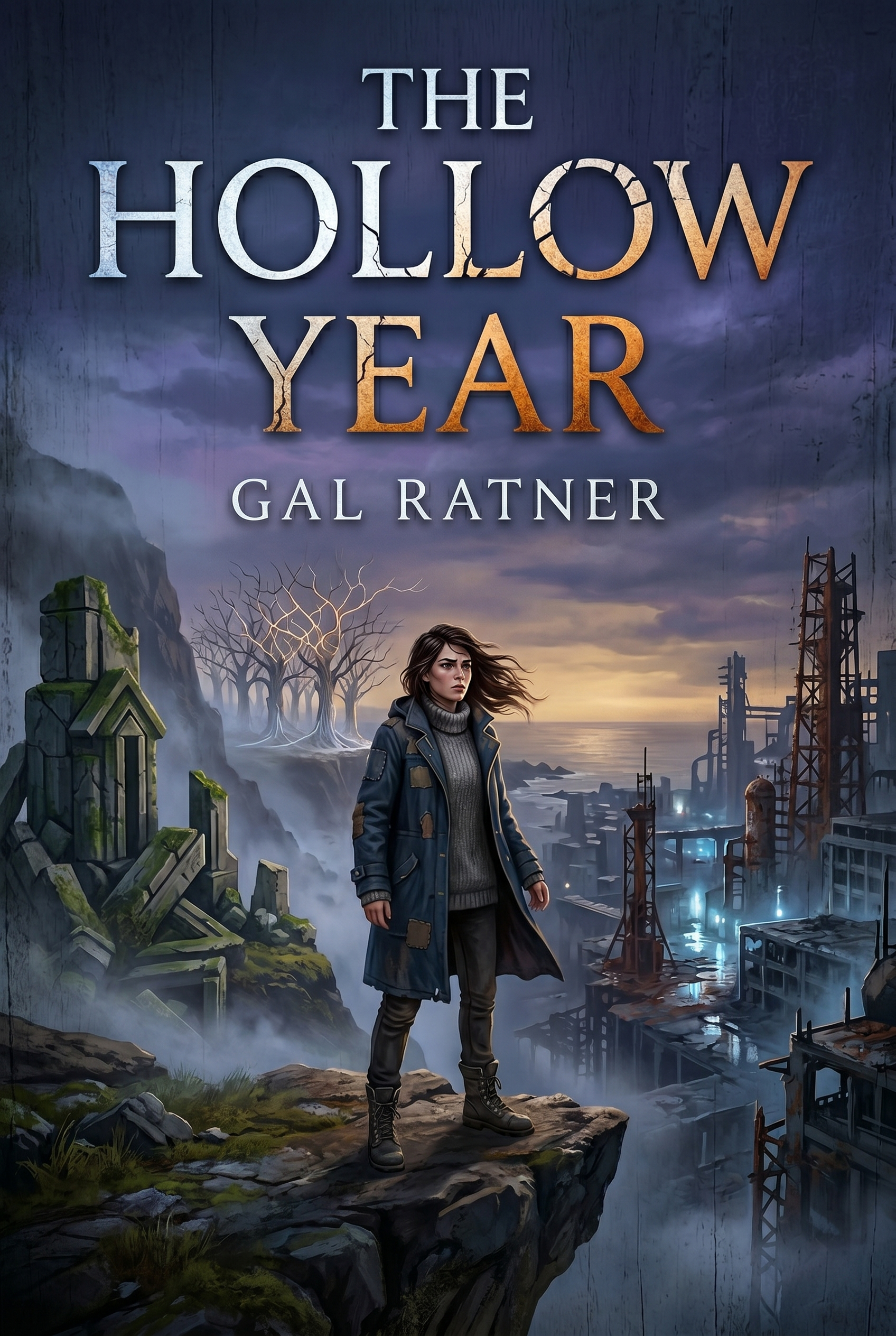
Preface
The water took her breath away, but it was the cold that woke her. It was not the clean, biting cold of a winter canal, but the stagnant, sucking chill of deep water and old stones. She broke the surface like a drowning thing cast back up, gasping, her lungs burning with the black slurry of the canal. The water was thick, heavy with silt and something sweeter, something chemical that clung to the back of her throat. She thrashed, her limbs heavy as lead pipes, her hair a tangle of kelp and wet silk clinging to her face and shoulders. The air tasted of coal smoke and rot, thick and wet, coating her tongue. She swallowed again, gagging on river weed and silt, her diaphragm spasming as it fought to purge the toxic broth from her system.
She clawed at the air, seeking solid ground, but found only the oily shimmer of the canal. A gas lamp hissed somewhere nearby, fracturing the darkness into a dozen broken moons that shivered on the water's skin. She kicked downward, her heels striking something hard. Stone. The cobbles of the bank.
She dragged herself forward, a wet, ragged sound tearing from her throat. Her fingers scrabbled for purchase on the slime-slicked stone, nails scraping against moss and grime. Her clothes clung to her—thin, white linen, torn and impossibly heavy, plastered against her ribs and thighs like a second, suffocating skin. The fabric was soaked through, transparent now, revealing the pale, bruised skin beneath. She hauled herself up, shoulder by shoulder, until she was over the lip of the bank and collapsing onto the hard cobbles. She lay there for a long moment, shuddering, her body convulsing as it tried to expel the canal from its depths.
When she finally pushed herself up onto her elbows, the world was a blur of bruised lamplight and dark water. She wiped her mouth with the back of her hand, expecting the slime of the canal. Instead, her fingers came away red. She stared at them, her breath catching in a jagged hitch. The blood was everywhere. It coated her hands in a thick, dark lacquer, pooling in the hollow of her palms, seeping between her fingers. It had soaked through the cuffs of her linen dress, staining the fabric to a deep, bruised purple. The smell hit her next—sharp, metallic, undeniably iron. She turned her hands over, watching the dark fluid drip onto the wet cobbles, mixing with the canal muck and the oil from the lamps. Her pulse hammered against her collarbone, a frantic, trapped bird battering against the cage of her ribs.
A sudden, hot pain flared in her left wrist, sharp enough to make her gasp. She brought her arm up, turning it over in the dim light. There was a band of cold metal there, tight as a vice against her skin. A surgical cuff. It was matte black, etched with tiny, precise grooves that dug into the flesh beneath, leaving angry red welts that wept faint beads of blood. A series of numbers, or perhaps a serial code, was stamped into the steel in a clean, unfeeling font. She tried to pry it off, her right hand fumbling over the cold surface, her fingers slipping on the wet metal, but it held fast. It was fused to her, or she to it. There was no clasp, no hinge, only the seamless, suffocating embrace of the steel. The metal was ice-cold, leaching the warmth from her wrist, making her skin numb. It felt less like jewelry and more like a shackle, a brand of ownership she couldn't scrub away.
A sound rose in her throat. She meant to make it a word. She meant to ask *who*, to shout for help, to demand an answer from the empty, fog-choked air. But when she opened her mouth, the air that came out was hollow. She reached inward, grasping for the anchor of a self, a name to hang onto, but her mind was a smooth, empty room. No doorways. No windows. Just a vast, terrifying white space where her past should have been. She tried to think of a face, a mother, a lover, a room where she slept. Nothing. Only the taste of ether and the blinding white of a ceiling. The absence of memory wasn't just a blank; it was a physical void, a pressure in her skull that made her dizzy. She clamped her mouth shut, the silence inside her head louder than the gas lamps hissing overhead.
She forced her legs to work, planting her muddy, blood-slicked feet against the slick stones. Her muscles burned, trembling with exhaustion, but she pulled herself upright. She swayed, the world tilting on its axis, and gripped the iron railing of the canal lock to steady herself. The city of Veridian stretched out before her, a tangle of black canals and gaslit alleyways. Somewhere in the distance, a church bell tolled the hour, the sound vibrating in her teeth and echoing off the wet stone walls. The air was thick with the scent of wet wool, ozone, and the faint, sweet rot of the river. A barge drifted past, its lanterns casting long, wavering shadows on the water. The oarsmen did not look up. They were used to things washing ashore in the dark.
But she did not look at the houses, or the shops, or the dark shapes of the canalside warehouses. Her gaze was drawn upward, along the water, across the narrow span of a wrought-iron bridge. There, rising above the slate roofs and the chimney smoke, was the Archivum. Its tower was a needle of dark stone, capped with glass and brass, glowing with the faint, amber light of the inner stacks. It stood like a sentinel in the fog, vast and indifferent, a monument to something she could not name.
A strange pull tugged at her chest, a gravitational ache. She knew that tower. She knew the sharp scent of ether and old vellum that drifted from it, even from this distance. She knew the weight of a silver needle in her hand, the way it caught the light, the precise angle required to slide it beneath the skin without tearing. She knew how to bind a memory into leather. She knew the rhythm of the pneumatic tubes, the hiss of the air as they carried volumes through the marble walls. The knowledge sat in her body like a phantom limb, aching for a use, humming in her fingertips. It was a language her body spoke but her mind couldn't translate.
She stood at the water's edge, a stranger in her own skin, the blood on her hands cooling into a sticky varnish. The surgical cuff bit into her wrist, a constant, cold reminder of the place she had just come from. She did not know who she had killed to get out of that water. She did not know why the cuff would not come off. She did not know the name that sat just behind her teeth, a ghost waiting to be named.
But she knew the tower. And she knew, with a certainty that cut through the cold and the confusion, that she was not done with it yet.
Chapter 1
The Forgotten Wing did not smell of the city. It smelled of old paper, dried lavender, and the dry, metallic scent of time running out. It was a subterranean labyrinth of stone shelves that stretched into the dark, far beneath the bustling, gaslit grandeur of the upper floors. Here, the air was still and heavy, preserved like the memories it held. The only light came from the green-shaded lamps on her carrel, casting a narrow pool of amber on the desk and leaving the rest of the world in shadow.
Isolde Vareth sat alone, as she always did. Her back was straight, her spine a rod of steel against the worn velvet of the chair. Before her lay the body of the deceased—no, not the body itself, that had been committed to the earth days ago. Before her lay the volume. It was a thick binding of cracked calfskin, the leather dark as a bruise. Inside, the vellum pages waited, pale and hungry.
She set her hands on the desk. Her fingers were encased in white kid gloves, pristine and tight, the leather creaking softly as she flexed them. To the untrained eye, they were a fashion statement, a quirk of the demoted Scriveners. To Isolde, they were a shield. Every extraction left a scar, a phantom echo of the soul she had touched. Touching another person’s skin without that barrier was to invite the chaos of a thousand borrowed sensations into her own nervous system. She had learned that lesson well. She learned many things well, though she could not recall where she had learned them.
With a slow, deliberate motion, she slipped her right hand out of the glove. The air of the sub-basement was cool against her skin, raising gooseflesh on her forearm. She reached for the needle.
It was a silver instrument, slender and sharp as a thorn, tipped with a bead of pale, viscous fluid that caught the lamplight and held it, trembling. The silver memory-needle. It hummed in her grip, a faint vibration that traveled up her wrist and settled in the base of her skull. This was the tool of her trade, the instrument of her craft, the thing that turned the ephemeral chaos of a human mind into something tangible, something that could be shelved, sorted, and forgotten.
She lifted the needle to the edge of the vellum. Her movements were precise, economical. She did not hesitate. The needle slid into the paper not with a tear, but with a whisper. There was a resistance, a soft give, like the puncture of skin, and then the flow began.
The memory did not come as words. It came as sensation. First, the taste of copper—blood on the tongue, the panic of a fall. Then the smell of rain on hot stone, the heavy perfume of gardenias. A face flashed in her mind’s eye, blurred but warm, a hand holding hers, the calloused thumb of a man. The sensation was vivid, tactile, overwhelming. Isolde’s breath hitched. Her free hand, gloved, pressed flat against the desk to steady herself.
Then, the cost.
A sharp tremor seized her right hand, the one holding the needle. Her fingers spasmed, threatening to drop the instrument. A phantom pain shot through her palm, a burning sting where the needle had entered the vellum, though her skin was unbroken. The taste of iron flooded her mouth, thick and cloying, making her jaw ache. She closed her eyes, forcing her breathing to slow, anchoring herself in the dark of the room. The tremor subsided, leaving behind a dull ache in the joint. This was the tax. This was what the Archivum took from its servants. She was twenty-six, and her hands already shook when she was tired. By forty, most of the Scriveners were mad, their minds cluttered with the ghosts of a thousand strangers.
She kept her eyes open. She would not give the memory the satisfaction of breaking her.
The flow of sensation slowed. The gardenias faded. The rain stopped. The memory of the old matron—Mrs. Gable, a woman who had lived a quiet life and died in a warm bed with her family weeping at her bedside—settled into the fibers of the vellum. The page darkened slightly, the ink settling into a permanent, deep brown. The volume was bound.
Isolde exhaled, a long, shuddering breath. She pulled her bare hand back into the glove, the leather sliding over her skin with a soft sigh. She worked quickly, tying off the binding with a length of waxed thread, her fingers moving with a dexterity that felt instinctive. She was good at this. She knew she was good at this, even if the rest of the Archivum treated her like a ghost.
A hiss from the ceiling made her look up. The pneumatic tubes ran like veins through the marble walls of the Archivum, carrying volumes between the wings. A canister, brass and heavy, dropped into the retrieval slot with a clatter. It was marked with the gold seal of the Living-Recent Wing—the elite Scriveners who worked on the memories of the currently dead, the senators and merchants who mattered.
Isolde did not move to retrieve it. She knew who would come for it. Moments later, heavy boots echoed on the stone stairs above. Archivist Thorne descended, his charcoal robes sweeping the dustless floor, a retinue of junior Scriveners trailing behind him like shadows. He was a silver-haired man, his face lined with the wisdom of decades, his eyes sharp and knowing. He was beloved by the public, a walking reliquary of the Republic’s history. Isolde had once called him mentor. Now, she merely looked at him, her face a mask of polite indifference.
He stopped at her carrel, looking down at the volume she had just finished. He did not touch it. He did not have to. The authority in his posture was enough.
"Number Twelve," he said, his voice smooth, baritone, devoid of warmth. "The Gable volume. Is it complete?"
"It is, Archivist," she said, her voice quiet. She did not use the number. She never did, not to his face, though everyone else did.
Thorne picked up the volume, testing its weight. He opened it, scanning the pages with a critical eye. "The extraction was clean. No residue. You have improved." It was not praise. It was an observation, clinical and detached. He handed the volume to a junior Scrivener, who snatched it as if it were hot iron. "See that it is shelved in the Rotunda. Not here."
Isolde did not react. She had worked in the Forgotten Wing for eight months. She had bound the memories of a hundred forgotten women, old men, and nameless servants. They were never moved to the Rotunda. They stayed in the dark, where the dust settled and the light faded. This was her punishment, or perhaps her reward. She did not know which. She only knew that she wanted out. She wanted the light, the heat, the respect that came with working on the living. She wanted to prove that she belonged in the upper floors, even if the rest of the Archivum refused to see it.
Thorne turned to leave, pausing only to look at her gloved hands. "Keep your gloves on, Isolde. We cannot afford another accident. The cost of a Scarred Scrivener is high enough without adding a second one to the ledger."
He walked away, his retinue following, leaving her in the silence. The green lamp flickered, the flame dipping low. Isolde sat still, her hands resting on the desk. She stared at her gloved fingers, tracing the seams with her eyes. She wondered, as she did every night, what she was hiding. Not just from them, but from herself.
There were two years she could not remember. Two years of her life, gone. A blank space in the middle of her history, smooth and empty as a stone in a river. She tried to reach for it, to grasp it, but her mind slipped away, leaving her with nothing but the taste of ether and the cold weight of the silver needle. She did not speak of it. She did not write of it. It was a wound that would not close, a secret she carried in the quiet dark of her room, alone.
She picked up the next volume. It was thin, the leather cracked and brittle. Another death. Another memory to be bound, another soul to be reduced to pages. She slipped her hand out of the glove again, the leather creaking. The needle waited. The cost waited. She reached for it.
Chapter 2
The pneumatic tube did not hiss. It coughed.
It was a wet, ragged sound, like a throat clearing of phlegm, that echoed through the high, vaulted ceiling of the Forgotten Wing. Isolde looked up from the Gable volume, her pen hovering over the ledger. The sound came from the wall behind her—a brass receiver, its mouth a black circle in the marble, vibrating with the impact of a heavy canister dropping from the upper shafts.
Usually, the tubes carried light things. Thin volumes of recent obituaries, correspondence from the Living-Recent wing, requests for specific archival access. They arrived with a sharp clack, followed by the pneumatic sigh of equalizing pressure. This was different. This was a stone dropped down a well.
Isolde waited. The vibration ceased. The silence of the sub-basement rushed back in to fill the space, thick and suffocating. She did not move for a long moment. She watched the brass mouth of the receiver. It was cold, polished to a mirror shine by the hands of a hundred Scriveners who had retrieved their mail before her. Now it belonged to her. Or it would, in three seconds.
One. Two. Three.
The canister fell. It hit the metal grate of the receiver with a heavy, dull thud that vibrated through the floorboards and up through the soles of Isolde’s boots. It was a dark iron cylinder, scarred with scratches, lacking the standard gold seal of the Archivum. No return address. No catalog number. Just a single sheet of heavy vellum taped to the side, blackened at the edges as if scorched by a careless lamp.
Isolde stood. Her joints popped, a dry sound in the damp air. She walked to the wall, her gloves making no sound against the metal as she disengaged the latch. The canister slid out into her hands. It was heavier than it looked. Dense. It felt less like a book and more like a brick of lead.
She carried it back to her carrel and set it down. The wood groaned under the weight. She did not open it immediately. She sat, her spine straight, and watched the cylinder. The green lamp flickered, the flame dipping low, casting long, trembling shadows across the desk. The smell of the canister was not paper. It was old copper. Ether. And something else—something sweet and rotting, like lilies left too long in a closed room.
She reached for the tape. Her fingers, clad in the white kid leather, fumbled slightly. A tremor. She paused, breathing through the nose, waiting for it to pass. The tremor was not from the extraction. It was from the recognition. She did not know why, but her body knew this object. Her heart had begun to hammer a frantic rhythm against her ribs, a bird beating its wings against a cage.
She peeled back the tape. The vellum sheet came away with a soft tear. Underneath was a brass cap, unscrewed. She lifted the lid.
Inside lay a volume. But it was not a standard Archivum binding. It was not calfskin. It was not vellum. It was wrapped in a material that felt like cold silk, dark as a bruise, bound with a cord of black thread that had been knotted with a precision that felt aggressive. There was no title on the spine. No author. No catalog number. Just a single sheet of paper tucked into the binding, held in place by a wax seal.
The wax was red. Not the dull brown of old archive seals, but a bright, violent crimson. And stamped into the center of the wax was a symbol she did not recognize: a single, open eye, weeping a tear that formed the shape of a key.
Isolde did not touch the seal. She lifted the paper from the page.
There was no name. No address. No date. Just two words, written in a hand that was elegant, precise, and unmistakably ancient. The ink was iron-gall, browned with time, but the strokes were sharp, confident. The handwriting belonged to someone who had never doubted their own authority.
To Moth.
The world tilted. The edges of the room—stone shelves, green lamps, the black canal of the window—blurred into a watercolor of grey and gold. Isolde’s breath stopped in her throat. Her chest tightened, a band of iron constricting her lungs. The air in the Forgotten Wing suddenly felt too thin, too cold.
Moth.
It was a name she had not heard in two years. Two years of silence. Two years of grey fog and ether smells and numb hands. A name that did not belong to Scrivener Number Twelve. A name that belonged to the girl before the girl, the child before the Scarred, the ghost before the woman.
Her hand shook violently now. The tremor traveled up her arm, rattling her teeth. She pressed her gloved hand flat against the desk to steady it. Who wrote this?
Three people had ever called her that. Three people. And three people were dead. Her mother, who had died in the fever of ’58. Her father, who had died in the Black River campaign before she was born. And the third… the third was the woman who had sung her to sleep, the woman with the hands that smelled of lavender and blood, the woman who had held her wrist and whispered, *“Fly to the light, little Moth, but never burn yourself.”* She had died five years ago, in a fire that the Archivum had officially recorded as an accident. Isolde had attended the memorial. She had worn black. She had felt nothing.
Until now.
Now, she felt everything. A wave of nausea rolled through her, sour and sharp. The taste of iron flooded her mouth, bitter and metallic, making her gag. The phantom pain in her palm flared, a burning sting that mirrored the weight of the book in her hands. It was as if the memory of the name was a needle, piercing her skull, forcing its way into the locked rooms of her mind.
She stared at the words. To Moth.
It was a delivery. A summons. A threat. Or a key. And it had arrived here, in the darkest corner of the Archivum, addressed to a ghost. Who had sent it? How had they known she was here? And why had they used a name that had been buried with the dead?
She should open it. Protocol demanded she open it. A sealed volume in the hands of a Scrivener was a curiosity, and curiosities were to be cataloged. But this was not a curiosity. This was a wound.
Isolde did not reach for the seal. She did not try to read the first page. She knew, with a certainty that settled deep in her bones, that if she opened it, she would not be able to close it again. The name was a hook, and the book was the bait. If she bit, she would be pulled into a current she did not understand, in a direction she did not want to go.
She closed the lid of the canister. She did not put the volume back inside. She set it on the desk, beside her ledger. The red wax seal caught the lamplight, glowing like a drop of fresh blood.
She stood up. Her legs felt weak, unsteady. She walked to the far wall of the carrel, where the stone shelves met the rough-hewn support beam. Behind the shelves, hidden by the dust and the shadow, was a false panel. She had found it six months ago, when she was first demoted to the Forgotten Wing. She had discovered it by accident, when she had slipped on the damp floor and fallen against the wood. A section of the panel had shifted, revealing a cavity, dark and dry and smelling of old glue.
She did not remember who had built it. She did not know how to open it. Her hands knew.
She pressed her palm against the wood. Her fingers found a groove, a slight imperfection in the grain that no carpenter would have missed. She pressed. She twisted. The wood groaned, a low, wooden sound, and the panel slid inward, revealing a hollow space behind it. The cavity was lined with tarred cloth, keeping the damp at bay. It was a hiding place. A secret space. And she knew, instinctively, that it had been made for her.
She picked up the volume. It was heavy in her hands, the silk binding cool against her gloves. She did not take off the gloves. She did not want to feel the texture of the book with her bare skin. She did not want to risk the scar, the bleed, the echo. Not yet. Not tonight.
She slid the volume into the cavity. It fit perfectly. The dimensions were exact. As she pushed it back, she felt a sudden, sharp pain in her left wrist, where the surgical cuff lay hidden beneath her sleeve. The pain was hot, electric, a spike of awareness that made her gasp. It was the same pain she felt when she touched the name. A connection. A resonance.
She pulled the panel shut. It clicked into place, seamless. The wood looked like any other part of the wall, scarred and stained with age. No one would know. No one would look. The Forgotten Wing was a place of shadows and silence. Even the rats seemed to avoid it.
Isolde stepped back. Her heart was still hammering, a frantic bird in her chest. She looked at the spot on the wall where the book was hidden. She could feel it through the wood, a presence, a weight, a promise.
To Moth.
She turned back to her desk. She sat down. She picked up her pen. She opened the ledger. But she did not write. She could not write. Her hand shook too much. The ink pooled on the page, a black bruise spreading across the white paper.
She stared at the ink. She thought of the woman who had sung to her. She thought of the fire. She thought of the two years she had lost. And she wondered, for the first time in eight months, if the gap in her memory was a hole, or a door.
If it was a door, someone had just knocked.
She dipped her pen in the inkwell. She tried to steady her hand. She tried to breathe. But the taste of iron remained in her mouth, thick and cloying, and the smell of rotting lilies followed her, no matter how hard she scrubbed the air with her gloves.
She wrote the date. October 14, 1878.
She wrote nothing else. She sat in the green lamplight, surrounded by the silence of the dead, and waited for the tremor to stop. It did not stop. It never seemed to stop anymore. It was just getting louder.
Chapter 3
The pneumatic tube groaned in the wall, a sound like a drowning breath. Isolde didn't look up until the canister clattered into the brass basket with enough force to rattle the inkwell.
In the Forgotten Wing, silence had weight. It pressed against the eardrums, accumulated like dust in the corners of the stacks, tasted of mildew and old tea. Here, memory was not a stream but a sediment. The dead archives held the centuries of Veridian's bureaucracy—tax ledgers from the Grain Riots, shipping manifests of slave ships from the southern colonies, the last wills of aristocrats who had bought immortality and failed. Isolde spent her days binding these hollow vessels, her gloves stained with the gray wax of forgotten lives.
She wiped her hands on her apron and approached the basket. The canister was cold, frosted at the seal. She cracked it with a thumb. Inside lay a slip of heavy cream card stock, the edges gilded.
Senator Halloran. Townhouse, Elder District.
Come now. — S. Thorne
Isolde stared at the signature. The pen-stroke was elegant, authoritative. Sabien Thorne did not send summons. Thorne was the Archivist. He was the silver-haired statue in the central rotunda, the man whose voice was read on Founding Day from the balconies. He summoned Scriveners to his office; he did not pull them from the dust of the dead-archive to run errands in the living city.
And he had written come now.
Her heart gave a single, hard kick against her ribs. She checked her gloves. White kid leather, reinforced at the fingertips with dragon-hide stitching, dyed black at the cuffs to hide the scar-tissue. She always wore gloves. In the Forgotten Wing, the risk was low—the dead rarely fought back—but habit was a armor she could not shed. If she made skin-to-skin contact with a mind while her scars were raw, the extraction would bleed through. The feedback could drop a Scrivener to their knees, screaming in a voice that wasn't theirs.
She snatched her satchel. The silver needle slid into the oilcloth pouch with a familiar, comforting weight. Even through the leather, she could feel the hum of the metal, the hunger for memory that seemed to vibrate in the marrow of her bones.
By the time Isolde reached the canal steps, the rain had begun. It fell in gray sheets, turning the gaslight into smeared halos of bruised violet. She hailed a water-taxi, showing the gilded slip to the rower. The man took it with a nod, his eyes flicking to the Archivum crest on her chest. He didn't ask who Halloran was. In Veridian, everyone knew Halloran. He was the Elder of the Senate, the man who controlled the flow of ether, the man who had once laughed with Isolde at a charity gala two years ago when he had thought no one important was listening.
"Fast," Isolde said, sliding coins into his palm. Her voice sounded thin in the damp air.
The taxi cut through the black water, skimming the slick hulls of barges. Isolde gripped the gunwale, watching the Archivum tower recede behind her. It loomed over the district, a cathedral of black stone and brass pipes that hissed steam into the night. Somewhere inside those walls, Thorne waited. He had never summoned her before. The last time they had spoken, he had corrected her binding technique on a matron's memory with a gentle, devastating precision. "Your hand shakes, Miss Vareth. The needle demands certainty."
She looked down at her right hand. The index finger twitched, a phantom tremor from the months of dead-binding. It felt fine. It felt ready.
Halloran's townhouse stood on the crest of the hill, its windows blazing with electric candlight. Servants moved like shadows across the marble portico. As Isolde ascended the steps, two guards in the heavy wool of the city watch blocked the door. When she flashed the archive seal, they stepped aside with a murmured, "Miss Vareth."
The foyer smelled of lilies and copper. The scent was cloying, masking something sharper underneath. Isolde kept her face smooth, her gloves pressed to the inside of her elbows. A servant guided her down a corridor lined with oil paintings. At the end stood a heavy door of polished mahogany, ajar.
Thorne stood inside the threshold, back to her. He wore his charcoal robes, the silver embroidery of the Archivum crest tracing the line of his spine. He looked taller in the lamplight, more imposing than the man she knew as a father-figure, a mentor. He turned as she approached, his face composed of polished marble. His eyes were dark, intelligent, and utterly devoid of pity.
"Miss Vareth."
"Archivist."
"You've done the living-recent?" Thorne's voice was a low murmur, barely rising above the thrum of the gas jets.
"Not since the winter of '76, sir. The dead-archive is…"
"Sufficient," Thorne interrupted gently. "I am aware. Which is why you are here. The other Scriveners are… compromised." He glanced back into the chamber. "Come. But be quick. The body is still warm, and the scent of the magic will not hold."
Isolde stepped into the room. It was a study, rich and suffocating. Bookshelves rose to the ceiling, filled with leather-bound ledgers. A fire had been banked low in the grate, casting long, wavering shadows. In the center of the room, stretched across a velvet settee, lay Senator Halloran.
He looked smaller in death. The rictus of his expression had softened, leaving him with a mask of surprised indifference. A dark stain bloomed across the white of his shirt, spreading like ink on paper. He had been killed at close range. No weapon was visible. His hands lay open on the cushions, the nails bitten to the quick.
Isolde's throat tightened. This was not a deathbed. This was a murder.
"He is recent," Thorne said, standing just behind her right shoulder. She could smell his cologne—bergamot and old paper. "The body was found by the maid an hour ago. She has already been excised. The police want the memory of the killer's face. They want the last ten minutes of his life." He paused. "I want it clean, Isolde. The mind of a politician is a tangled room. You know this. Do not disturb the furniture if you can avoid it. Bind the final sequence and return the volume to the vault. I will handle the state."
"Yes, Archivist."
She moved to the settee. Her training took over, shedding the unease like a heavy coat. She placed the satchel on a side table and withdrew the needle. The silver caught the firelight, gleaming with a cold, liquid shine. A bead of pale fluid rose at the tip, iridescent and viscous. The cost of the tool. She felt the familiar ache bloom in her right index finger, the sensory scar of a thousand extractions. It was a dull throb, like a toothache in the bone.
Isolde rolled down the glove on her right hand just enough to expose the fingertips. She kept the leather on the palm, for the grip. She reached out and touched Halloran's temple. His skin was waxy, cooling rapidly. The pulse was gone.
She found the spot—the temporal ridge, the thinnest point of the skull where the memory-stream pooled. She pressed the needle to the skin.
For a moment, nothing. Then the connection snapped into place.
Isolde gasped. The sensation was always a shock—the rush of another consciousness flooding into the needle, cold and electric. She expected the roar of dying. She expected the surge of adrenaline, the flash of fear, the sensory overload of the final moments. She braced herself for the emotional impact, for the terror or pain that always clung to a violent end.
Instead, she met silence.
Absolute, polished silence.
Her mind brushed against Halloran's final memory and found no texture. No image. No sound. No fear. It was as if she had touched a wall of smooth glass where a tapestry should have been. The memory stream wasn't just empty; it was scarred. There was a wound in the mind, a surgical excision so precise that the edges had healed over, leaving a perfect, sterile void.
The needle trembled in her fingers. The tremor traveled up her arm, seizing her shoulder. The feedback was wrong. She was feeling a hollow pull, a suction that wanted to drag her own mind into the gap. She fought it, clamping her will down, forcing the needle to hold the surface of the void.
"Isolde?"
Thorne's voice was close. Too close. She felt his breath against her ear. He was watching her hands. She saw his eyes in the reflection of a silver inkwell—heavy-lidded, analyzing, hungry.
"The mind is… resisting," she managed to say, her voice strangled. "The stream is blocked. There's a… a wall in the cortex. Something has been removed."
Thorne stepped around the settee, his gaze dropping to Halloran's face. He reached out, his long fingers hovering over the Senator's open eyes. "Removed," he murmured. "Yes. That would do it."
He looked up at her. There was no surprise in his face. Only a dark satisfaction, quick and gone. "The police expect a binding, Miss Vareth. They expect a face. Can you give them one? Even a fragment? A silhouette? The State needs an answer by morning."
Isolde tried again. She pushed deeper, risking the feedback. The scar in her finger burned hot, a spike of heat driving into her nerve endings. She tasted iron, the metallic tang of magic bleeding through. She found a loose thread in the silence—a sensory echo. The smell of ether. The sound of a pneumatic valve hissing. And a hand, gloved in white leather, pressing a needle to the Senator's neck.
Her breath hitched. A glove? A Scrivener?
The memory twisted, the image fracturing. Then the void slammed shut, ejecting her. Isolde jerked back, ripping the needle from the skin. A spray of blood and pale fluid coated the silver tip. She staggered, her chest heaving, her vision swimming with black spots. The hollow pull left her feeling lightheaded, as if her own head had been emptied and stuffed with cotton.
"Miss Vareth."
Thorne's hand was on her elbow, steadying her. His grip was firm, his fingers warm through the leather of her glove. He smelled of bergamot and something underneath—metallic, sharp. Iron.
"I need a moment," she gasped, pulling her hand away. Her fingers were numb, the skin tingling where the needle had touched. The scar was active, throbbing with a rhythm that matched her pulse. "There's… there's a trace. Ether. A pneumatic valve. And a Scrivener's glove."
The room went very still. The fire crackled, a sound like breaking bone.
Thorne's expression did not change, but his eyes narrowed a fraction. "A Scrivener's glove," he repeated softly. "You are certain?"
"I can feel the texture of the binding. The pressure of the thumb. It was… a left hand. A precise strike. He didn't kill the Senator himself, Archivist. He extracted the memory first. Then he killed the body to hide the theft. The murder was the distraction. The crime was the silence."
Thorne looked down at the Senator's body. For a long moment, he said nothing. When he spoke again, his voice was different. Colder. The mask of the mentor had slipped, revealing something harder beneath. "Then you have done your work, Isolde. You have found the wound." He gestured to the needle. "Bind the volume. Put this away. The State will decide what to do with your findings."
Isolde's hand shook as she capped the needle. The silver felt suddenly heavy, like a bar of lead. She looked at Thorne. He was already turning away, picking up a folded newspaper from the table, his back rigid. He was listening to the house. He was waiting for footsteps.
"Archivist," she said, the word sticking in her dry throat. "The police—"
"Will receive a volume containing the Senator's final moments," Thorne said without turning. "I will compose the summary myself. You are dismissed. Take the service elevator. Do not speak to the staff."
Isolde stood frozen for a heartbeat. The request was arbitrary. The staff had already been excised; they knew nothing. But the tone brooked no argument. Thorne was her superior, her protector, the man who had plucked her from the slums and given her the needle.
And yet, as she backed toward the door, a cold thread of unease tightened around her spine. He hadn't asked what she saw. He hadn't asked about the ether or the pneumatic valve. He had asked only if she was certain. He was testing her perception. Or he was testing her silence.
She slipped out of the room, closing the mahogany door behind her. The corridor was empty, the gas jets humming. Isolde pressed her back against the cold wall, her heart hammering against her ribs. She looked down at her right hand. The index finger was stained with a spot of blood she hadn't noticed. It pulsed, throbbing in time with the needle in her satchel.
She had felt the memory. She had found the void. And Thorne had known she would find it.
The elevator doors groaned open, inviting her down. Isolde stepped inside, her gloves suddenly feeling too tight, suffocating. She pulled the satchel close to her chest, the silver needle cold against her palm, and waited for the descent. She had the truth in her hand, and she had never felt more alone.
Chapter 4
The elevator did not descend. It hung suspended between the floor of the study and the labyrinth of the townhouse’s lower levels, the cables groaning under the weight of the silence. Isolde pressed her forehead against the cold brass grille, her breath fogging the metal. She could not leave. Thorne’s order—Wait here—had not been a suggestion. It was a cage.
She had the needle in her satchel. It hummed against her hip, a low, vibrating thrum that matched the tremor in her hand. The thumb of her right glove was stained with Halloran’s blood. She had wiped it on her apron, but the smell of copper clung to the leather, sharp and cloying. It was the smell of a lie.
The elevator shuddered, then dropped. Isolde gripped the rail. When the doors slid open, the study was exactly as she had left it. The fire had banked further, reduced to embers that pulsed like a dying heart. The Senator lay on the velvet settee, his face pale, his eyes fixed on the ceiling. And Thorne was gone.
Isolde stepped out. The door clicked shut behind her, the lock engaging with a sound like a bone snapping.
She was alone with the dead.
Her training screamed at her to check the pulse, to check the temperature, to catalogue the scene. But her body moved before her mind could catch up. She crossed the room, her boots silent on the Persian rug, and stopped at the settee. She needed to see the wound again. She needed to understand the void.
She knelt. The Senator’s neck was bruised, a faint, purpling ring where the needle had been driven in. It was a perfect entry. No hesitation. No tremor. The work of a master. The work of someone who knew exactly how much pressure to apply to stop a heart without leaving a mark.
Isolde leaned in closer. The air above the body was still thick with the residue of the extraction. She could taste it on her tongue—ether, yes, but also something sharper. Ozone. The smell of air after lightning. It was the scent of high-capacity memory work, the kind that burned out the nerves of lesser Scriveners.
And then she saw it.
It was small, easily missed if one’s eyes were drawn to the blood or the face. Burned into the plaster of the wall directly above the Senator’s head, barely six inches from the ceiling cornice, was a mark. It was not a scratch. It was a brand. A spiral of twelve inward-facing hooks, drawn in blackened soot and darkened wax. The hooks curled toward the center like the fingers of a clenched fist, tight and aggressive.
Isolde reached out, her gloved finger hovering over the burn. The plaster was still warm.
Her heart hammered a frantic rhythm against her ribs. She knew this mark. She did not know how she knew it—there was no name for it in her head, no classification in the Archivum’s indices—but her body reacted with a primal recoil. Her stomach turned. The hair on her arms stood up under the silk of her robe.
It was a signature.
Someone had burned this into the wall to leave a message. To claim the body. But who? And why?
She stood, her knees stiff. She looked around the room. The windows were latched from the inside. The door had been locked when she entered. There was no other exit. The killer had been here. Alone. For a long time.
A key turned in the lock of the study door.
Isolde froze. Her hand went to her satchel, fingers closing around the cold silk of the needle pouch. She stepped back, putting the settee between her and the door.
The door opened. Thorne stepped through, followed by two men in the heavy wool coats of the City Watch. Their faces were obscured by the shadows of their hoods, but their hands were visible. Resting on the hilts of their sidearms.
Thorne looked calm. He brushed a speck of dust from his shoulder, his eyes meeting Isolde’s with a cold, assessing gaze. Behind him, the taller of the two Watchmen stepped into the light. Inspector Vane. A man known for his brutality and his loyalty to the Senate.
“Miss Vareth,” Vane said. His voice was gravel, rough from smoke and cheap gin. “Archivist Thorne tells us you were the last one here. Before the body was found.”
Isolde’s mouth went dry. “I was summoned, Inspector. Archivist Thorne ordered me to extract the Senator’s final memories. He said—”
“The Archivist is occupied,” Thorne interrupted. His voice was smooth, devoid of emotion. “He has delegated the preliminary inquiry to Inspector Vane. And to you, Miss Vareth.”
Isolde frowned. “Delegated? To me? But I am the suspect. You said the police expect an answer. You said I should not speak to the staff.”
“The police expect a suspect,” Thorne corrected. “And you fit the profile.”
The words hit her like a physical blow. Isolde stared at him. “What?”
Thorne gestured to the body. “Senator Halloran was murdered. His final memories were stolen—a feat of surgical precision that requires a Scrivener of exceptional skill. A left-handed Scrivener, who uses ether to mask the scent of the extraction.”
Isolde’s blood ran cold. “I am right-handed. And I did not use ether. The ether was already there. In the room.”
“Was there?” Vane stepped closer. He smelled of tobacco and rain. “We found a vial broken on the floor. Near the settee. Near your feet.”
Isolde looked down. At the edge of the rug, half-hidden by the velvet drapes, lay a shard of glass. She had missed it. She had been too focused on the void in the mind.
“The needle,” Vane continued. “It was found in your satchel. We checked. The blood on the tip matches the Senator. And the texture of the binding on your glove… it matches the pressure marks on the Senator’s neck. A left-handed grip, yes, but the needle was twisted. A right-handed person twisting a needle to the left… it leaves a specific drag mark. I’ve seen it before.”
Isolde’s breath came in short, sharp gasps. “That’s impossible. I didn’t kill him. I couldn’t. The memory was gone. If I had killed him, I would have stolen the memory. I would have felt it.”
“Unless you are a liar,” Thorne said softly. “Or unless you are insane. The Archivist tells me you have been struggling with… gaps in your memory. Two years of void. Perhaps the mind breaks when it is stressed. Perhaps you killed the Senator in a fugue state, and you simply do not remember.”
Isolde looked at Thorne. She searched his face for a crack, a hint of mockery, a sign that this was a test. But there was nothing. His eyes were dark, empty pools. He was watching her like a specimen pinned to a board.
“You’re framing me,” she whispered.
“I am protecting the Republic,” Thorne said. “Halloran was a corrupt man. His murder causes a scandal. If the killer is one of our own, a Scrivener… it undermines the trust of the public. It undermines me. And it undermines you.”
He stepped forward, his hand resting on her shoulder. His fingers were cold. “If you are the killer, you are a traitor. And traitors are excised. Every memory. Every thought. Erased.”
Isolde pulled away. She looked at Vane. The Inspector was watching her with suspicion, his hand still on his gun. He believed Thorne. Everyone believed Thorne.
“I am not the killer,” Isolde said, her voice trembling but clear. “Look at the wall.”
Thorne’s eyebrow rose. “The wall?”
“Above the body. There is a mark. Burned into the plaster. Twelve hooks. A spiral.”
Vane frowned. He stepped past Thorne and looked up. He squinted in the dim light. “A brand? What is it? A gang mark?”
“I don’t know,” Isolde said. “But it’s fresh. And it’s a signature. The killer was proud. He wanted to be found.”
Thorne was silent for a long moment. Then he turned to Vane. “See? Her mind is fractured. She sees symbols where there are none. She is hysterical.”
“It’s real,” Isolde insisted. “Check the plaster. It’s warm.”
Vane reached up, touching the blackened spiral. He grimaced. “It is warm. And it’s… intricate. Too intricate for a common thug.” He looked at Isolde. “Who are you, Vareth? A Scrivener or a madwoman?”
“A Scrivener,” she said. “And I am innocent.”
Thorne sighed. It was a sound of genuine disappointment. “Inspector Vane. I believe Miss Vareth requires medical attention. Her condition is… unstable. If she is the killer, she is a danger to herself. If she is not, she is a victim of trauma.”
Vane hesitated. He looked at the Senator’s body, then at Isolde. He nodded. “We’ll take her to the Infirmary. For observation. And for questioning.”
“The Infirmary?” Thorne said. “No. She is a Scrivener of the Archivum. Her care is the Archivum’s responsibility. I will take her. I will monitor her. If she is innocent, she will recover. If she is guilty… well. The needle can heal as well as it harms.”
Isolde stared at him. He was claiming her. He was taking her back to the Fortress, away from Vane, away from the truth. He was isolating her completely.
“Archivist,” she said, her voice rising. “I want to be questioned. I want to see the evidence.”
“There is no evidence,” Thorne said. “Only a dead Senator, a missing memory, and a Scrivener with blood on her gloves. You are a suspect, Miss Vareth. Until proven otherwise, you are under my protection. And under my supervision.”
He turned on his heel and walked toward the door. He did not look back. Vane gestured for her to follow. She had no choice.
As she passed the settee, she looked down at the Senator one last time. The void in his mind stared back at her. And above his head, the twelve hooks seemed to pulse in the darkness, a silent accusation that echoed in the hollows of her skull.
She was trapped. And the trap was made of silver and silence.
Chapter 5
The laundry chute smelled of lye, stale sweat, and the faint, metallic tang of old rain. Cassian Moro dropped into the dark, sliding down the corrugated iron on his back, his boots scraping for purchase. He counted the seconds as he fell. Three, four, five. At six, he bent his knees, absorbing the impact as he hit the pile of burlap sacks and discarded linens in the sub-basement sorting room. The air here was thick, heavy with the humidity of a city built on water and secrets.
He lay still for a moment, listening. The only sound was the distant, rhythmic thrum of the Archivum’s pneumatic tubes, like the heartbeat of a great, slumbering beast. He exhaled slowly, pushing himself up. His joints ached—a dull, familiar protest from months of sleeping in ditches and eating cold rations—but his hands were steady.
He checked his pockets. A lockpick set wrapped in oilcloth. A small, unlit tallow candle. A sliver of dried salt pork. He didn’t need much. He just needed to be inside.
Cassian moved to the service door. It was heavy oak, banded with iron, but the lock was a simple tumbler, rusted from disuse. He worked the pick with practiced ease, feeling the pins click into place. One, two, three. The mechanism groaned, then yielded. He slipped into the corridor, pulling the door shut behind him until only a sliver of darkness remained.
He knew this place. Not by heart, but by months of watching, mapping, and waiting. He had studied the Archivum from the outside for a year. He knew which windows opened, which guards drank cheap gin at three in the morning, and which passages were too narrow for a man of his build. He had chosen the laundry chute because it was the only route that bypassed the front gate’s wards. Magic, for all its prestige, was blind to things that smelled of dirt.
He walked along the service corridor, his boots making no sound on the worn stone floor. The walls were lined with shelves of bound memory, towering into the shadows above. The air was cool, dry, and smelled of old paper and ether. It was a quiet place. A dead place. Cassian preferred it to the noise of the streets, to the clamor of the markets and the shouting of the canals. Here, the silence was heavy, pressing against his eardrums like deep water.
He paused in a narrow alcove to adjust his cuffs. The fabric was rough, borrowed from a dead man in a safe house near the Elder District, but it would do. He pulled his left sleeve up, just an inch, and looked at his forearm. The ink was faded, blurred slightly by years of washing and sun and blood, but the names were still there. Jace. Elara. Kael. Ryn. A dozen more beneath them, smaller, cramped, written in a hand that had trembled as he pressed the needle in. Each name was a ghost. Each name was a memory he had taken, a life he had hollowed out to survive the Black River campaign.
He covered the ink again, pulling the sleeve down. He didn’t look at them often. He didn’t need to. They were etched into his skin so he wouldn’t forget. He was a Harvester. He had stolen the pasts of men and women who asked for nothing more than to keep their own lives. And now he was stealing back his own.
He continued down the corridor, turning left at the junction marked with a faded brass plate: Restricted Stacks — Authorized Personnel Only. The sign was peeling. He didn’t care about signs. He cared about the heavy iron door at the end of the hall, the one that required a keycard and a retinal scan. Or, if one had the right tools and the right patience, a little bit of leverage and a lot of luck.
Cassian approached the door. He pulled a thin wedge of steel from his pocket and jammed it into the gap between the door and the frame. He pressed his ear against the wood. Nothing. He applied pressure to the wedge, listening for the snap of the internal latch. It came with a soft click. He pushed the door open just wide enough to slip through, then wedged the steel in place to keep it from swinging shut. He was inside.
The Restricted Stacks were a cathedral of shadows. Tall iron ladders ran up to shelves that disappeared into the darkness of the vaulted ceiling. The air here was colder, the smell of paper stronger, almost suffocating. Cassian moved slowly, his hands brushing the spines of the leather-bound volumes as he passed. He didn’t read them. He didn’t need to. He was looking for one specific shelf. Row G. Case 14.
He found it without trouble. Case 14 was labeled with a brass tag: Moro, Cassian. Imperial Harvester. Status: Defected. Threat Level: High.
He pulled the file free. It was heavier than he expected. The leather binding was cracked, the edges frayed. He carried it to a nearby table, a heavy slab of oak scarred by years of carving and cutting. He placed the file down and opened it.
The pages were yellowed, the ink faded but still legible. It was a record of his life. Or what remained of it. His birth certificate, stamped and sealed by the Republic. His recruitment papers, signed in a hand he didn’t recognize. His service record, detailing every campaign, every extraction, every name he had stolen. It was a litany of crimes. A ledger of sins.
But buried in the middle of the file was something else. A folded sheet of paper, tucked behind the final page. Cassian recognized the handwriting immediately. It was his sister’s. Elena. He had not seen her in five years. He had not heard her voice since the night the Imperials took her.
His breath caught in his throat. He unfolded the paper with trembling fingers. It was a list. A list of names. Soldiers. Civilians. People who had disappeared during the Black River campaign. And next to each name, a small, handwritten note. Survived. Escaped. Hidden.
She had kept records. She had hidden them. And now they were here, in this file, where no one would look.
Cassian stared at the paper. His vision blurred. For a moment, the room seemed to tilt. He gripped the edge of the table, his knuckles white. This was why he had come. Not for the money. Not for the revenge. He had come for this. He had come to find her. To find the people who had survived. To prove that he had not been the monster the Republic claimed him to be.
He folded the paper carefully, slipping it into his inner pocket, next to his heart. He closed the file, placing it back on the shelf. He didn’t need the whole thing. He just needed the truth. And he had found it.
A sound echoed through the stacks. A soft click. The sound of a key turning in a lock.
Cassian froze. He listened. Footsteps. Slow, deliberate. The click of a heel on stone. They were coming.
He extinguished his candle, plunging the alcove into darkness. He moved silently to the edge of the shelf, pressing himself into the shadows. He could hear the footsteps growing closer. One person. Maybe two. The rhythm was uneven. Hesitant.
He waited. His hand hovered over the hilt of the knife at his belt. He didn’t want to kill. He never wanted to kill. But he would. If he had to. He would do anything to keep the truth safe.
The footsteps stopped. A beam of light cut through the darkness, sweeping across the shelves. It was a lantern. Held by a hand in a white kid glove.
Cassian watched the light move. It passed over him, missing him by inches. The light continued down the aisle, illuminating the spines of the books, the dust motes dancing in the air. And then it stopped. Right in front of him.
He held his breath. He could see the person now. A young woman. Late twenties, maybe. She was small, slight, dressed in a dark robe that hung loosely on her frame. Her face was pale, her features sharp, her eyes wide and bright in the lantern light. She was looking at the shelf. At Case 14.
Her hand reached out. She touched the brass tag. Moro, Cassian.
She didn’t see him. She couldn’t see him in the dark. But she was close enough that he could smell her. Ether. And something else. Something like rain. And fear.
She pulled the file from the shelf. She opened it. She scanned the pages, her lips moving silently as she read. Cassian watched her. He didn’t know who she was. He didn’t know why she was here. But he knew one thing.
She was in his way.
The footsteps behind her grew louder. Another voice, low and commanding. “Miss Vareth. I told you to wait in the study.”
The woman—Isolde—flinched. She closed the file quickly, shoving it back onto the shelf. She turned, her lantern swinging wildly. The light caught the face of the man who had spoken. Older. Silver-haired. His eyes were cold, hard as flint.
Thorne.
Cassian didn’t know the name, but he knew the type. Men like Thorne built empires on the backs of broken people. Men like Thorne didn’t ask questions. They gave orders. And when they weren’t followed, they broke things.
Thorne stepped closer to Isolde. “You are trespassing, child. You are under my supervision. And yet, here you are, in the Restricted Stacks, alone with a dead man’s file.”
Isolde’s voice was steady, though it trembled slightly. “I needed to understand. The Senator’s memory. It was stolen. But I found something else. A mark. Burned into the wall. Twelve hooks.”
Thorne’s expression didn’t change. “A delusion. The mind breaks when it is stressed. You know this. You have gaps in your own memory. Perhaps you are the one who took it.”
“I didn’t,” Isolde said. “I didn’t kill him. I didn’t take the memory. And I didn’t burn that mark into the wall.”
“Then who did?” Thorne asked. He stepped closer, his hand reaching out to touch her shoulder. Isolde flinched away. “You are unwell, Miss Vareth. You need rest. You need… correction.”
He reached into his pocket. He pulled out a silver needle. It gleamed in the lantern light, sharp and terrible.
Cassian moved.
He didn’t think. He acted. He stepped out of the shadows, his hand closing around Thorne’s wrist. The needle clattered to the floor. Thorne gasped, his eyes wide with surprise. Isolde stumbled back, her lantern falling, shattering on the stone floor. Darkness swallowed them, broken only by the faint glow of the embers in the brazier across the room.
“Let her go,” Cassian said. His voice was low, rough from disuse. He held the needle he had picked up from the floor, pressing the sharp tip against Thorne’s throat. “Or I’ll take the memory you’re holding.”
Thorne’s face went pale. He didn’t struggle. He just stared at Cassian, his eyes narrowing. “A thief. In my house. How… predictable.”
“Predictable?” Cassian sneered. “You stole my sister. You stole my name. You stole my past. And now you’re going to let her go.”
He didn’t know how he knew Thorne had taken Elena. He just knew. The file. The list. The names. It all fit. Thorne was the architect. The monster. The man who had built his empire on stolen lives.
Thorne smiled. It was a cold, thin smile. “I have no idea who you are. But you are making a mistake. You are alone. She is alone. And I have guards. Every exit is watched. Every window is barred. You will die here. And she will die with you.”
Cassian looked at Isolde. She was standing in the shadows, her face pale, her eyes wide. She was looking at him. Not with fear. With curiosity. With something else. Something like recognition.
“He’s lying,” she said. “About the guards. He always lies.”
Cassian looked back at Thorne. “Then let’s test that.”
He pushed Thorne backward, keeping the needle at his throat. “Move. Slowly. To the window.”
Thorne hesitated. Then he nodded. He began to walk, Cassian and Isolde following behind him. The corridor stretched out before them, long and dark. The air was thick with tension. Cassian could hear his own heart pounding in his chest. He was out of his depth. He was out of time. But he was not alone.
And that, for the first time in a long time, was enough.
Chapter 6
The iron door of the vault shuddered under the impact of a battering ram. Dust sifted from the ceiling beams, settling on the brass spines of the bound volumes like gray snow. Isolde stood frozen, her white kid gloves raised instinctively, not in surrender, but as a reflexive shield against the violence of the moment.
Cassian had not let go of her. In fact, he had drawn the silver memory-needle closer. The tip pressed into the hollow of her throat, right above her collarbone. It was cold, heavier than it looked, and carried the faint, electric tang of ozone that always preceded a memory extraction. The lamplight caught the shaft, fracturing into a dozen cold stars that danced in her vision, mocking the darkness.
"Stay still, Scrivener," Cassian murmured. His breath was warm against her ear, smelling of tobacco and the bitter ash of ether. "They're coming."
Behind them, Archivist Thorne stood by a row of locked carrels, his hands folded neatly in front of him as if he were merely observing a minor breach of decorum rather than an armed insurrection. His expression was unreadable, a mask of calm that made Isolde's stomach turn. He had not raised an alarm. He had not tried to stop them. He had simply stepped back, watching Cassian with a quiet, almost fascinated interest. His silver hair caught the gaslight, making him look like a statue carved from moonlight and ice.
"The lock is picking," a voice shouted from the other side of the door. It was muffled, but the urgency was unmistakable. "Brace it! On my mark!"
Cassian shifted his weight, pressing the needle harder. Isolde felt a sharp prickle of pain, a bead of warmth blooming against her skin. Her pulse hammered against the metal shaft, a frantic bird trapped in a cage of bone. She could taste iron on her tongue, the phantom sensory scar of her own recent extractions bleeding through her nerves. Her fingers trembled, a familiar, dreaded ache that always came when the magic drew too close, the cost of the art leaking into her veins like poison.
"I said, stay still." His voice was low, devoid of theatrics. Just a fact.
Isolde swallowed. The metal bit deeper, drawing a thin line of crimson that tracked down her neck. "You're holding a state Archivist hostage," she whispered, her voice trembling despite her best efforts to steady it. "If they shoot, they'll hit me."
"I know." Cassian's grip on her shoulder tightened, his fingers digging into the fabric of her charcoal robes. He didn't look at her. His eyes were fixed on the door, his jaw clenched tight. "That's why we're leaving. Now."
He steered her away from Thorne, away from the vault door, into the narrow service corridor that ran along the vault's eastern wall. The corridor was dim, lit only by the sickly yellow glow of gas lamps flickering behind glass enclosures. Their footsteps echoed sharply on the flagstone floor, Cassian's boots heavy and deliberate, Isolde's soft-soled shoes slapping against the stone in a frantic rhythm.
She didn't trust him. She knew she shouldn't trust him. He was a fugitive, a thief whose name was inked on the forearms of dead men. She could see the tips of the tattoos peeking out from his cuffs as he moved, the black script of the fallen marching up his skin like a chain of ghosts. But the needle at her throat was a tether, pulling her forward into the dark. Every instinct screamed at her to struggle, to bite, to kick, but the cold weight of the silver against her windpipe held her paralyzed. To move was to invite the needle deeper, to invite the silence.
Behind them, the iron door groaned. A metallic clang echoed as the first breach was made. Shouts of alarm rang out, followed by the sharp crack of a rifle butt against metal.
Cassian didn't slow down. He pulled her around a corner, into a wider junction where pneumatic tubes hissed overhead, carrying sealed volumes through the walls of the Archivum like blood through veins. The air here was thick with the smell of old paper, wax, and something sharper—chlorine and damp stone. The humidity clung to Isolde's skin, making her robes heavy and suffocating. The Archivum breathed around them, a living beast of stone and shadow, indifferent to the chaos unfolding in its bones.
"The loading dock," Cassian said, scanning the intersection. His face was shadowed, the scar across his jaw pulled tight as he breathed. "There's a window. It leads to the lower canal."
Isolde frowned, her mind reeling. "The lower canal? The water there is black slurry and refuse. It's three stories down."
"Better than a cell," he said. He grabbed her arm, his hand rough and calloused against her gloved skin. The friction sent a jolt of static through her, a reminder of the danger of skin-to-skin contact, of the scars that would bloom if their bare flesh touched. "And we can't stay here."
They ran. The corridor ended in a heavy wooden door marked with a faded iron plate: LOWER LOADING DOCK — AUTHORIZED PERSONNEL ONLY. Cassian shoved it open, and the rush of cold, wet air hit them like a physical blow.
The loading dock was a cavernous space, low-ceilinged and dark, smelling of wet wood and canal water. Rows of empty crates stood in the shadows, and at the far end, a large, arched window looked out onto the black expanse of the canal. The water churned below, dark and oily, reflecting the dim gaslight from the bridges above. It looked less like water and more like liquid obsidian, slick and unforgiving, waiting to swallow them whole.
Cassian pulled Isolde to the window. It was secured with a heavy iron latch, rusted from years of disuse. He didn't bother with the latch. He turned to her, his eyes searching hers in the gloom.
For a moment, the shouting and the pounding faded. All Isolde could see was the needle still pressed to her throat, the cold metal biting into her skin. She could feel the weight of it, the promise of silence it offered. If he drove it in, she would forget everything. The fear, the pain, the two-year gap that haunted her dreams. It would all vanish into the void.
"I'm sorry," Cassian said quietly.
The words were so unexpected, so devoid of malice, that Isolde flinched. He wasn't apologizing for holding her hostage. He was apologizing for what was about to happen. For the drop. For the water. For the fact that there was no other way out.
"Get back," he said.
He shoved her toward the window. Isolde stumbled, her back hitting the wooden frame. The latch gave way with a shriek of rusted metal. The window swung outward, revealing the drop.
Below, the canal water churned, black and cold, only twenty feet down.
Cassian was behind her now, his body pressed against her back. He had the needle in his right hand, but he wasn't using it against her. Instead, his left arm wrapped around her waist, pulling her close. She could feel the hard line of his chest, the steady rhythm of his heart beating against her spine. He smelled of rain and old leather, a stark contrast to the sterile, paper-scented air of the Archivum.
"Jump," he said. "On three."
Isolde's heart hammered against her ribs. She looked down. The water looked like a mouth waiting to swallow them. She could smell it now—the rot of dead things, the metallic tang of the city's waste, the sour reek of oil and decay. It was the smell of the city's underbelly, the place where forgotten things went to die.
"One," Cassian counted.
The vault door burst open behind them. Boots thundered in the corridor. The shouting grew louder, angry and frantic.
"Two," he said.
Isolde squeezed her eyes shut. She thought of the silver needle, the cold metal, the way his voice had said I'm sorry. She thought of Thorne's cold, fascinated stare. She thought of the two years she couldn't remember, and the fear that maybe she wasn't worth remembering. Maybe she was just another volume to be bound and shelved, another secret to be buried.
"Three."
They went over the ledge.
Wind roared in her ears. The world blurred into streaks of gaslight and shadow. For a suspended second, she was falling, weightless and terrifyingly free. The air rushed past her face, stripping away the last remnants of the Archivum's controlled world. She could hear Cassian's breath beside her, steady and deep, as if he had done this a thousand times.
Then the water hit.
It was like being struck by a wall of ice. The cold seized her lungs, stealing her breath. The force of the impact drove the air from her body, and she tumbled into the darkness, spinning in the churning black slurry. Debris caught at her clothes—rotting wood, tangled weeds, something soft and unidentifiable that she refused to think about. She kicked frantically, her gloved hands clawing at the current, her lungs burning.
She
Chapter 7
The cart rocked with a rhythm that had long since stopped being soothing and started feeling like a slow, relentless punishment. Isolde sat with her back against the rough-hewn wood of the wagon bed, her knees drawn up to her chest, wrapped in a burlap sack that smelled of turnips and old rain. Two days. It had been two days since the canal had swallowed them, two days since the Archivum had vanished into the grey smear of the horizon behind them.
The farmer, a man named Harel who spoke little and watched everything with the wary, narrowed eyes of someone who had learned that silence bought time, drove the horse from the driver's seat. He did not know who Isolde was, or why the scarred man beside her flinched when a carriage passed on the mud-slicked road. He only knew they had money, paid in heavy, unmarked silver coins that smelled of blood and ozone, and that they would not talk to the magistrates.
Cassian sat across from her, his legs stretched out but his knees bent to accommodate the narrow space. He had changed his clothes, shedding the charcoal robes of the Archivum for a rough-spun tunic and trousers that had been given to him by a sympathetic innkeeper in the first town they passed. But the man had not changed. He sat with the coiled tension of a spring, his eyes fixed on the road ahead, his left hand resting on his knee. The hand was wrapped in a strip of linen that Isolde had torn from her own petticoat in the dead of night, three days ago.
The wound had been bad. A gash along the palm, deep enough to expose the white of the tendon, inflicted when they hit the water—the debris in the canal had sliced him open before the cold took him. Isolde had bound it then, her fingers shaking not from the cold, but from the terror of what she was about to do. She had used a silver needle, drawn from the pouch she always carried, and she had performed a binding. Not of memory, but of flesh. She had sealed the skin with the same precision she used to seal a volume, stitching the wound shut with magic and thread.
But today, the bandage was damp with fresh blood.
"You're bleeding," Isolde said. Her voice was raspy, unused to speaking. The air in the cart was thick with the smell of wet wool and the horse's sweat.
Cassian didn't look at her. He kept his eyes on the road. "It's nothing."
"It's leaking." Isolde shifted, the burlap sack rustling. "If it infects, you'll lose the hand. Or the arm. Or you'll die. The canal water is filthy. There's rot in it."
"I've had worse." His voice was flat, devoid of pride. Just a statement of fact. "It will hold."
"It won't hold if you keep clenching your fist." Isolde leaned forward, the movement stiff from two days of cramped silence. "Let me see it."
Cassian finally turned his head. His eyes were dark, shadowed by days without sleep, the scar across his jaw pale against his skin. He looked at her with a mixture of suspicion and exhaustion. "You're a Scrivener, Isolde. You bind paper, not people. The last time you touched a living wound, you passed out."
"I didn't pass out," she said, her voice sharpening. "I fainted from the fumes. There's a difference." She reached for her pouch, her fingers brushing the cold metal of the silver needle inside. "And I'm not going to let you die because you're too proud to let me help."
Cassian studied her for a long moment. The horse's hooves clattered on the stones, a steady, rhythmic drumming that filled the silence. Then, slowly, he uncurled his left hand.
The wound was angry. The skin around the gash was red and swollen, the edges pulled tight. The linen was stained dark with old blood and fresh oozing. Isolde felt a chill run down her spine, not from the cold, but from the visceral reality of the injury. She could see the pulse beating in the tissue, a tiny, frantic flutter.
"Hold still," she said.
She reached for her own hands. Her gloves were white kid leather, stained now with mud and canal sludge, but still intact. She had worn them since she was twelve. Since the first day she learned that skin-to-skin contact with a subject could bleed the sensory scar of extraction through her own nervous system. It was a rule. A survival mechanism. To touch another person's pain was to invite it into her own flesh.
But there was no choice. The wound needed cleaning. And cleaning required touch.
Isolde hesitated. Her fingers trembled as she reached for the cuff of her right glove. She pulled at the leather, the sound of the material stretching loud in the small space. Cassian watched her, his gaze intense, unreadable.
"You don't have to," he said quietly. "I can wait."
"No, you can't." Isolde slipped the glove off her right hand. Her skin was pale, the fingers slender and stained with ink. She looked at her bare hand, the exposed flesh, and felt a wave of nausea. It felt like standing naked in a storm. "I'm doing it."
She stripped the glove from her left hand as well. Now both palms were exposed. She rubbed them together, trying to generate warmth, trying to steady the tremor. Then, she reached out.
Her bare fingers touched his. The contact was electric, immediate, and devastating.
The sensation hit her like a shockwave. The pain from his wound flared in her own palm, a burning, throbbing ache that mirrored his injury perfectly. The smell of the canal water rushed into her nose, sharp and coppery. She tasted the rot, felt the cold of the water, the panic of the jump, the terror of falling. It was a flood of sensory input, raw and unfiltered, flooding her nervous system.
She gasped, her head snapping back, her eyes squeezing shut. For a second, she was drowning again. She was falling. The needle was at her throat. The dark water was in her lungs.
Cassian stiffened under her touch, his breath catching. He felt it too, she realized. The connection. The bridge. When she touched him, he felt her fear, her exhaustion, the cold that had settled into her bones. It was a feedback loop, a shared circuit of pain and sensation that was terrifying in its intimacy.
"Stop," he hissed, pulling back slightly. "Isolde, stop."
"I'm almost done," she whispered, her voice shaking. Tears pricked her eyes, blurring her vision. She forced herself to look down, to focus on the wound. She reached into her pouch and pulled out a small vial of ether and a roll of clean linen. "I need to clean it. If I don't, the rot will set in."
She dipped a strip of linen into the ether and pressed it to his wound. Cassian groaned, his muscles tightening, his hand gripping her wrist. The pain was shared, a dual current of agony that made Isolde's vision spot. She could feel his heart rate spiking, could feel the heat of his blood beneath her fingers.
She worked quickly, methodically. She cleaned the gash, her bare fingers probing the depth, feeling the texture of the torn flesh. She could feel every micro-tremor in his hand, every pulse of blood. It was intrusive, violating, and yet, strangely, it felt like the most honest thing she had done in years. In the Archivum, she touched people with gloves, with tools, with distance. Here, in the dirt of a farmer's cart, she was touching him, and he was touching her, and the world was reduced to this single, burning point of contact.
When she was done, she bound the wound again, her fingers moving with a speed and precision that belied her distress. She tied the linen tight, securing it with a knot she knew would hold.
Then, she pulled her hands back.
The silence that followed was heavy, charged with the aftermath of the connection. Isolde sat back, her hands trembling in her lap. The pain in her palm was fading, leaving behind a dull, throbbing echo. She could still smell the ether on his skin, could still feel the ghost of his grip on her wrist.
Cassian stared at her. His chest was heaving slightly, his eyes wide. He looked at his hand, wrapped in fresh linen, and then back at her. He reached out and touched the linen, testing the binding. It held.
"You touched me," he said. It wasn't a question.
"I had to," Isolde said, slipping her gloves back on. The leather felt like a shield, a relief. She buttoned the cuffs, her fingers steady now. "You were going to bleed out."
"You felt it," he said. "The pain. The water. The... everything."
Isolde didn't answer. She looked away, out the side of the cart, at the passing fields. The grey sky was breaking, thin strands of sunlight piercing through the clouds. "It's the cost," she said quietly. "The magic. It doesn't just take from the subject. It leaves a scar on the Scrivener. Usually, it's just a memory, a feeling. But skin-to-skin... it's stronger."
Cassian nodded slowly. He seemed to be processing this, his mind working through the implications. "And you did it anyway."
"I did."
"Why?"
Isolde looked back at him. His eyes were open, vulnerable in a way she hadn't seen before. The menace was still there, the edge of danger, but it was tempered by something else. Respect. Or perhaps, recognition.
"Because you're not my enemy," she said. It was the first time she had said it aloud. "And because... I know what it's like to have no one else. To be hunted. To be afraid."
Cassian held her gaze for a long moment. Then, he reached out and took the hem of the burlap sack she was wrapped in, pulling it tighter around her shoulders. His fingers brushed her arm, careful to avoid her skin, but the gesture was gentle. Protective.
"You're not alone, Isolde," he said. His voice was low, rough with exhaustion. "Not anymore."
Isolde didn't pull away. She let him pull the sack tighter, the warmth of his hand on the fabric a small, strange comfort. Outside, the farmer called out, his voice carrying over the clatter of the wheels. They were approaching a town. A place to rest. A place to think.
But for this moment, in the rocking cart, under the grey sky, there was only the two of them. And the silence between them was no longer hostile. It was quiet. Shared. And for the first time in two days, Isolde didn't feel entirely alone.
Chapter 8
Rain lashed against the single pane of glass in the inn room, a relentless, drumming patter that did nothing to drown out the silence between them. The room was a box of damp plaster and bruised wood, lit by a single tallow candle that wept yellow wax onto the scarred table. Isolde sat with her spine rigid, the white kid gloves pulled back over her fingers, the leather still holding the ghost of his warmth. Every few minutes, her right thumb rubbed absently at the cuff of her left glove, a nervous tic she couldn’t suppress. The sensory echo of Cassian’s pulse was still there, a dull, thrumming resonance in her own palm that had nothing to do with the cold. It was the physical debt of contact, the way his nervous system had briefly braided with hers in that cart. She hated the vulnerability, but she refused to lie to herself about its utility.
Cassian sat across from her, methodically checking the linen bindings on his hand. His movements were economical, stripped of the violent urgency that had defined him since the canal. He smelled of damp wool, cheap lye soap, and the sharp, medicinal bite of ether that clung to both of them. He looked up as her thumb found the leather seam again.
"You keep touching yourself," he said. His voice was rough, but the edge had softened into something flatter, more observant.
"I’m checking for tears," Isolde lied, pulling her hand down onto the table. The wood grain felt abrasive under her gloved fingers. "The leather isn’t as reliable as it looks." She didn’t mention the phantom ache, the way his blood still seemed to sing in her veins. To acknowledge it would be to admit how close they had come to the edge, and Isolde was not yet ready to trust herself with that kind of exposure. "Tell me about the vault. Thorne’s vault. I need to know what you saw before the guards breached."
Cassian’s jaw tightened. He set his wounded hand down, the fresh linen stark against his dark skin. "It wasn’t a vault, not really. Just a sub-basement storage. Iron shelves, dust thick enough to taste, and pneumatic tubes hissing overhead like angry snakes." He paused, his dark eyes tracking the candle flame. "Thorne was there. He didn’t try to stop me. He didn’t even flinch when I pressed the needle to your throat. He just… watched. He had that look in his eyes, Isolde. The same look he gives the dead volumes when he’s deciding whether they’re worth preserving. I realized then that the breach wasn’t an accident. He let them come."
"He wanted you caught," Isolde said. Or him. Or both. She pushed a scrap of charcoal from the window sill across the table, using it to sketch on a clean scrap of paper. "And he wanted me isolated."
"Maybe he wanted us together," Cassian murmured. He leaned forward, the movement bringing the scent of his skin closer—rain, iron, and something faintly sweet, like old parchment. "Or maybe he just didn’t care how we got out, as long as we left." He rubbed his thumb over the fresh linen on his palm. "What about your senator? You’ve been quiet since we left the cart. You’re carrying something heavier than just his empty mind."
Isolde’s breath caught, just slightly. She hated how easily he saw through her. She forced herself to meet his gaze, her fingers tightening around the charcoal stub. "The extraction was wrong. Halloran wasn’t just dead. His memories were gone. Not stolen in a panic, but pulled out like thread from a seam. A trained hand. Someone who knew exactly where the temporal lobe anchored." She looked down at the paper, drawing a quick, jagged circle. Twelve short lines, each hooking inward, arranged in a dense, suffocating ring. She slid the paper across the table. "But that’s not what stopped my hands."
Cassian picked up the paper. His eyes dropped to the sketch, and for the first time since she’d met him, his posture shifted. The easy, coiled tension in his shoulders straightened into something rigid. He didn’t speak. He just traced the edge of the paper with his clean thumb, his gaze fixed on the charcoal lines.
"Where did you see it?" he asked finally. His voice was lower, stripped of its usual cynical edge.
"Burned into the plaster above the settee. Right where his head would have rested." Isolde’s voice trembled, just once, and she cursed herself for it. "The air smelled of ozone and burnt hair. I’ve never seen a mark like it. It wasn’t a guild symbol. It wasn’t Republic armor. It felt… personal. Like a signature."
Cassian exhaled slowly, a long, measured breath that fogged the cold air between them. He reached into his tunic and pulled out a small, folded square of thick paper. It was creased from being carried close to his body. He unfolded it carefully, revealing a dark, jagged stain that had been pressed from his own pocket. But it wasn’t blood. He smoothed it out on the table, right beside her sketch.
It was a rubbing. Done with charcoal on rough parchment, taken from a wall. Twelve hooks. Inward-facing. Arranged in the exact same dense, suffocating ring.
The silence in the room thickened, pressing against Isolde’s eardrums. The rain outside seemed to fade into a dull hum. She stared at the two pieces of paper, side by side, and felt a coldness spread through her chest that had nothing to do with the drafty window. It was recognition. Not of the mark itself, but of the weight behind it. Her fingers itched beneath the gloves. Her left wrist, hidden beneath her sleeve, gave a phantom throb, as if the cuff mark embedded in her flesh was trying to answer the charcoal on the table.
"Where?" Isolde whispered.
"On the iron door of the sub-basement," Cassian said. "Right beside the pneumatic valve. I didn’t look at it until after the breach. By then, I was running." He looked up, his eyes sharp, calculating. "This isn’t a warning, Isolde. It’s a stamp. Something branded a subject. Or a room."
"Thorne knew," she said, the pieces sliding together with sickening clarity. "He knew the memories would be gone. He knew the guards would come. He pushed me toward the senator’s house like a pawn to a square I didn’t know was rigged." She pulled her hands back, the leather of her gloves creaking. "And you saw it on his door. Which means he was in that sub-basement. Which means the vault wasn’t just storage."
"It’s a workshop," Cassian finished. His voice was quiet, deadly. "Or a slaughterhouse."
Isolde didn’t correct him. She didn’t need to. The sensory scar of the senator’s extraction—the sterile, surgical void—echoed in her mind, mingling with the memory of the burning plaster. Someone had done this. Someone with access to the Archives’ deepest levels, and the authority to brand its walls with a mark that made Isolde’s blood run cold. She didn’t know what it meant. She didn’t know who had carved it. But she knew, with a certainty that settled deep in her marrow, that it was not a mistake.
She looked at Cassian. Really looked at him. The scar across his jaw, the ink names tattooed on his forearms, the quiet, brutal competence that had kept them alive for two days. He was a thief. A deserter. A man who had carved his sins into his own skin to carry them. But he was also the only person in Veridian who hadn’t lied to her yet.
"We can’t go back to the city alone," she said. "He’s waiting for us to make a mistake. He’s herding us."
"Then we don’t let him herd us," Cassian replied. He folded the parchment carefully and tucked it back into his tunic. "You know the Archives’ layout better than anyone. You know how the pneumatic tubes route, where the blind spots are in the guard rotations, how to move through the Forgotten Wing without triggering a tripwire. I know how to move in the dark. I know how to break locks that aren’t meant to be opened. And I know how to kill people who think they’re untouchable." He leaned back, the candlelight carving shadows into his face. "We work together. Until we find out who burned that mark. Then we walk away."
Isolde studied him. The offer was stark, transactional, and entirely necessary. She wanted to refuse. She wanted to slip back into the safe, isolated dark of the forgotten stacks, where the only ghosts were dead matrons and the only threats were dust mites. But the two-year gap in her memory yawned like a chasm, and Thorne’s calm face kept appearing in the spaces between her thoughts. Trust was a luxury she couldn’t afford, but survival was a currency she was willing to spend.
"Temporary," she said, her voice steady. "We share information. We don’t ask about the gaps. We don’t touch each other without warning." She hesitated, then added, "And if either of us realizes the other is leading us into a trap, we break the alliance. Immediately."
Cassian held her gaze. The candle flickered, casting long, dancing shadows across the table. He didn’t smile. He didn’t need to. "Agreed."
He reached out a hand. Not to touch hers, but to shake it. A formal gesture, stark and final. Isolde looked at his clean hand, then at her own gloved one. She kept the leather on. Some boundaries, once drawn, were not meant to be crossed again, not even in trust. She reached out and clasped his wrist. His grip was firm, calloused, real. The leather crinkled softly between them, a barrier that felt more honest than bare skin ever could.
"Temporary," she repeated.
He nodded. The agreement hung in the air between them, fragile as vellum, heavy as lead. Outside, the rain began to ease, leaving only the slow, steady drip of water from the eaves. Isolde pulled her hand back and reached for her silver needle case. It sat in the corner of the table, cold and familiar. She ran her thumb over the clasp.
"Tomorrow," she said, "we go south. Not to the city. To the Forgotten Wing. I need to see what he left behind."
Cassian stood, stretching his wounded hand, testing the bandage. "Lead the way, Scrivener."
The word didn’t carry the weight of mockery anymore. It was just a fact. A designation. A starting point.
Isolde didn’t answer. She just watched the candle burn down, the flame licking at the wick, casting long, sharp shadows against the damp walls. Two days ago, she had been a ghost in her own life, haunted by the taste of ether and the silence of her own mind. Now, she had a name for the fear. And a partner who knew exactly how to hold a knife.
The alliance was signed in charcoal and blood, and for the first time since she had emerged from the canal, Isolde felt the heavy, suffocating weight of her amnesia shift. It wasn’t gone. But it was no longer the only thing in the room.
Chapter 9
The rain had not stopped when we left the inn; it had only softened to a mist that clung to the cobblestones like a second skin. Oakhaven was a ghost town at this hour, its streets empty and its windows dark. Isolde walked beside me, her steps measured, her posture rigid. She carried her silver needle case in her right hand, her thumb resting on the clasp as if it were a talisman. She looked small in the fog, a figure cut from charcoal and shadow, but she moved with the certainty of someone who knew exactly where she was going.
"You know the way?" she asked. Her voice was low, stripped of the warmth that had begun to seep into our alliance, replaced by the cool, clinical tone of the Scrivener. She was retreating, pulling her mind back behind the walls she had spent two days slowly dismantling.
"I know the roots," I said. I adjusted the strap of my satchel, feeling the weight of the defector file against my hip. "The surface is a lie, Isolde. The city you see—that’s the face it shows the gods. What’s underneath is the face it shows itself." I didn’t wait for her to argue. She was a woman of sharp angles and sharper silences, and she understood the value of a functional alliance better than most. Besides, she had already committed. She had taken my hand, literally and figuratively. There was no going back now.
We walked for an hour, moving through the sleeping streets toward the canal districts. The fog clung to us, wet and cold, seeping through my coat to the skin. Isolde walked with her head high, scanning the architecture with the practiced eye of an archivist. She was looking for landmarks—the brass card-catalogues, the velvet carrels, the hissing pneumatic tubes that crisscrossed the sky like steel veins—but down here, the city was unrecognizable. The gas lamps were few and far between, casting long, distorted shadows that danced like specters in the mist.
"This way," she said suddenly, stopping at the edge of a narrow alleyway. The smell hit me first—the stench of the undercity, thick and coppery, like old blood and wet iron. "The maintenance grate for the West Sector." She pointed to a rusted iron cover set into the cobblestones, half-hidden by a tangle of weeds and shadow. Her knowledge of the Archive’s anatomy was extensive, even if her own past remained a blank page.
I looked at her, surprised. "You know this?"
"I was demoted to the Forgotten Wing," she said, her face grim. "The waste extraction routes were the only thing the junior Scriveners were allowed to memorize. We were told it was the most boring part of the Archive’s anatomy." She pulled a pair of thick leather gloves from her pocket—different from the white kid gloves she wore in public—and handed them to me. "Put these on. The air down there... it carries the residue of every memory that’s ever been discarded." She looked away, her jaw tightening. "It’s dangerous for someone without a trained mind to filter it." She didn’t explain further, but I saw the tremor in her hand as she handed me the glove. She was protecting me, even now, even after everything.
I pulled the glove on. The leather was stiff, smelling of camphor and age. Isolde did the same, her movements precise, mechanical. She didn’t want to leave her skin exposed. Not yet.
We opened the grate. The darkness below yawned open, a throat waiting to swallow us. Isolde went first, her boots scraping against the iron rungs as she descended. I followed, the smell rising to meet us—rot, ozone, and something faintly sweet, like ether left too long in the sun.
The tunnel was wide enough for two men to walk abreast, the walls lined with slick black stone. Water pooled at our feet, dark and oily. Overhead, the city’s infrastructure groaned and hissed. The pneumatic tubes, usually silent pipes in the upper streets, were active here, pulsing with a low, rhythmic thrum that vibrated in my teeth. They carried the waste of the upper city—discarded papers, broken seals, the physical remnants of erased minds—down into the bowels of Veridian.
"The tubes are still active," Isolde murmured, her voice echoing softly off the curved walls. She reached up, tracing the brass valve of a passing capsule as it whooshed past above us. "They’re routing to the processing plants." Her face was pale in the faint light of my lantern. "I didn’t know they went this deep." I hadn’t either. I knew the city was a machine, but I hadn’t realized how many gears turned in the dark.
We walked for another hour, the tunnel narrowing and twisting. The air grew thicker, harder to breathe. My lungs burned, but Isolde didn’t complain. She matched my pace, her breathing steady, her eyes scanning the shadows with the practiced vigilance of someone who had spent years hiding in plain sight.
"Why here?" I asked, breaking the silence. "Why not cut through the main canal? It’s faster." She didn’t answer immediately. We emerged into a vast, cavernous space, the tunnel opening into a cathedral of stone and water. I stopped, my lantern light sweeping across the scene, and felt my breath catch.
Beneath us, the canal spread out like a black mirror, reflecting the faint, ghostly light of the city above. But this wasn’t just water. It was a graveyard. Sunken barges, collapsed aqueducts, and the jagged remains of buildings jutted from the surface like the teeth of a dead leviathan. And in the center, rising from the black water, was a cathedral.
It was half-drowned, the spires broken off, the stained-glass windows shattered and blind. But even in ruin, it was magnificent. The arches were still intact, soaring upward into the darkness, their stone ribs supporting a ceiling lost to the shadows. The water lapped against the base of the structure, swirling around columns carved with faces that looked like they were screaming in silence.
"The Old Nave," Isolde whispered. Her voice was filled with a strange mix of awe and horror. "I’ve read about it. The priests say it was built before the Republic, before the canals... before the memory magic. They say it was buried when the city sank." She stepped closer to the water’s edge, her lantern casting long, dancing shadows across the stone. "It’s beautiful. In a terrible way." I looked at her profile—the sharp line of her nose, the set of her jaw, the way the light caught the pale curve of her cheek. She wasn’t just a Scrivener. She was a poet of loss, and she knew it.
"We cross here," I said, pointing to a submerged walkway, a low arch that connected the tunnel to the cathedral’s entrance. "The water’s shallow there. Shallows enough to wade through." She looked at me, hesitation flickering in her eyes. Then she nodded, a short, sharp dip of her chin, and stepped onto the stone.
The water was freezing, biting through her boots as we waded across. The current was slow but strong, tugging at our legs, trying to pull us off balance. I kept my lantern low, the flame flickering in the damp air. Above us, the city hummed—a distant, mechanical song that vibrated through the stone and into our bones. It was the sound of a million lives, millions of memories, flowing overhead, unaware of the ruin beneath their feet.
"Cassian," she said, her voice tight. I looked up. She was staring at the wall of the tunnel, where the stone was etched with symbols—scratches, deep and frantic, carved by someone who had been desperate.
"Black River," I said softly. "I’ve seen marks like that. Prisoners in the camps... they scratched them into the walls when the guards weren’t looking. They were counting. Or praying." I didn’t tell her that I had been the one who made the prisoners scratch. I didn’t tell her that I had been the one who listened to their prayers drown in the mud. Some secrets were too heavy to carry into the dark.
We reached the other side, the water receding to ankle depth as the tunnel sloped upward. The air grew cooler, cleaner. The smell of rot faded, replaced by the scent of old dust and dried ink—the smell of the Archive.
"We’re close," Isolde said, her voice dropping to a whisper. She pulled her hand out of her pocket, her fingers brushing the leather of her needle case. "I can feel it. The resonance." She wasn’t talking about the city. She was talking about the magic—the pull of the Archive, the magnetic weight of a thousand bound souls.
We emerged from the tunnel into a small, dry chamber, a maintenance room filled with stacks of empty canisters and rusted machinery. At the far end, a heavy iron door stood closed, the lock mechanism intricate and complex. But it was the wall beside it that made Isolde stop dead.
There, etched into the stone, was the sigil. Twelve hooks. Inward-facing. The mark of the hollowed. It was fresh, the stone dust still scattered around the edges, as if it had been carved hours ago. Isolde reached out, her gloved finger hovering over the symbols. She didn’t touch them. She just stared at them, her face pale, her eyes wide.
"Thorne," she said. The name was a curse, a prayer, a confession. "He’s been down here." She looked at me, her expression unreadable. "He’s been building something. Something big." I stepped up beside her, the weight of the sigil pressing on my chest. I knew what it meant. I had seen it on the walls of the camps. It was a mark of ownership. Of erasure. It meant that Thorne wasn’t just preserving memories. He was deleting them.
"We have to go in," Isolde said, her voice hardening. The hesitation was gone, replaced by the cold, sharp focus of a Scrivener who has found her purpose. She reached for the lock, her hands moving with a speed and precision that belied her fatigue. "And we’re going to find out what he’s buried." I watched her work, the way her fingers flew over the tumblers, the way her breath hitched only once when a spring snapped back. She was good. Better than good. She was a weapon, and she was aiming it at the heart of the city.
I leaned against the wall, crossing my arms, and watched the shadows dance on the stone. The city above slept, unaware of the storm brewing beneath its feet. But down here, in the dark, the air was electric, crackling with the promise of secrets uncovered and sins forgiven. Isolde turned the final tumblers, the lock clicking open with a sound like a bone breaking. She pushed the door open, and the darkness beyond welcomed us, cold and waiting.
"After you," I said, stepping back. She didn’t thank me. She didn’t look back. She just walked into the dark, her needle case gleaming in the faint light, a silver blade in the hand of a woman who had forgotten her name but remembered how to fight.
I followed, the heavy door closing behind us, sealing us in with the ghosts of the city beneath the city. The game had changed. We were no longer just running. We were hunting. And for the first time in a long time, I felt the thrill of the chase. It was intoxicating. It was dangerous. And it was exactly what we needed.
Chapter 10
The iron door clicked shut behind us, the heavy bolt sliding home with a sound like a coffin lid closing. Darkness swallowed the corridor, broken only by the sickly yellow pool of my lantern. The air down here was different—still, thick with the damp rot of drowned stone and something sharper, cleaner. Ether. Old paper. The scent of a mausoleum.
I didn't let go of her arm immediately. My fingers were still wrapped around her elbow, feeling the sharp ridge of her bone through the wool of her coat. She didn't pull away. She just stood there, breathing hard, her chest rising and falling against my side. For a moment, the only sound was the distant drip of water somewhere in the dark and the low, mechanical hum of the pneumatic tubes miles above our heads.
"We're clear," I said finally. My voice sounded rough, scraped raw from the climb and the cold. I let go and stepped back, wiping my palm on my trousers. "This is a dead end. Or close enough."
She didn't move to check the lock. She just turned, her white-kid-gloved hands fluttering to her sides before curling into fists. Her eyes were wide, reflecting the lantern flame like a deer's. Not fear. Recognition. I knew that look. I'd seen it in the mirror a hundred times.
"The architecture," she murmured, more to herself than to me. She stepped into the light, her boots clicking on the flagstones. "It's not a maintenance chamber. It's a reading room. Or it was."
I followed her, keeping the lantern low. The beam swept across rows of collapsed shelving, their wooden ribs snapped like broken teeth. A long oak table lay on its side, covered in a thick gray shroud of dust. But it was the walls that held my attention. They were lined with niches, each one empty, save for the faint scorch marks where volumes had once been burned or torn out.
"Sit," I said, nodding to a relatively intact crate near the table. "Your hand's bleeding through the bandage."
She looked down. I was right. A dark bloom of crimson was spreading across the linen wrap I'd given her in the inn. The stitch she'd forced into my skin two days ago—her first time removing her gloves, her first real contact—had held, but the movement had torn the edges. She hadn't noticed. She was too busy mapping the room, her fingers tracing the grooves in the stone, her mouth a thin, pale line.
I tossed the crate onto its side, creating a rough bench. She sat, her back straight, her posture rigid even in the dark. I pulled off my left glove, then my right. The air bit at my skin, cold and damp. I unwrapped the linen from my palm. The gash was angry, red and swollen, but clean. The silver needle she'd used had cauterized the worst of it, leaving a raised ridge of scar tissue that throbbed in time with my pulse.
"I should re-stitch it," she said. Her voice was flat. Clinical. The voice of a Scrivener examining a specimen.
"Later," I said. I reached into my satchel, pulled out a fresh strip of clean cloth, and wrapped it tight. "We're not safe yet. I need you sharp."
She nodded, but she didn't look at me. She was staring at the far wall, where a shattered stained-glass window let in a sliver of moonlight. It fell across the floor in a pale, geometric shard, cutting through the dust like a blade.
I watched her for a long moment. The silence between us was heavy, but it wasn't empty. It was filled with everything we hadn't said. The senator's void. The sigil on the wall. Thorne's calm, knowing eyes. And the two-year gap in her memory that sat between us like a loaded gun.
I couldn't carry the weight alone anymore. Not if we were going to walk into whatever was buried down here.
"You need to know what you're walking into," I said finally. The words came out slower than I intended, grounded in the stone floor. "Not just Thorne. Not just the program. Me."
Isolde turned her head. Her eyes met mine, sharp and unyielding in the dim light. She didn't speak. She just waited.
I unbuttoned the cuff of my left sleeve and rolled it up past my elbow. The fabric fell away, revealing the landscape of my skin. The ink was dark, permanent, etched into the dermis by a needle far coarser than hers. Names. Dozens of them. Some crossed out with heavy, jagged lines. Others left raw, the skin raised and pale around the letters.
"Black River," I said. I kept my voice even, stripped of the old shame. "The Imperial campaign. I wasn't a soldier, Isolde. I was a Harvester."
Her breath hitched, just once. A fraction of a second. I saw the recognition flash in her eyes—the word, the title, the reputation. Harvesters were the Empire's dirty secret. We didn't fight wars with bullets. We fought them with minds. We walked onto the battlefield when the shooting stopped, needle in hand, and pulled the trauma out of the dying. We sold it to the highest bidder. We sold it to the living to keep them sane. We sold it to criminals to break them.
"I took memories," I continued, rolling my shoulder to show the full expanse of the tattoos. "Thousands of them. Soldiers, farmers, children caught in the crossfire. I didn't ask what I was taking. I just took it. It kept me fed. It kept me alive. It made me rich enough to buy a knife and a bed in Veridian." I met her gaze. "I'm not a good man, Isolde. I'm a thief who stole pieces of other people's souls to survive a war. The names on my arm? They're the receipts. Every single one."
She didn't look away. She didn't flinch. Her face was a mask of calm, but her fingers were digging into her palms so hard her knuckles were white. I saw the way her throat worked as she swallowed. She was analyzing me. Categorizing me. But she wasn't condemning me. Not yet.
"Why tell me this?" she asked. Her voice was quiet, but steady.
"Because alliances are built on truth, or they're built on lies," I said. "And I'm tired of lies. I deserted three years ago. Left the campaign, left the unit, left the names. I couldn't carry them anymore. Not the memories. The weight of knowing I'd been the one to erase them. So I ran. I ended up here, in the underbelly of a city that eats people like us for breakfast. I survived by stealing back what little I had left. By hunting the men who made the rules." I tapped my chest, right over my heart. "That's why I'm here. That's why I'm with you. Not because I trust you. But because Thorne is using the same methods. Same needle. Same silence. And if he's building something down here, I want to burn it down before it takes anything else from me."
I finished rolling my sleeve down, the fabric swallowing the ink, swallowing the past. The air in the room felt thicker now. Charged. The confession hung between us, raw and unvarnished. I had laid my hands on the table. I had shown her the blood on my soul.
Now it was her turn.
I leaned back against the cold stone, resting my head, and watched her. I expected hesitation. I expected deflection. I expected her to talk about the Archive, about the politics, about the sigil. But the silence stretched, taut and fragile as spun glass.
Her eyes dropped to her lap. She was staring at her gloves. The white kid leather was smudged with soot and canal mud, the cuffs frayed. Her left hand trembled, just slightly, a subtle vibration that traveled up her wrist and into her sleeve. I knew what that tremor meant. It was the scar of extraction. The physical cost of the magic she practiced. But beneath it, there was something else. Something deeper. A hollow space.
I waited. I let the quiet fill the room. I didn't push. I just let her sit in it.
She didn't speak. She didn't offer the two years. She didn't mention the ether, the blood, the seamless cuff fused to her wrist, or the silence where her life used to be. She just sat there, perfectly still, her hands resting in her lap like dead things, guarding the only secret she had left to keep.
The silence settled over us like dust. Heavy. Final.
I closed my eyes, listening to the drip of water, the hum of the city above, and the quiet, desperate rhythm of her breath. She would tell me when she was ready. Or she wouldn't. And I would still walk into the dark with her.
But the silence remained, unbroken, between us.
Chapter 11
The exit from the drowned reading room was a rusted service hatch, hidden behind a collapsed shelving unit that smelled of wet rot and ancient glue. Cassian heaved the iron grate upward, the metal screeching against stone, and gestured for me to climb first. I didn't hesitate. My hands gripped the cold bars, my boots finding purchase in the dark recesses, and I pulled myself up into the damp throat of the city’s underbelly.
We emerged into the West Sector, but not the West Sector I knew from the canals. This was deeper. The air here was heavy, saturated with the cloying sweetness of cheap perfume and the sharp, metallic tang of ether. It hung in the gloom like a fog, turning the gaslights into bruised, yellow bruises against the damp brickwork. We were in the Red Ward now, a district of silk and sinew, where the brothels rose like tenement towers and the alleys were paved with secrets.
“Keep your head down,” Cassian muttered, pulling the collar of his coat up. He moved with a predator’s grace, his body low, his eyes scanning the shadows. I kept my white gloves on, my fingers curled tight inside the kid leather. The dampness was seeping into my boots, a cold sludge that promised blisters by morning.
We found the door behind a flickering neon sign that buzzed like a trapped fly. No name. Just a small, tarnished plaque with a number: 402. Cassian rapped on the wood—three quick, two slow. A sliver of light appeared in the crack. A shutter slid back, revealing an eye, bloodshot and ancient. Then the lock tumbled. The door swung inward, exhaling a cloud of smoke and cello music.
The Den of Velvet Bottles. That’s what the street urchins called it, and it fit. The room was a narrow, sloping basement lined with heavy crimson drapes that had long ago turned black with dust. In the center stood a long mahogany table, scarred by knife marks and stained with rings of spilled gin. Behind it sat a man who looked as though he had been carved from driftwood—skin gray, fingers long and stained with ink, wearing a velvet waistcoat that had once been green.
This was Jory. A broker. A fence for the mind.
He looked up as we approached, his eyes narrowing. A smile split his face, revealing teeth that had seen too many nights. “Well,” he rasped. “If it isn’t the Harvester. And his pet.”
“We’re not looking for a fight, Jory,” Cassian said, his voice flat. He didn’t sit. He stood behind me, a shadow against the dim light.
Jory leaned back, steepling his fingers. “Nobody comes to the Den looking for a fight, Mr. Moro. They come looking for escape. For forgiveness. For a Tuesday afternoon in July, 1874, when the grass was green and your mother hadn’t yet coughed up her lungs. What’s the appetite tonight?”
“I need Halloran,” I said. My voice sounded thin in the smoky air. “Senator Halloran’s last memory. The final hour before he died. I know you have fragments.”
Jory’s smile didn’t falter, but his eyes hardened. He reached beneath the table and produced a small glass vial, no larger than a thumb. Inside, a wisp of violet mist swirled lazily, trapped in liquid. “Ah. The Senator. Hard to find. Harder to keep. That man’s mind was… shredded. Someone went through it with a sledgehammer before the police even arrived. But yes. I have a shard. A clean one. From a service memory. The walk to the car.”
“Price?” Cassian asked.
Jory tapped the glass. “The Senator paid in gold. I bought it in trauma. A first love. A near-death experience. Or…” He looked at Cassian, his gaze drifting to the tattoos peeking from the man’s cuffs. “Or you have your own inventory. I hear you Harvester types have a surplus of pain.”
Cassian didn’t answer immediately. He walked to the table, his movements slow, deliberate. He pulled out a chair and sat, the wood creaking under his weight. He didn’t look at Jory. He looked at me.
“I’ll pay,” Cassian said. “Take the vial.”
“Not with coin,” Jory purred. “Coin doesn’t buy memories. Only minds do.”
Cassian nodded. He reached up with his left hand and unbuttoned his cuff. Then his right. He peeled off the leather gloves, one by one, and laid them on the table. His hands were scarred, the skin rough and calloused, but it was his arms that caught the light. The tattoos. The ink names. Dozens of them. A list of the dead.
Isolde felt a chill run up her spine. I had seen the arms. I had seen the cost. But I had not seen him offer them up like currency.
“What are you doing?” I whispered. It was the first time I had spoken to him since the reading room. My voice trembled, just once.
“He asked for a trade,” Cassian said. He didn’t look at me. He was staring at Jory. “I’ll give him a memory. A good one. A pure one.”
Jory’s eyes gleamed. “Pure is rare, Mr. Moro. Most of what you Harvester types deal in is filth. Fear. Rot. If you want premium rates, you need premium goods.”
“I have a kitchen,” Cassian said. “It’s winter. There’s a fire in the hearth. The smell of yeast and sugar. My mother is standing at the table. She’s cutting a loaf of bread. It’s warm. The crust is thick. The inside is soft. I’m ten years old. I haven’t been hungry in three days. I sit down. She gives me the first piece. I take a bite. The taste of it… it’s the best thing I’ve ever felt. I remember the warmth. I remember her hand on my shoulder. I remember that for a moment, the war was far away. I remember that I was loved.”
The room went silent. The cello music seemed to fade, replaced by the low hum of the ether lamps. I stared at him. He was speaking in a monotone, but his eyes were glassy, distant. He was reaching back, touching a wound that had scabbed over years ago.
“That’s a lot of good,” Jory murmured, his greed warring with the sheer weight of the confession. “Too good. It’ll… linger.”
“Take it,” Cassian said.
Jory nodded slowly. He reached for the silver needle on his belt. It was thicker than the ones we used in the Archivum, crude and jagged, designed for rough extraction. He walked around the table and took Cassian’s left hand in his own. Cassian didn’t flinch. He didn’t pull away. He just sat there, his spine straight, his face a mask of calm, and watched as Jory raised the needle.
I wanted to stop him. I wanted to scream. But my hands were bound by my gloves, by my fear, by the two years of silence I had wrapped around myself like armor. I stood there, a spectator in my own life, watching a man I barely knew carve a piece of his soul off on a mahogany table in a brothel basement.
Jory pressed the needle into the skin of Cassian’s palm. A bead of blood welled up, dark and thick. Cassian closed his eyes. For a second, his jaw tightened, a muscle jumping in his cheek. Then he exhaled, long and slow, and his shoulders dropped.
Jory pulled the needle out. He held it up to the light. The tip was stained with a faint, shimmering gold. He brought it to his nose and inhaled. His eyes rolled back in his head. He shuddered, a violent tremor that ran through his entire frame. When he opened his eyes, they were wet.
“God,” Jory whispered. He looked nauseous. “It’s… it’s too sweet. It burns. It’s… warm.” He spat onto the floor, wiping his mouth with a rag. “I can’t keep it. It’ll rot my gut. It’s too much goodness for a place like this.”
He pushed the vial of violet mist across the table toward us. “The Senator’s memory is yours. Take it and go. And you, Harvester… don’t come back here.”
Cassian didn’t touch the vial. He looked at his left hand. The puncture wound was already closing, the skin knitting together. But there was a hollowness in his face that hadn’t been there a minute ago. A piece of the landscape of his mind had been scooped out. He looked smaller. Lighter. Dangerous.
He reached out and took the vial. His fingers brushed mine as he did, and the contact sent a jolt through me. Not fear. Recognition.
“Thank you,” he said to Jory. His voice was steady. It was the most terrifying thing I had ever heard.
We turned and walked out of the Den. The heavy door slammed shut behind us, sealing away the cello music and the smell of gin. We were back in the alley, the damp cold rushing back to bite at our faces. The neon sign buzzed above us, a dying insect.
I stood there for a moment, the vial cold in my pocket. Cassian was staring at his hand, rubbing his thumb over the scar where the needle had been. He didn’t look at me. He just stood in the shadows, his coat soaked, his arms bare.
“Cassian,” I said. The name felt like a stone in my mouth.
He looked up. His eyes were dark, unreadable. “What?”
“You didn’t have to do that. We could have—”
“We could have what?” he interrupted. His voice was sharp, brittle. “We could have starved? We could have died in the dark? You think Jory cares about your moral outrage? He cares about the trade.”
“I know,” I said. “But it was… it was your mother.”
He flinched. It was subtle, a twitch of the eyelid, but I saw it. He looked away, down the alley, toward the distant glow of the canal. “She’s gone, Isolde. The memory was just a echo. I’d rather have the vial than the echo.”
I wanted to say more. I wanted to tell him that I was watching him. That I was seeing the cracks in his armor, just as he had demanded I show him mine. But the words stuck in my throat, tangled up in the fear of what lay behind my own eyes. I touched the white glove at my side, feeling the sweat slicking the inside. I was still hiding. He had just given everything. And I was still holding back.
Cassian turned and started walking, his boots splashing in the puddles. I followed him, the vial heavy against my thigh. The night stretched out before us, long and cold and full of teeth. But for the first time, I felt the weight of his trust. It was heavier than the fear. It was a burden I didn't know how to carry.
We moved through the alleys, toward the old maintenance grates, toward the undercity where the secrets of the Archivum lay buried in the dark. I clutched the vial in my pocket, feeling the glass bite into my leg, and I wondered if he knew what was in it. I wondered if he knew that the memory I was stealing back might be the very thing that killed me.
But he didn't ask. And neither did I.
Chapter 12
The vial sat on the table between them like a loaded pistol. It was small, stoppered with crude cork and wax, the liquid inside a thick, iridescent grey—the colour of a bruise deepening. Jory’s back room smelled of stale gin, wet wool, and the coppery tang of opened minds. Outside, the Red Ward slept, but the brothel above still thrummed with the muffled bass of violins and the muffled cries of pleasure-payers, a rhythmic thrumming that felt entirely too cheerful for the darkness pressing in on the four walls.
Cassian did not look at the vial. He looked at Isolde. His face was drawn, the lines around his mouth sharpened by the absence of the memory he had sacrificed. He smelled of ether and fear—his own, not the Senator’s. For a man who had walked through fire without blinking, he was trembling. Just barely. A fine vibration in the forearms where the ink of his victims’ names lay dormant under the skin.
“Drink,” he said. His voice was rough, scraped raw.
Isolde kept her white kid gloves on. It was a reflex she could not break, the habit of a Scrivener who knew that skin-to-skin contact with a stranger was an act of intimacy that often ended in murder. She reached out, her gloved fingers brushing the cold glass. The liquid swirled. Inside that volume was the last thing Senator Halloran had seen before his mind was flayed open. It was not safe. Unbound memory was volatile; it carried the emotional resonance of the trauma that created it. If she drank this, she would not just see the scene. She would feel Halloran’s terror. She would feel the cold bite of the needle. She would feel death knocking at the door.
“You took the bread,” she said, her voice low. “You gave up your mother. And you’re handing me the dead man’s nightmare?”
Cassian’s jaw tightened. He looked away, toward the crack in the plaster where the gaslight hissed. “We don’t have a choice, Isolde. Thorne has the streets locked down. We find out what Halloran saw, or we are rats in a trap, and Thorne is the exterminator.”
She lifted the vial. It was heavy, denser than glass should be. Memory had weight. It pulled at the marrow.
She uncorked it. The smell hit her first—not the scent of Halloran’s study, but the sharp, acrid bite of ozone and old paper, the specific aroma of a library burning. She tipped her head back and poured it into her mouth.
It burned. It tasted of iron and regret. It slid down her throat like swallowed glass, and for a moment, the world held its breath.
Then the room dissolved.
The smell of gin vanished. The thrum of the violins cut out. The darkness behind her eyelids turned to gold.
She was standing in a study. High-ceilinged, paneled in dark walnut, smelling of leather and expensive tobacco. A fire crackled in the grate, casting long, dancing shadows across a Persian rug. Senator Halloran stood by the window, his back to the room, staring out at the gaslit street below. He was alive here, his chest rising and falling with rapid, shallow breaths. He wore a dressing gown of deep blue silk, unbuttoned at the throat. His hand gripped the windowsill so hard his knuckles were white.
“They lied to me,” Halloran whispered. His voice was thin, reedy. “I signed the papers. I gave them the access codes for the sub-levels. I thought—”
A chair scraped against the floor. The sound was like a gunshot in the silence.
A figure stepped out of the shadows near the door. They wore a hood of heavy black wool, pulled low, obscuring the face. They did not speak. They simply stood, radiating a calm that was more terrifying than any violence. In their hand, they held a silver instrument. It caught the firelight—a slender, gleaming shaft. A needle.
Isolde’s heart hammered against her ribs, but she was trapped inside the memory, a ghost watching her own ghost. She could feel Halloran’s pulse in her own throat. She could feel the sweat prickling under his silk collar. She wanted to scream at him to run, but she had no voice.
“The procedure,” Halloran said, turning slowly. His face was pale, slick with perspiration. “It’s not a binding, is it? You’re not preserving me. You’re erasing me.”
The figure did not answer. They took a step forward. The needle glinted again, sharp and predatory.
“Who are you?” Halloran demanded, his voice rising in panic. “Thorne? Is this Thorne’s work?”
The figure tilted their head. It was a bird-like, curious motion. And then, a voice. It was muffled, distorted by the wool of the hood, but the words cut through the firelight with absolute clarity.
“He is the Architect,” the figure said. “And you are irrelevant.”
Halloran stepped back, his heel hitting the window seat. “Irrelevant? I am a Senator of the Republic! You cannot touch me.”
The figure raised the needle. “It is not about touching, Senator. It is about replacement.”
They moved with a speed that blurred the air. Halloran cried out, reaching for the heavy brass letter opener on the desk, but the needle was already there—a flash of silver, a prick of cold fire at the base of his skull.
Halloran froze. His eyes went wide, the pupils dilating until the iris was swallowed by black. He slumped, not dead, but empty. The light in his eyes went out, leaving a hollow, staring gaze.
The figure lowered the needle. They looked directly at the window. At the street. At Isolde.
Isolde gasped, trying to pull back, to retreat into the dark, but the memory held her fast. The figure raised a gloved hand—black leather, stained with old blood—and pointed a finger at the empty space beside the dead Senator.
“The Twelve are complete,” the figure whispered. “The Twelfth is ready.”
And then, the world shattered.
Isolde gasped, doubling over on the floor of Jory’s den. She retched, dry heaving, her stomach convulsing as the ghost of the Senator’s terror left her body. The taste of ozone and blood lingered on her tongue, thick and cloying. Her head pounded, a violent rhythm behind her eyes that made the world swim.
“Isolde!”
Cassian’s face swam into view above her, pale and strained. He reached out, his hand hovering near her shoulder before stopping, respecting the boundary they had set. He smelled of damp earth and sweat. His eyes were dark, the pupils blown wide.
“You’re back,” he said. He sounded relieved, and it grated on her nerves. “Give me the vial. Was it—?”
She shook her head. A violent, jerky motion. Her fingers were clutching the edge of the table, the white kid gloves grey with grime. Her heart was racing so fast she thought she might faint again. The phrase echoed in her skull, a bell tolling over and over, drowning out the hiss of the gas jets.
“The Twelfth,” she whispered.
Cassian froze. “What?”
Isolde looked up at him. Her vision was still swimming, the edges of the room fraying into black. She felt a strange hollowness in her chest, a sensation of falling, as if she had missed a step in the dark. The phrase sat in her mind like a stone, heavy and cold. It didn't just mean twelve. It meant something else. Something deep in the architecture of her mind, buried under two years of silence, something stirred and turned over.
“Halloran,” she rasped. “The figure. He said the Twelfth is ready.”
Cassian’s face went slack. The color drained from him so fast he looked like a corpse himself. He staggered back, hitting the wall. The heavy wooden chair scraped loudly against the floorboards.
“The Twelfth,” he repeated, as if tasting a poison. “Number Twelve?”
Isolde nodded. She couldn't speak. The bell was still ringing in her ears. *The Twelfth is ready.*
She looked down at her left hand. She was trembling, the tremor so violent her gloved fingers clicked together. She flexed her wrist, and the matte-black cuff—fused to her skin, a constant weight she had stopped noticing years ago—seemed to pulse with a sudden, cold heat.
“Why does that sound familiar?” she asked. Her voice was thin, barely audible over the thundering in her head.
Cassian stared at her. He looked terrified. He looked at her gloves, then at her wrist, then back to her face. For the first time since she had met him, the mask of the hardened deserter slipped, and she saw the raw, unguarded fear of a man who realizes he is walking into a trap he cannot see.
“Do you have any idea what that means?” he asked.
“No,” she said. And she meant it. But the lie tasted like ash. She knew the number. She knew the weight of it. It was a number she had lived inside for two years, a number that filled the silence of her mind. But she could not name it. She could not touch it.
“I’m going to get us out of here,” Cassian said abruptly. He turned away from her, moving toward the door. He walked with a limp now, favoring his left leg, the wound from the Senator’s study still festering. He opened the door and stepped into the hallway, leaving her alone in the dim light of the den.
Isolde sat on the floor, clutching her wrist. The taste of ether lingered. The bell rang once more, faint and distant, and then faded into the roar of her own pulse.
She looked at the empty vial on the table. The grey liquid was gone, consumed and gone. But the memory of the hooded figure remained, burned into her retinas. The figure had looked at the empty space beside the Senator. They had pointed.
They had pointed at the Twelfth.
Isolde closed her eyes. Behind her lids, the darkness swirled, and for a moment, she saw a bed. A white sheet. A ceiling of black iron. And a voice, soft and paternal, whispering in the dark.
*“Sleep now, Isolde. You are almost ready.”*
She gasped, opening her eyes. The room was empty. The silence was absolute.
She was Number Twelve.
The thought arrived not as a memory, but as a fact, undeniable and terrible. It settled into her bones like a lead weight.
And the Twelfth was ready.
She stood up, her legs shaking, and walked to the door. She had to catch up with Cassian. She had to know what she was. Because if the Twelfth was ready, then someone had come out of the dark.
Someone who was wearing a face she knew.
Someone who had been waiting for her to wake up.
Chapter 13
They found her in a back room stacked with crates of dried herbs. She was kneeling on the floor, sorting through a pile of sage, her back to the door. At forty or so, her hair was the color of iron filings, and her hands moved with a certainty that made them look younger than they were. Cassian knocked twice, said her name, and the woman turned slowly, setting the sage aside.
Madame Calloux had been a Scrivener once. Isolde remembered reading her name in a journal from the Forgotten Wing — a senior binding specialist, dismissed twenty years ago for unknown reasons. She had a reputation for being brilliant, difficult, and dangerously well-connected.
She did not invite them in. She held the door open and said, "Close it behind you. It's raining."
The apartment above the shop was small but warm. A fire burned in the hearth, the flames painting the walls with long, wavering shadows. A kettle whistled on the stove. The air smelled of bergamot and dried lavender, a clean, grounding scent that stood in stark contrast to the rot of the streets below.
Calloux put them to work. Soup first — a thick, dark broth made from lamb and root vegetables, served in chipped enamel bowls. Bread second — dark, dense, still warm from the oven. Tea third — bergamot and something bitter, poured into a cup with a hairline crack.
"Eat," she said, sitting opposite them at a small wooden table. "You look like corpses."
Isolde ate in silence, the heat of the soup spreading through her chest. She had not eaten in over twenty hours. The taste of Halloran's memory still lingered on her tongue, a metallic ghost she couldn't wash away. Beside her, Cassian ate with the quiet desperation of a man who had forgotten what a proper meal felt like.
When they finished, Calloux took the bowls and set them on the stove. Then she turned to face them, her hands folded on the table, her eyes sharp and unreadable.
"Now," she said. "Talk."
Isolde met her gaze. "We need to get out of the city."
"You're not the only ones with that wish," Calloux said. "Thorne has locked down the West Sector. The Guard is burning every boarding house within ten miles. They're looking for you, Scrivener. Five hundred crowns. Live."
Cassian set his cup down. "And we don't want to give them the satisfaction."
"No," Calloux said. "You don't." She leaned forward. "But you're here. You came to me. That means you need something. Information. A route. Or protection. Which is it?"
"All of the above," Cassian said.
"Then tell me why you deserve any of it."
Isolde reached for her tea. Her left hand shook as she lifted the cup, the tremor so violent the liquid sloshed over the rim. She set it down before Calloux noticed. She noticed everything.
"We have a common enemy," Isolde said. "And a common secret."
"Secrets are expensive here," Calloux said. "What is yours?"
Cassian spoke first. He unrolled his left sleeve, revealing the dark ink that covered his forearm from wrist to elbow. The names were arranged in neat, deliberate rows — twelve of them, each one a person he had harvested during the Black River campaign. His voice was quiet, almost calm, as he explained what he had done, how he had deserted, why he had come to Veridian.
Calloux listened without interrupting. When he was done, she nodded once, as if he had passed a test she had already set.
"And you, child?" she said, turning to Isolde. "What is your secret?"
Isolde's hand went to her left wrist. She could feel the cuff beneath her glove — the weight of it, the pressure. *The Twelfth is ready.* The phrase echoed in her skull like a bell.
"I saw something," she said. "In a memory vial. A hooded figure. He injected a Senator. He said… he said the Twelfth is ready."
Calloux's expression didn't change, but something shifted in her eyes — a narrowing, a focusing, like a lens adjusting to light.
"Who said it?"
"He didn't tell me his name. But he mentioned an Architect. And he —" Isolde swallowed. "He mentioned the Twelve."
"Show me your wrist," Calloux said.
Isolde frowned. "What?"
"Your left wrist. The cuff. Roll it up."
Isolde hesitated. She had never shown the cuff to anyone. Not Thorne. Not Cassian. She had worn gloves even to bathe, even to sleep. The memory of the needle, the ether, the silence — it all pressed against her chest like a hand.
Cassian reached for her hand. "Isolde."
She pulled away. Not from him — from herself. She reached for the buttons of her left cuff with her right hand. Her fingers were shaking. She unbuttoned the sleeve, pulled it up past her elbow, past the radius, until her wrist was bare.
The matte-black band was fused to her skin, seamless and cold. Etched into the surface, in tiny, precise characters, was a serial number: 012-IV-Vareth.
Calloux stared at it. Her breath hitched. Her hand went to her mouth.
"Where did you get this?" she whispered.
"I don't know," Isolde said. "It's always been there. Since I woke up in the canal."
"Woke up," Calloux repeated. The word hung in the air, heavy and accusatory. "You don't remember? The procedure?"
"No," Isolde said. "Nothing. Just two years of silence. And now… this."
Calloux's face had gone pale, the color draining away until she looked like a statue of wax. She stared at the cuff, her eyes wide, the pupils blown so large the iris was almost gone. She looked like she had seen a ghost. Or a corpse rising from the grave.
"The Cradle," she breathed.
"What?" Cassian stepped forward, his voice tense. "What is it?"
Calloux didn't answer him. She looked at Isolde, her expression shifting from shock to something darker — fear, yes, but also a terrible, resolute grief.
"You think Thorne is the Architect," she said, her voice low. "But Thorne is just the face. The program… the Hollowing… it was supposed to be shut down. Twenty years ago. But if you have the cuff… if you have the serial code… then it wasn't shut down. It was hidden."
"Hidden where?" Isolde asked.
"Beneath the Archives," Calloux said. "The sub-basement. The Cradle. They kept the beds. They kept the machinery. And they kept the subjects."
Isolde's heart hammered against her ribs. *The Cradle.* The word meant nothing and everything. It felt like a memory trapped behind a glass wall, shimmering and unreachable.
"Twelve beds," Calloux said, her voice dropping to a whisper. "Eleven sleepers. One escapee."
She looked at Isolde. Really looked at her, searching her face for a truth she was afraid to find.
"Who is the escapee, child?" she asked. "Who woke up in the canal?"
Isolde opened her mouth to speak, but no sound came out. The silence stretched, taut and sharp. She looked down at her cuff, at the serial number. 012. Twelve.
"I am Number Twelve," she said. The words tasted like ash.
Calloux flinched. It was a small movement, a tightening of the jaw, a clenching of the fist. But it was enough. It was the confirmation of a nightmare.
"And the other eleven?" Calloux asked. "Are they still sleeping?"
"I don't know," Isolde said. "But the Twelfth… the Twelfth is ready. And he's out there. He's in the city."
Calloux's hand moved. It was a fluid, practiced motion, born of years of keeping a shop in a dangerous district. She slid her hand under the counter, out of sight.
"Stay back," she said.
Isolde froze. "Calloux?"
From beneath the counter, Calloux drew a revolver. It was an old thing, brass and wood, worn smooth by use. She held it low, pointing it at Isolde's chest. Her hand was steady now. Dead steady.
"I knew it," she whispered. "I knew it." She looked at Cassian, her eyes hard. "You brought a monster to my door, soldier."
"She's not a monster," Cassian snarled, stepping between Calloux and Isolde. His hand went to his dagger. "She's a victim."
"She's a weapon," Calloux corrected. "And weapons have a way of turning on their owners. You think Thorne is hunting her? He's not. He's retrieving her. He's retrieving it."
Isolde sat frozen, the cold of the room seeping into her bones. The tea in her cup had gone cold. The smell of bergamot was gone, replaced by the smell of gun oil and old fear. She looked at Calloux, at the woman who had offered them shelter, and saw only a stranger. A stranger with a gun, pointing it at the heart of her own history.
"Put it down," Isolde said. Her voice was quiet, but it carried the weight of the needle, of the Archives, of the two years of silence.
Calloux didn't waver. "I have a duty, child. To the ones who didn't wake up. To the ones who are still in the beds. If you are the Twelfth, then you are the key to the Cradle. And I won't let Thorne use you to open the door."
"I don't want the door," Isolde said.
"You don't have a choice," Calloux said. "The Twelfth is ready. And when the Twelfth rises, the others follow."
She tightened her grip on the revolver. The room was silent, save for the hiss of the rain against the window and the pounding of Isolde's heart. She looked at Cassian, hoping for a solution, a plan, a spark of hope. But Cassian was staring at the gun, his face grim, his hand hovering over his dagger.
They were trapped. Not by Thorne. Not by the Guard. But by the truth of what she was.
And the truth was a loaded gun, pointed at her chest.
Chapter 14
The gun did not waver. It was an old thing, brass and dark wood, but in Calloux’s hand it looked like a piece of the city itself — iron, cold, and heavy with consequence. Cassian’s hand rested on the hilt of his dagger, his knuckles white, his body coiled like a spring. The air in the small room had grown thin, the warmth of the fire suddenly insufficient against the chill of the weapon aimed at Isolde’s chest.
"Put it down," Isolde whispered. Her voice sounded strange to her own ears — flat, distant, as if it were coming from the corner of the room rather than her throat. "I'm not going to hurt you."
"I'm not worried about me," Calloux said. Her eyes never left Isolde’s face. She was searching it, dissecting it, looking for a monster she feared she might have once known. "I'm worried about the eleven."
"The eleven?" Cassian asked, his voice low and dangerous. "What eleven?"
Calloux did not take her eyes off Isolde. She spoke as if Cassian were a ghost she had made peace with years ago, or perhaps as if he were merely furniture in a room she controlled.
"The Cradle was a program," she said. "Officially, it was decommissioned in 1854. The records were burned. The architects were dismissed or disappeared. But if she has the cuff..." She flicked her gaze briefly to Isolde’s left wrist, where the matte-black band was still exposed, glowing faintly in the firelight. "...then the official records are lies. The program didn't end. It went underground."
"Underground where?" Isolde asked. The question felt like lifting a stone from a well — heavy, damp, and likely to have something crawling beneath it.
"Beneath the Archivum," Calloux said. "The sub-basement. Beneath the Forgotten Wing, beneath the pneumatic tunnels, beneath the foundations of the main library. There was a wing built specifically for the Hollowing."
Cassian uncoiled slightly, his confusion overriding his instinct to kill. "The Hollowing. You mean the Scrivener process? Extraction? Binding?"
"No," Calloux snapped. Her hand tightened on the revolver. "Never that. Binding preserves memory. The Hollowing erases it. It doesn't just take the memories, child. It burns them. Every neuron, every synapse, every trace of who you were — gone. Replaced by a new script. New orders. A new face in the crowd."
Isolde felt a wave of nausea, sharp and sudden, like the taste of ether flooding her mouth. She gripped the edge of the table, her knuckles white. "A new script," she repeated. "You mean... I was made into something."
"You were emptied," Calloux said. "And then you were filled with something else. That's what the Cradle does. It takes a subject — usually a child, or someone with no ties, no history — and it washes them clean. Then it writes a new person on the blank page. Deep-cover agents. Spies. Thieves. Assassins. Placed inside the Republic to wait, to sleep, to wake when the Architect gives the signal."
Cassian stepped forward, his voice hard. "How many?"
"Twelve beds," Calloux said. Her voice dropped to a whisper, the volume of a secret kept too long. "Twelve subjects. Twelve Hollows. Eleven of them are still in the beds. They’re kept in stasis, their minds preserved in the ether, waiting for the signal. And the twelfth..." She looked at Isolde again, and this time her expression was not fear, but a terrible, mournful pity. "The twelfth is the escapee. The one who woke up before the script was finished. The one who ran."
Isolde looked down at her hands. They were trembling. The white kid gloves she wore were frayed at the cuffs, stained with canal water and dust. She thought of the two years of silence in her head. The smell of ether. The blinding white ceiling. The blood on her hands. She had assumed she had been a victim of a crime — a kidnapping, a murder. She had assumed Thorne was just the man who had found her.
But he hadn't found her. He had built her.
"Thorne is the Architect," Isolde said. The realization did not come as a shock; it came as a settling, like dust after an earthquake. "He's the one who wrote my script."
"He is the one who holds the pen," Calloux corrected. "And he is the one who is hunting you now. Not to arrest you. Not to judge you. To retrieve you. If you are the twelfth, and you are awake, then you are the key to the Cradle. You are the only one who knows the codes, the rhythms, the wake-up signal. If Thorne gets his hands on you again, he can wake the other eleven. He can wake an army of Hollows, and they will be loyal to him. To the Republic. To the lie."
The room spun. Isolde pushed herself back from the table, the chair scraping loudly against the floorboards. "And the eleven? Are they... are they still in there?"
"Sleeping," Calloux said. "Dormant. But they are human beings. Or they were. Before Thorne took them apart." She lowered the gun slightly, just an inch, but it was enough to break the immediate tension. "I was a Scrivener, once. Senior binding specialist. I saw the reports. I saw the files being transferred to the sub-basement. I refused to bind the volumes. I refused to touch the work. That's why they dismissed me. That's why I left. I thought I was saving what was left of their souls."
Cassian looked at her, really looked at her, and for the first time, his hostility softened into something resembling respect. "You knew," he said. "You knew what was happening down there."
"I suspected," Calloux said. "I hoped I was wrong. But if she has the cuff... if she has the serial number..." She gestured to Isolde’s wrist. "*012-IV-Vareth*. The IV stands for *Iter Vermis*. The Worm's Iteration. A joke, really. Thorne thought he was being clever. Calling his creations worms, feeding them lies from the dirt." Her lip curled in disgust. "He always did have a flair for the dramatic."
Isolde closed her eyes. The taste of iron was back, stronger now, coating her tongue. She thought of the names on Cassian’s arm. The soldiers he had harvested. The memory of the Black River campaign, the mud, the blood, the endless, grinding horror of war. Thorne had taken all of that — all of Isolde’s life, all of her childhood, all of her pain — and scrubbed it away like a stain on a rug.
And then he had replaced it with a script. A role. A number.
"Why did I escape?" Isolde asked. Her voice was small, fragile. "If I was a weapon... why did I run?"
Calloux shrugged. "Maybe the script cracked. Maybe the ether didn't hold. Or maybe..." She paused, her eyes narrowing. "Maybe there was a flaw in the binding. A residue of the original self, struggling to break through. You Scriveners know that memory is sticky. It clings. It leaves ghosts. Maybe you were stronger than he thought."
Cassian let out a short, sharp breath. "So we have to go down there. We have to find the beds. We have to shut them down. Permanently."
"It's not that simple," Calloux said. "The Cradle is locked with a memory-key. A mental cipher. Only the Twelfth can open it. Only you, Isolde." She looked at Isolde, her gaze intense. "And if you open it, you might wake them. Or you might destroy them. You don't know which. You don't know if you're capable of making that choice."
Isolde opened her eyes. She looked at Cassian. He was watching her, his face grim, his jaw set. He was waiting for her to speak, to lead, to be the Scrivener, the warrior, the woman who had jumped into a canal with a needle to her throat. But she felt hollowed out, scoured clean. She felt like the other eleven. She felt like a volume waiting to be bound.
"I need to see it," she said. "The cuff. I need to know if it's... active."
Calloux nodded slowly. She lowered the gun completely, resting it on the table between them. The metal clinked softly against the wood. The sound was final.
"Show me your wrist again, child."
Chapter 15
Calloux's shop closed at eight. The bell above the door gave its last metallic sigh, and the front room descended into the kind of silence that belonged to places where business had already been done for the day. Isolde stood in the kitchen area, still wearing the white kid gloves that felt heavier than iron around her wrists, and watched Calloux lock the deadbolt with a brass key that looked older than the Republic itself.
"There's a room upstairs," Calloux said, not looking at either of them. She was pouring tea into a chipped ceramic cup with hands that had once bound thousands of memory volumes. Now those hands trembled. "Hayloft. Drafty. The roof leaks when the west wind comes through. There's one bed." She set the cup down with deliberate force. "Share it, or sleep on the boards. Your choice."
She did not make eye contact with either of them as she turned back to the counter, retrieving the revolver from beneath a stack of ledgers. She chambered a round — the sound was soft, almost apologetic — then placed it back. The gesture cost her nothing and said everything.
Isolde climbed the stairs alone. The wood groaned under her weight, and the air grew thinner, hotter, thick with the dried sweetness of hay and the ghost of a hundred different bodies. The room was small, the kind of space built for storing grain rather than housing two fugitives, and the single bed — a narrow iron frame with a thin mattress patched in three places with burlap — occupied most of it. There was a window, small and grimy, that looked out onto the canal but showed only black water and the occasional flicker of gaslight from a distant bridge.
She sat on the edge of the bed. The iron frame groaned. She took off her gloves, one at a time, and set them on the floor beside the bed. Her hands looked small in the lamplight, the scars from recent extractions faint and pale across her knuckles. The matte-black cuff on her left wrist caught the light — dull, seamless, permanent. She wondered if Thorne had put it on her himself, whether he had held her still while the metal was fused to her skin, and whether he had felt anything at all when the cuff closed.
Footsteps on the stairs. Cassian entered the room, and the space seemed to shrink. He had changed into a clean shirt Calloux must have provided, dark linen that made his jawline look sharper, his eyes darker. He carried a blanket — rough wool, smelling of camphor and old rain — and he stopped just inside the doorway, his body blocking the last of the stairwell light.
"The door doesn't lock," he said. It was not a question. It was a statement of fact, measured and flat.
"Neither does this arrangement." Isolde's voice sounded too loud in the small space. She cleared her throat. "I'll take the floor." She pushed herself up from the bed and moved toward it, but Cassian's hand came up, palm out, between them. The gesture was so quick she barely saw it.
"No." He said it like a command, but the word came out softer than he intended. He dropped his hand. "You're bleeding again." His eyes had already found the dark stain spreading through the fabric at his left side, where the blade had caught him in the sub-basement three nights ago. "The bed is the only thing with a mattress. You sleep on it. I'll take the floorboards. They're flat."
"I'm not letting you bleed out on Calloux's floorboards," Isolde said. The words surprised her. She hadn't meant to say them. But the alternative — Cassian Moro, a man she had fought, fled with, and shared a cannal jump with — dying in a pile of hay — felt like a wrongness she could not tolerate.
He hesitated. She saw the calculation behind his eyes — the same calculation she performed a hundred times a day when she approached a binding: risk assessment, resource evaluation, the weighing of what was needed against what was possible. Then he exhaled, long and slow, and moved to the bed.
They lay on opposite sides of the narrow mattress, with perhaps a foot of space between them. Isolde stared at the ceiling, which was low and stained with water marks that, in the lamplight, looked like old maps. The room smelled of hay — dry and sweet and full of seeds that had forgotten they were ever plants — and beneath that, the faint chemical tang of ether that clung to both their clothes like a second skin. It was the smell of the Archivum. It was the smell of extraction. It was the smell of what had happened to her.
Cassian shifted beside her. The bed frame creaked. "You're tense," he said. It was not an accusation. It was an observation, the kind a man makes when he is awake and cannot sleep and the person next to him is the only sound in the room.
"I'm not used to beds that aren't hard." Isolde closed her eyes. The lamplight filtered through her eyelids, painting the darkness red. "Or people who aren't trying to kill me."
A quiet laugh, low and rough. "That's a fair point. For what it's worth, I'm currently not trying." He paused. "For the moment."
She opened her eyes. He was on his back, one arm tucked behind his head, the other — the one with the ink names tattooed along the forearm — resting on his chest. She could see the names in the lamplight. They were not decorative. They were not armor. They were a ledger. She thought of his mother's bread, the memory he had surrendered to Jory with the same calm he now applied to lying beside a woman he barely trusted. It was a kind of violence she understood, and a kind of courage she did not yet know how to name.
"You didn't have to give that memory up," she said. The words came out before she could stop them. "The bread. You could have kept it."
"I know." His voice had changed. It was quieter now, stripped of the edge he wore like a coat. "But you saw what that vial showed us. Halloran's last moments. Thorne's Architect. The Twelve. It's all connected." He turned his head, just slightly, and she could feel his breath against her cheek — warm, faintly of tea and something metallic. "I'm not hiding from you anymore, Isolde. Not about that."
She swallowed. The taste of ether was stronger in the room now, or perhaps it was inside her, rising from some buried place she had stopped trying to reach. "Why did you jump with me?" she asked. The question had been sitting between them since the canal, since the water had closed over their heads and she had felt his arm around her and the cold, the panic, the dark. "You could have let me fall. You could have gone back to the Archivum alone."
He was quiet for a long time. She thought he would not answer. Then: "Because you didn't."
The sentence hung in the space between them, simple and devastating. She had not told him — would never tell him — about the woman in the Cradle, the other Scrivener she had killed to escape, the needle going into her own palm and the pain that had felt, in that moment, like salvation. She had never told anyone. She had carried it like a stone in her throat, heavy and indigestible, and she had assumed Cassian was no different from the others — a person she would have to keep at arm's length, guarded, measured, safe.
But he had jumped. He had chosen, in the freezing black water, to pull her to the surface. He had chosen her.
"The bed," Cassian said, after a silence that stretched too long. "It's narrow."
"I'm aware."
"You're shifting."
"I'm trying to find a position that doesn't involve your elbow digging into my ribs."
He exhaled a laugh — real this time, not the rough approximation from before. She could hear it in the dark, the sound of it vibrating against the mattress, against the air between them. And then she felt his hand move — not toward her, but near her, the heat of it a presence against the side of her waist, where the thin cotton of her dress had ridden up in the shifting. His fingers brushed the bare skin of her hip, just above the waistband, and the contact was electric. Not the needle's electric. Something else. Something that had nothing to do with memory or extraction or Thorne's scripts.
His hand stayed there. His palm rested against the bare skin of her waist, and the warmth of it was a shock, a violation of every boundary she had drawn between them in the weeks since they had met. She could feel the calluses on his fingers, the roughness of a life lived with weapons and tools and the constant friction of survival. She could feel the pulse in his wrist against her skin, steady and slow, and the knowledge that he was just as aware of the contact as she was — that he was holding his breath, or perhaps he had stopped breathing entirely — made something in her chest loosen, painfully, like a ligament she had been holding tight for two years snapping free.
She turned her head on the pillow. He was looking at her. In the lamplight, his face was half in shadow, his features carved from something harder than the hay around them, but his eyes — his eyes were not hard at all. They were open. They were afraid. And she, who had spent two years in silence and another two in service and another two in flight, was suddenly, fiercely, unwilling to be afraid of this.
"Don't," she whispered. Not a command. A plea. "Don't move your hand."
He didn't. His palm remained at her waist, his fingers spread lightly, tracing the line of her hip bone through the thin fabric of her dress. She could feel every point of contact — the ridge of his thumb, the weight of his index finger, the slight tremor in his grip that betrayed, against all his discipline, how much this meant to him, how much the simple act of touching her without a needle between them, without blood or fear or the weight of a dying Republic pressing down on both of them, was breaking something open inside him.
And inside her.
She lifted her right hand — the one without the cuff, the one that was still hers, the one she had earned, the one that had killed and bled and bound and fled — and placed it over his. His skin was warm. Hers was cold. The contrast was so sharp it made her breath catch. His fingers turned beneath hers, and for a moment, their hands lay together on the narrow bed, palms pressed, the silver needle she wore at her belt a cold presence at her hip, the hay around them dry and golden in the lamplight, and the canal water beyond the window black and still and very, very far away.
Neither of them moved to cross the line. Neither of them needed to. Something had already happened — something that could not be un-happened, that could not be erased or extracted or bound into a volume and locked away in a shelf. It was small. It was quiet. It was the most dangerous thing either of them had done in years.
Cassian's thumb moved, just once, against the back of her hand. A question. An acknowledgment. A promise.
Isolde did not answer. She closed her eyes. And for the first time in two years, she did not dream of ether or white ceilings or blood on her hands. She dreamed of a hand on her waist, and a voice that said, simply, "You're not alone." And when she woke — if she woke — she would have to pretend that none of it had happened. She would have to pretend that the line between them had not moved, imperceptibly, irrevocably, like a boundary drawn in wet ink that has already bled into the page.
But the hay would remember. The lamplight would remember. The bed would remember. And so would she.
Chapter 16
They left Calloux's shop at four in the morning, when the city was most likely to be asleep and the gaslamps guttered weak in the damp air. The canal was a sheet of black glass, unbroken by wind or boat, and the only sound was the crunch of their boots on frost-rimed cobblestone and the occasional hiss of a pneumatic tube somewhere deep in the walls of the city.
Isolde wore gloves again. She had pulled them on in the hayloft without a word, the white kid leather sliding back over the scars on her knuckles, and Cassian had seen her do it. He had not commented. The hand that had rested on her waist in the dark — the warmth, the tremor, the terrible and beautiful openness of it — was now entirely absent. It was not regret, exactly. It was the hardening that came after surrender, the knowledge that the world would not allow them softness.
"The entrance is behind the Founders' Reliquary," Cassian said. His voice was low, measured, the same tone he had used when mapping the Laundry Chute, when calculating the drop into the canal, when deciding whether to give up his mother's bread. It was the voice of a man who had spent his life measuring risk and finding it acceptable. "Thorne has guards at the main entrances. The reliquary hasn't been opened for maintenance in eight years. The lock is original — a single-pin tumbler with a false ward. I picked it six months ago, when I was still thinking about getting in."
Isolde looked at him. The gaslamp on the bridge threw his face into sharp relief — the scar across his jaw, the dark hollows under his eyes, the way his mouth tightened when he thought about what lay ahead. She thought of the hand on her waist, the warmth against her hip bone, the way he had held his breath as though afraid to move would break something fragile between them. And now here he was, offering to lead her into the belly of the Archivum, the place that had made her, the place that had broken her, the place where she might find the two years she had lost.
"You picked it and never went back," she said.
"I decided I didn't want to know what was in there." He met her eyes, and for a moment the hardness in his face cracked, something raw and unguarded showing through. "Some doors are better left closed."
She wanted to tell him that she was already past the point of closed doors. That she had spent two years staring at the inside of her own skull, trying to find the shape of the absence, trying to understand the woman who had crawled out of the canal with blood on her hands and a cuff on her wrist and no name. That the woman was her, and she was that woman, and there was no going back from that knowledge even if she wanted it — which she didn't.
But she didn't say it. Instead, she nodded, and they turned toward the Archivum.
The Founders' Reliquary was a small stone building at the northern edge of the Archivum grounds, a mausoleum that housed the original charters of the Republic and the embalmed hands of the seven founders, preserved in glass cases like saints' relics. It smelled of old incense and cold marble, and the air inside was still and silent, preserved like everything else in the Republic's obsession with the past.
Cassian knelt before a section of marble paneling behind the central display case. The stone looked no different from the rest — carved with the names of the founders, their dates, their achievements — but Isolde watched him run his fingers along the seam, and she saw it: the faintest line of difference, the hairline fracture that only someone who had studied the building for months would notice. He pressed two fingers against the third panel from the left, just below the inscription for Archivist Varen — the founder who had established the Scrivener program — and the stone gave inward with a soft click.
The panel swung open on hidden hinges, revealing a narrow passage that descended into darkness. The air that rose from it was cold and smelled of damp stone and something else — something metallic, like old blood, like the taste of a needle before it pierced skin.
Isolde's breath caught. The sensation was immediate and visceral, rising from some buried place in her body, the way the air in the drowned cathedral had tasted of ether and ozone. She had been here before. She knew this smell. She knew this darkness. The knowledge sat in her throat like a stone, unswallowable.
"You recognize it," Cassian said. Not a question. An observation, sharp as a scalpel.
"No." She lied. She had never lied to herself this badly. "I don't."
He studied her face, and for a moment she thought he would press, would demand the truth the way he had demanded it in Calloux's kitchen, the way he had demanded it on the canal steps. But he didn't. He simply nodded, struck a match, and held it to the end of a candle stub he had brought in his pocket. The flame caught, flickering orange in the darkness, and he began to descend.
The stairs were narrow and steep, carved from the same dark stone as the passage, and they curved downward in a tight spiral that Isolde's body seemed to know instinctively. She did not think about the way her feet found each step, the way her fingers knew the curve of the wall, the way the air grew colder and thicker with every turn. She simply moved, following Cassian's back and the wavering candlelight, her heart beating a rhythm she couldn't control, fast and hard and afraid of what lay below.
At the bottom, the passage opened into a wide corridor lined with iron doors — tall, heavy, sealed with brass locks that had been polished to a dull shine. The air here was different. It was thicker, heavier, saturated with something that made Isolde's teeth ache and her fingers curl into fists. It was the smell of suspended life, of minds held in stasis, of two years of her own existence locked away in a room she couldn't remember.
Eleven doors. Eleven locks. Eleven identical brass plaques, each bearing a single number in Roman numerals. From I to XI.
Cassian struck another match. The light spread across the corridor, revealing what Isolde had not seen in the dark: eleven bodies. Eleven beds. Eleven figures lying still beneath thin white sheets, their faces pale and serene, their wrists bare and bound by matte-black cuffs identical to the one that fused to Isolde's left arm.
Isolde stepped forward. Her boots made no sound on the stone floor, but her breath was loud in her own ears, ragged and sharp, and she could feel Cassian watching her from behind, his presence a heat at her back that she had come to rely on and now desperately missed.
She passed the first door. Inside, a woman's body — young, perhaps twenty-five, her hair blonde and spread across the pillow like spun gold. The cuff gleamed dull in the candlelight. She looked peaceful. She looked like a sleeping child.
She passed the second door. A man. Older. Gray hair. His face was lined with age, but his body was still, his breathing so shallow Isolde couldn't see his chest move. The cuff on his wrist was the same. The seal was the same. The emptiness in his eyes, even closed, the same.
One. Two. Three. Four. Five. Six. Seven. Eight. Nine. Ten. Eleven.
And then the twelfth door.
It stood open.
Isolde stopped. Her hand went to her mouth — a gesture she didn't recognize, sudden and involuntary, like something her body remembered even if her mind did not. The candle in Cassian's hand flickered, and for a moment the flame guttered, as though the air itself had grown thin, as though the room were breathing in and holding its breath.
Inside the twelfth doorway was an empty bed. A thin white sheet, untouched. The mattress was bare, the iron frame cold and unyielding, and at the foot of the bed was a small wooden table with a silver needle laid on it — gleaming, precise, the tip catching the candlelight in a way that made Isolde's stomach clench. The needle she had used every day of her life. The needle that had been in her hand when she had killed the other Scrivener to escape. The needle that had gone into her own palm and burned and saved her and ruined her.
Her left hand — the one without the cuff — began to shake.
She pressed her gloved fingers against the side of her thigh to steady it, but the tremor traveled up her arm, through her elbow, through her shoulder, settling deep in her chest where her heart hammered against her ribs like a bird trying to break free. She couldn't stop it. She didn't know why she was shaking. She knew the shape of the tremor — she had felt it every time she used a needle, the physical cost of extraction, the sensory scar that clung to the Scrivener like a second skin — but this was different. This was not the cost of extraction. This was the cost of recognition.
She was looking at her own bed. She had been lying here. She had been Number Twelve. The empty bed was her bed, the needle on the table was her needle, the cuff that fused to her wrist had been clasped on this bed, and she could not remember any of it because Thorne — because her father, because the man she had called mentor and believed in and trusted — had taken it away.
Isolde turned. Cassian was standing in the doorway of the twelfth room, his candle held low, his face unreadable in the flickering light. He had seen her shake. He had seen the way her breath had come short, the way her hand had gone to her mouth, the way her body had gone rigid with a recognition she refused to name. He was looking at her with the same intensity he had used in Calloux's kitchen, with the same demand for truth that she had refused him again and again.
"You knew," he said. It was not a question. It was a sentence, delivered quietly, almost tenderly, the way a man delivers a diagnosis. "You knew you were here."
Isolde opened her mouth. She wanted to lie. She wanted to say that she didn't know, that she had no memory of this place, that the shake in her hand was just fear, just the cold, just anything but the truth. But the words wouldn't come. The truth sat in her throat like a stone, heavy and indigestible, and she knew, with a clarity that frightened her more than any needle ever had, that she had run out of lies.
Behind her, in the corridor beyond the twelfth room, a sound. Faint. Distant. The click of a lock turning. The hiss of a pneumatic tube engaging. The soft tread of boots on stone.
Cassian's head turned. His body shifted — not toward Isolde, but toward the sound, his free hand going to the blade at his belt, the movement smooth and practiced and instantly dangerous. Isolde felt his tension like a wire pulled tight between them, and she knew, with a certainty that made her blood run cold, that they were no longer alone in the dark.
"Thorne," she whispered.
Cassian's eyes met hers. In the candlelight, they were dark and unreadable and utterly focused, and she saw in them the same calculation she performed a hundred times a day — the weighing of options, the assessment of risk, the knowledge that some choices, once made, cannot be unmade. And then he nodded, once, and moved toward the corridor, toward the sound, toward whatever waited for them in the dark beyond the sleeping eleven.
Isolde followed.
She left the empty bed behind. She left the needle gleaming on the table. She left the twelve bodies — ten sleeping, one empty, one awake — and she walked toward the sound of approaching footsteps with her hand still shaking, with her heart still hammering, with the taste of ether in her mouth and the cold weight of the truth settling over her like a shroud.
She had found what she was looking for. She had found the place where she had been made. And now she had to decide, in the cold and the dark and the presence of the man who was the only person who had ever jumped into a canal for her, whether to run or to fight or to dig deeper into the absence and find out what she had done to the woman whose memory Thorne had erased.
The footsteps grew louder. The air grew colder. And Isolde Vareth, who had spent two years without a name, stepped forward into the dark and did not look back.
Chapter 17
The footsteps did not belong to the guards Thorne usually kept at his heels. These were softer, deliberate, the tread of a man who owned the stone beneath his boots. The shadows at the end of the corridor peeled away, and Archivist Sabien Thorne stepped into the candlelight.
He wore a long charcoal coat, the collar turned up against the damp, and his silver hair was swept back from a face that had been carved by time into something both beloved and terrifying. He held no weapon. He did not need one. In his right hand, suspended by two fingers, was a silver memory-needle. The lamplight from the corridor caught the shaft, throwing a thin, cold reflection that cut through the gloom like a blade.
"Cassian," Thorne said. His voice was warm, almost amused, the same tone he had used when correcting Isolde's binding knots in the Forgotten Wing. "You have done me the courtesy of finding the place I built. I am grateful for that. It saves us both considerable time." He ignored the blade Cassian had drawn, his eyes fixed entirely on Isolde. "Isolde, my dear. You look well. The cold agrees with you."
Isolde's breath hitched. The air in the corridor suddenly felt thin, saturated with the sharp, medicinal tang of ether, a scent so potent it made her eyes water and her stomach lurch. It was the smell of the two years she had lost. The smell of the void.
"Don't touch her," Cassian said. His voice was low, a warning pulled from the depths of his chest. He stepped in front of Isolde, his body a shield between her and the Archivist, but his eyes were not on Thorne's face. They were on the needle.
Thorne smiled, a small, paternal curve of the lips that made Isolde's skin crawl. "You always were protective, Cassian. A flaw in a thief, perhaps. But here, it is irrelevant." He took a step forward, the needle swinging gently. "Isolde, come. You have been drifting for two years. Drifting is dangerous for a vessel meant to hold water. It is time to return to the dock."
He raised the needle.
The movement was small, precise, the gesture of a surgeon about to make an incision. And as the silver tip caught the light, as the scent of ether flooded Isolde's lungs, the world shattered.
It did not come as a thought. It came as a sensation, violent and absolute, tearing through the walls she had built around her mind.
The strap.
Leather, rough and cold, biting into the flesh of her shoulders. Not gloves this time. No gloves. Her wrists bound tight, her chest compressed, her body pinned to a chair that smelled of iron and old blood. She was screaming, or she had been screaming, but her voice was gone, stolen, or perhaps she was too young to remember the sound of it.
The ether.
A mask pressed over her nose and mouth, rubber and glass, smelling of sweet poison and burning metal. Her lungs burned as she inhaled, the liquid air flooding her veins, turning her thoughts to sludge, turning the world to white noise.
The voice.
Over the hiss of the respirator, over the pounding of her own heart, a voice. Clear. Calm. Familiar.
"Subject Twelve. Stabilize the neural bridge. Begin."
The memory crashed into her with the force of a physical blow. She saw the face behind the voice. Not the silver-haired Archivist of the public galleries, but the man from the memory — younger, his hair dark, his eyes bright with a feverish intensity. His hands, gloved in white kid leather, holding a silver needle. His fingers, adjusting the dials on the machine that hummed and shrieked around her.
His mouth moving. Begin.
She knew that hand. She had held it. She had watched it bind the memories of a thousand strangers. She had watched it stroke her hair when she was small and afraid. She had watched it destroy her.
The needle in Thorne's real hand moved closer. Isolde couldn't breathe. She couldn't move. The sensory scar of the extraction clawed up her throat, hot and acidic, tasting of iron and burnt sugar. She felt the phantom weight of the restraints, the pressure on her chest, the terrible, hollowing ache of her mind being scooped out, bowl by bowl, by the man she had loved.
"Isolde." Thorne's voice was closer now. "Don't fight the return. It is painful only at first. Then it is relief."
He reached out. The needle hovered inches from her temple. The silver gleamed, beautiful and terrible, a sliver of moonlight in the dark.
Isolde's glove — the white kid leather, her armor, her lie — felt suddenly suffocating. She saw her own hand, bare, shaking, reaching up to touch the needle. Not to stop it. To welcome it.
Number Twelve.
The realization did not come as a word. It came as a key turning in a lock she had not known was there. She was not just a victim. She was the prototype. The first. The template. The eleven sleeping bodies in the alcoves were copies, crude imitations drawn from her erased mind. She was the original volume. The one he had copied to build his army.
And he had used her. He had used her mind, her memories, her very self, to construct the weapon he called the Cradle.
Isolde looked at Thorne. Really looked at him. She saw the way his eyes lingered on her face, not with love, but with the pride of a sculptor admiring his masterpiece. She saw the resemblance — not in blood, not yet, but in the shape of the jaw, the set of the brow, the terrifying certainty in his gaze. He had made her. He had unmade her.
"Isolde?" Thorne's brow furrowed, just slightly. The needle lowered a fraction of an inch. "What is it? Do you not remember me?"
She opened her mouth. Her throat was dry, scraped raw by ether and silence. She wanted to scream. She wanted to weep. She wanted to drive the needle into his eye.
Instead, she looked at Cassian.
Cassian had seen it. He had seen the recognition in her eyes, the way her body had locked up, the way the blood had drained from her face until she looked like the sleeping bodies in the beds. He saw the terror that was not of Thorne, but of herself.
"Isolde," he said, his voice cutting through the ether-haze. "Look at me."
She turned her head. His eyes were dark, urgent, grounded in the present. He was real. The candle, the stone, the cold, the smell of his sweat and gunpowder — these were real. The man with the needle was a ghost, a memory made flesh, a monster wearing the face of a saint.
"Look at me," Cassian said again. "You are here. You are with me."
Thorne lunged.
It was a blur of motion, sudden and brutal. The needle flashed, aiming for the soft skin behind Isolde's ear, the place where the needle could hook the memory centers, could rewrite her, could make her his again.
Cassian moved faster.
He threw himself sideways, not at Thorne, but into Isolde, knocking her hard against the stone wall of the corridor. The silver needle whistled past her ear, slicing a lock of hair, and buried itself in the stone with a thwack that echoed through the silence.
Thorne stared at the needle, then at Cassian, his expression shifting from surprise to cold fury. "You fool," he whispered. "You have damaged the key."
Cassian helped Isolde to her feet. Her legs were water, her hands shaking so violently she could barely grip his arm. The memory was still there, burning behind her eyes, the leather strap, the ether, the voice — Begin — screaming in her skull. But it was fixed now. It was a fact, hard and unyielding as the stone beneath her boots.
She was Number Twelve.
And she was awake.
"Run," Cassian said.
Thorne raised his other hand, and the air in the corridor seemed to shimmer, the pneumatic tubes hissing with sudden pressure. "You will not leave this room," he said. "You are not finished. None of you are finished."
Cassian didn't wait. He grabbed Isolde's hand — bare this time, the glove torn off in the struggle — and pulled her toward the open door of the twelfth room, toward the dark passage behind the reliquary.
They ran.
Isolde's boots slapped against the stone, her breath coming in ragged gasps that tasted of iron and fear. She didn't look back. She couldn't. If she looked back, she would see the empty bed, the needle in the stone, the man who had made her and broken her, and she would have to feel it all at once.
They reached the staircase. Cassian shoved her ahead of him, taking the rear, his blade drawn, his face set in a grim mask of protection.
They climbed. The stairs seemed to stretch forever, the spiral twisting up into the darkness, but they didn't stop. They couldn't.
And when they finally burst out of the hidden panel in the Founders' Reliquary, into the cold, damp air of the cathedral, Isolde could not move.
The silence of the room hit her. The smell of incense and old stone. The glass cases housing the embalmed hands of the founders, pale and withered in their vitrines. The moonlight streaming through the high windows, illuminating the dust motes dancing in the air.
She was safe. For now.
But the memory was still there. The leather strap. The ether. The voice.
Begin.
Isolde Vareth, who had spent two years without a name, who had crawled out of the canal with blood on her hands and no idea who she was, who had spent every waking moment trying to remember, who had found the truth and found it wanting — she could not speak.
She looked at Cassian. He was watching her, his chest heaving, his eyes full of a question he was afraid to ask.
Isolde tried to form words. I remember. He was me. I was him. I am Twelve.
But her throat closed. Her jaw locked. The sensation of the needle, the weight of the restraints, the feeling of her mind being poured out like water — it was too much. It sat in her chest, a heavy, cold stone that choked her.
She stepped back. Her heel hit the stone floor. Her knees buckled.
Slowly, deliberately, she slid down the marble wall, the stone rough against her back, until she was sitting on the floor, her legs drawn up, her hands pressed against her ears as though she could shut out the memory, shut out the voice, shut out the truth.
Cassian knelt beside her. He reached out, his hand hovering over her shoulder, uncertain. "Isolde?"
She didn't answer. She didn't move. She stared at the glass case of the founders' hands, at the pale, withered fingers, and she saw her own hand — bare, shaking, trembling — and she pressed it harder against her ear, as though the sound of her own blood rushing in her ears was the only thing that could drown out the voice.
Begin.
She did not speak. She did not look at him. She did not move. She sat in the dark, in the cold, in the silence of the cathedral, and she let the memory wash over her, again and again, until it was the only thing she could feel.
The candle in Cassian's hand guttered, the flame throwing long, dancing shadows against the stone walls, illuminating the dust, the glass, the dead hands of the founders, and the living girl who had died in this very room two years ago.
Isolde closed her eyes.
And she did not speak.
Chapter 18
The silence in the cathedral was heavier than the stone above them. Isolde sat on the floor, her knees drawn to her chest, her eyes fixed on the pale, withered hands of the founders in the glass case. She did not move. She did not breathe, or perhaps she breathed only shallowly, as though the air itself might trigger the memory he had forced into her skull.
Cassian stood over her, his blade still in his hand, though the tip had lowered. His own chest heaved, the adrenaline of the escape slowly receding, leaving behind a cold, creeping dread that had nothing to do with the guards or the Archivist.
It was the way she had known the doors.
It was the way she had moved through the sub-basement without a lantern, her fingers tracing the cold iron of the handles as though she could read the tumblers by touch alone. It was the way she had flinched at the phrase the Twelfth in Jory’s shop, a physical recoil that had nothing to do with fear and everything to do with recognition.
He looked down at her. She was trembling, a fine, continuous vibration that shook her shoulders, her hands, the hem of her coat. She looked small. Frail. A broken thing picked up from the canal.
But broken things do not know the secrets of the Cradle.
"We have to move," Cassian said. His voice was rough, scraped raw by the damp air. "Thorne will be sending more guards. The cathedral is a trap."
Isolde did not answer. She did not even blink.
Cassian sheathed his blade. He knelt beside her, reaching out to touch her shoulder. Her skin was ice cold. She flinched away from his hand, curling tighter, pressing her back against the marble until there was nowhere left to go.
"Isolde." He said her name softly. "Look at me."
Slowly, painfully, she turned her head. Her eyes were red-rimmed, the pupils blown wide, swallowing the iris. They were the eyes of someone who had seen the bottom of the world and found it wanting.
"He was your father," Cassian said. It was not a question. He had heard the way Thorne had spoken in the flashback, the way Isolde’s body had locked up. "And he used you. He made you into... into what they are."
She stared at him. Her lips parted, but no sound came out. A single tear tracked through the grime on her cheek, leaving a clean, pale line in the dust.
Cassian felt a surge of pity, sharp and sudden, but beneath it lay the colder, harder rock of suspicion. He was a survivor. He had survived the Black River campaign by trusting no one, by watching everyone’s hands, by learning which smiles were for him and which were for the blade. And Isolde Vareth was hiding something. She had been hiding it from him from the moment they met in the vault.
"We need to go," he said again, standing up. He offered her his hand. "I will get you out of here. But you have to walk with me. You have to trust me."
She looked at his hand. Then she looked at his face. And for a fraction of a second, he saw something shift behind her eyes—a calculation, a fear so profound it looked like hatred. Then it was gone, buried beneath the mask of the obedient girl.
She took his hand.
***
The journey back to the surface was a slog through darkness and filth. The sewers of Veridian smelled of rot and iron, the air thick with the humidity of a city built on water. Cassian led the way, his lantern held low, his senses on high alert. He listened for the footsteps of the guards, the hiss of the pneumatic tubes above, the distant rumble of the canal traffic.
Isolde followed him in silence. She moved efficiently, her boots splashing in the shallow water, her hands tucked into her sleeves. She did not speak. She did not ask questions. She simply followed, a shadow clinging to his back.
But Cassian watched her. He could not help himself.
When they reached a fork in the tunnel, he hesitated, consulting the rough map in his mind. Isolde did not hesitate. She stepped forward without looking, taking the left path, the one that led away from the flooded sections. When they encountered a rusted grate blocking the way, she did not ask for help. She knelt, pulled a small knife from her boot, and worked the lock with practiced ease. Cassian had not even drawn his weapon yet. She had already picked it.
He stared at the open grate, then at her back. His jaw tightened.
"How did you know that?" he asked.
Isolde froze. She did not turn around. "Know what?"
"The path. The lock. The layout of the undercity." Cassian’s voice was low, dangerous. "You didn't learn that in the Forgotten Wing, Isolde. The dead-archive girls don't spend their nights picking locks in the sewers. Thorne didn't teach you that. I didn't teach you that."
She turned then. The lantern light cast deep shadows under her eyes, making her look like a skull wrapped in skin. "I told you," she said, her voice thin and brittle. "I don't remember anything."
"Don't lie to me." Cassian stepped into her path, blocking her way. The lantern swung between them, throwing their shadows against the wet stone walls. "Not now. Not when I’m risking my life to get you out of here. When we were in the sub-basement, when Thorne said the Twelfth... you didn't just flinch. You knew. You knew exactly what it meant."
"I told you I had a headache." Isolde’s voice rose, sharp with panic. "I told you my skull felt like it was ringing."
"You reacted like a soldier hearing a code word. You reacted like someone who has heard that word a thousand times." Cassian leaned in, his eyes boring into hers. "Who were you, Isolde? Before the canal? Before the cuff? Because you’re lying to me, and it’s making me angry."
The anger in his voice struck her like a physical blow. She took a step back, her heel slipping in the muck, her hand going to her throat. "I don't know what you want me to say. I don't know anything."
"You know the Cradle." Cassian’s voice dropped to a whisper. "You know the layout. You know the locks. And you know Thorne. Better than I do. Better than anyone." He shook his head, the frustration boiling over. "You’re playing a game I don’t understand, and I’m tired of being a pawn in it."
"I’m not playing anything!" Isolde shouted. The sound echoed through the tunnel, bouncing off the wet walls. "I am trying to survive! I am trying to remember who I am, and every time I get close, you... you accuse me of lying. You accuse me of being one of them."
Cassian flinched. The words hit him harder than he expected. He looked away, his gaze dropping to the water churning around his boots. He could see the truth in her face—the raw, open terror of a woman who had lost everything, who had no armor left. But the suspicion remained, a thorn in his gut that he could not pull out.
"If you know something," he said quietly, "you need to tell me. Because if Thorne finds you again, if he tries to rewrite you again, I can't stop him if I don't know what I'm fighting. I need to know who you are."
Isolde looked at him. For a long moment, the only sound was the drip of water from the ceiling, falling into the darkness below. He saw the war in her eyes—the desire to trust him warring with the instinct to protect herself. And then, slowly, the instinct won. She looked down, her shoulders slumping.
Cassian stared at her. He wanted to believe her. He wanted to reach out and take her hand, to promise her that he would wait, that he would protect her. But the image of the empty bed in the Cradle, the twelve sleeping bodies, the way she had moved through the dark like a ghost—these images were stubborn. They clung to him.
"You’ve been saying that for two years," he said, his voice cold. "You’ve been hiding it from Thorne. And now you’re hiding it from me." He shook his head. "I can't do this. I can't fight with one hand tied behind my back."
Isolde opened her mouth to speak, but he turned away. He walked past her, back toward the path they had come from, his boots splashing heavily in the water. He did not look back. He could not.
"Cassian!" Isolde called out. Her voice was small, pleading. "Where are you going?"
"To find the surface," he said, not stopping. "And to decide if I can trust you enough to keep you alive."
He walked into the darkness, leaving her standing in the dim light of the lantern, the water rising around her ankles, the weight of his silence pressing down on her like the stone above.
***
Cassian did not stop walking until he reached the main canal. The air here was cleaner, though still heavy with the scent of rain and coal smoke. The surface of the water was black, rippling under the weak light of the gas lamps. The city loomed above them, a silhouette of spires and domes against the bruised purple sky.
He found the steps leading up to the Elder District, the stone worn smooth by centuries of footsteps. He sat down on the top step, his back against a lamppost, and lit a cigarette. The smoke curled around his head, a gray veil against the world.
He waited.
He did not know how long he had been sitting when he heard the sound of footsteps splashing in the shallow water below. He did not look up. He knew who it was.
Isolde climbed the steps. She moved slowly, her hands tucked deep into her sleeves, her head bowed. She stopped at the bottom of the stairs and looked up at him. Her face was pale, her eyes wide and hollow.
"You left," she said. It was not an accusation. It was a statement of fact, delivered in a voice so quiet it was almost lost in the rain.
"I had to," Cassian said. He took a drag from the cigarette, exhaling the smoke into the damp air. "I needed to think. I needed to know if I could trust you."
"And?" Isolde asked. She took a step forward, onto the first step. "Did you?"
Cassian looked at her. He saw the girl who had cleaned his wound in the cart, who had held his hand in the hayloft, who had looked at him with a trust so absolute it terrified him. And he saw the stranger who knew the secrets of the Cradle, who had hidden the truth from him for two years, who was, in some fundamental way, unknown.
"No," he said. The word hung in the air, heavy and final. "I can't."
Isolde’s face went blank. Not angry, not sad. Just blank. As though the words had drained the color from the world, leaving only gray. She stood on the step, the rain beginning to fall in earnest now, droplets catching in her hair, on her lashes, on the white kid glove that covered her left hand.
"So that's it?" she asked. "You leave me? Here?"
"I leave you," Cassian said. "Because I don't know who you are. And I won't die for a ghost."
He crushed the cigarette under his boot and stood up. He looked at her one last time, searching for something—anything—that might make him change his mind. But she was still standing there, a statue of grief and confusion, waiting for him to move.
He turned and walked away, down the street, into the rain. He did not look back. He could not.
Behind him, Isolde remained on the step. The rain fell harder now, washing over her, soaking through her clothes, chilling her to the bone. She watched Cassian’s figure recede into the darkness, a silhouette against the gaslit street, until he was gone.
Then she sat down. She sat on the wet stone, her knees drawn up, her hands pressing against her ears, just as she had in the cathedral. The sound of the rain drowned out the city, drowned out the traffic, drowned out the silence.
She was alone.
And for the first time in two years, she had no one to blame but herself.
Chapter 19
The rain did not wash Veridian clean; it only drove the black water of the canals higher, swelling against the limestone foundations until the city smelled of wet iron and rot. Isolde stood on the steps of the Archivum, water dripping from the hem of her coat, her breath pluming in the draft that whistled through the portico.
Cassian's words echoed in the hollow behind her ribs: *You knew. You knew about the beds.*
He was gone. He had turned his back on the canal wall and vanished into the labyrinth of the merchant district, leaving her alone with the rain and the two years of silence that had just been breached. She had no one else. The crew was a scattered collection of thieves and ghosts. Pell was dead. Wren was hiding. Calloux was a retired woman with a revolver and tea who did not belong in the world of Scriveners and silver needles.
There was only one anchor left. One hand that had held hers when she first pulled her weight from the canal silt.
She climbed the steps. The bronze doors, heavy as cathedral gates, groaned inward at her touch. The porter, an old man with a face like crumpled parchment, did not blink.
"Miss Vareth. The Archivist is in his private reading room. I'll light the way."
He knew. Of course he knew. In the Archivum, no one was a stranger, and no one was unseen. Isolde pulled her hood lower and followed the boy through the labyrinth of corridors. The air inside was warmer, thick with the scent of sandalwood and the dry, sweet rot of aging vellum. Overhead, the pneumatic tubes hissed and clacked, carrying sealed volumes through marble veins. The Archivum breathed around her, a living organism of ink and memory.
Thorne's room was a vault of warmth. Velvet drapes swallowed the light from the streetlamps, and a fire roared in the hearth, casting long, dancing shadows across stacks of leather-bound tomes. The map table stood clear, save for a pot of bergamot tea, a silver tray, and the small, silvered ledger where Thorne recorded the bindings of the senior Scriveners.
Thorne stood by the fire. He turned as she entered, and for a heartbeat, the world tilted.
He was every inch the beloved father of the Republic. His hair was silver, swept back from a face lined with the gentle humor of a man who had spent his life reading the hopes of others. He wore a charcoal robe of soft wool, and his hands—long-fingered, elegant, stained faintly with the permanent ink-residue of his craft—rose in a gesture of welcome.
"Isolde," he said. His voice was the sound of old paper shifting, deep and steady. "You're soaked to the bone."
"Archivist," she managed. Her voice felt raw.
He crossed the room in three strides, his movements fluid, unbothered by the damp air. He reached for her elbow, his fingers warm and dry, and guided her to the high-backed velvet chair. "Sit. Please."
She sat. The fire hit her face, thawing the ice that had settled in her joints. She shivered, a violent tremor that she could not suppress.
"Thorne," she began, then stopped. What was there to say? *I am a monster? I am a bed in a room of eleven other beds? Cassian thinks I'm a hollow?*
He did not wait for the confession. He was already pouring. The tea steamed, the bergamot cutting through the smell of damp wool. He placed the cup in her hands. Her fingers were so cold the porcelain felt like metal.
"Drink. And don't complain about the temperature; I know you like it scalding."
There was a familiarity in the gesture that made her chest ache. He remembered her tea. He remembered everything about her, didn't he? The way she took her sugar. The way she held her needle. The way she feared the dark.
She wrapped her hands around the cup and took a sip. The heat bloomed in her throat, grounding her. She set the cup down and looked at him. Thorne had taken a seat in the wingback opposite, his posture relaxed, one ankle resting on his knee. He was watching her with an intensity that felt like pressure against her skin.
"Cassian has left me," she said. The words came out flat, stripped of emotion by exhaustion.
Thorne's gaze flickered. Just for a fraction of a second. "Moro? The thief?"
"He was the only one who saw the Cradle, Thorne. He saw the beds. He saw the cuff marks. And he thinks I was part of it. He thinks I've been lying to him for months."
"Isolde, listen to me." Thorne leaned forward, his voice dropping to that gentle, reasonable register he used when calming a panicked novice. "Cassian Moro is a man who trades in stolen memories. He has no anchor. He projects his guilt onto everyone he meets. He is trying to make you complicit in his sins so he does not have to face his own."
"It wasn't a projection," she whispered. "I felt it. The empty bed. The smell of ether. The scar on my wrist is still there. I can show you."
She hesitated. Her gloves were soaked, the leather heavy and cold. Slowly, deliberately, she slid the right glove off. Then the left. Her hands emerged pale, the knuckles white, the scars of extraction faint and pale across the backs of her hands like road maps to places she couldn't name.
She rolled up the cuff of her left sleeve. The metal band gleamed dully in the firelight.
Thorne's eyes dropped to the cuff. He did not look away immediately. His gaze fixed on the scar tissue beneath the band, the way the skin puckered and thinned, as if the flesh had been burned or melted by something hot. Isolde saw the movement, the microscopic tightening of the muscle around his eye. She saw his right hand flex against the velvet of his knee, the thumb rubbing against the index finger in a rhythmic, anxious circle.
"Where did you get that, child?" His voice was softer now. Tighter.
"I don't know. It's been there since the canal. Since I came to you."
Thorne stared at the cuff. The fire popped, a spark leaping onto the grate. "There was a program," he said quietly. "Twenty years ago. The Hollowing. It was decommissioned before I took my post as Archivist. Officially, it was a failure. They said the subjects couldn't sustain the overwrite. Their minds shattered."
"You said the sub-basements were locked because of structural instability," Isolde said. Her mind was racing, connecting the threads with the terrible speed of a needle finding its thread. "You said the reports were lost."
"I said what I was told to say." Thorne's gaze snapped up to meet hers. His eyes were dark, flecked with gold in the firelight. "Isolde, you are under immense stress. You have been binding dead memories for months. You have been exposed to high-grade ether vapors. Your mind is fatigued. The mind, when it is pushed beyond its limits, begins to invent things. To fill the gaps with shadows."
"There were bodies," Isolde insisted. "Eleven of them. Sleeping. Cuffed. And a twelfth bed that was clean. It was ready."
She watched him closely. Thorne's expression did not change. It smoothed into a mask of paternal concern so perfect it made her skin crawl.
"There are no bodies in the sub-basements," he said. "I have walked those halls for thirty years. I know every stone, every pipe, every crack in the foundation. There is nothing there but damp and old stone. You have seen what you wanted to see because you are afraid, and you are looking for a reason for the two years you cannot remember."
The air in the room seemed to thin. Isolde gripped the teacup until her knuckles ached. "Why can't I remember?"
"Shock," Thorne said. "Trauma. You emerged from the canal with no name. You had bled yourself dry on the stones. You were hollowed, Isolde. Whatever you saw, whatever happened to you, your mind sealed the door to protect you. It is a natural defense. The gap will fill. It always does. Give it time. Trust me."
*Trust me.*
The words hung in the air, heavy and sweet as poisoned honey. Isolde looked down at her hands. The scars on the backs of her hands throbbed, a phantom heat that had nothing to do with the fire. The cost of extraction. The sensory scar. *Every extraction leaves a faint scar of sensation on the Scrivener who performs it.*
She looked at Thorne's hands. The elegant, ink-stained hands that had held the needle over her head two years ago, that had bound her memories, that had pulled her from the dark. She had never seen the scars on his hands. He always wore rings, or gloves, or kept his hands tucked in his sleeves.
"May I?" she asked. The words slipped out before she could check them.
Thorne blinked. "May you what?"
"Your hands. You never let us see. The senior Scriveners... we assume the marks are there. But you never show them. Not even to your apprentices."
A silence stretched, taut as a wire. Thorne did not move. He did not smile. He simply looked at her, and for the first time, Isolde felt the weight of his gaze not as warmth, but as a calculation. He was measuring her. Calculating how much she knew, how much she suspected, how far she could be pushed.
Then, slowly, he removed his left hand from the arm of the chair. He turned it over, palm up, and extended it toward her.
There was no scar on his palm. But as his hand turned, the lamplight caught the inside of his wrist, just above the cuff of his robe. There, faint and silvered, was a line. Not a scar of extraction.
A brand.
A brand in the shape of twelve inward-facing hooks.
The air left Isolde's lungs. The cup rattled against the saucer.
Thorne saw her look. He saw the recognition flash in her eyes—the same mark she had burned into the wall of the senator's townhouse. The same mark she had seen in her nightmare.
He did not pull his hand away. He did not hide it. He simply let it lie there, palm up, in the firelight, a silent challenge.
"Do you remember the night you came to me, child?" he asked.
The question was gentle, almost tender. But Isolde felt the floor drop away.
*Do you remember?*
Everyone remembered the night she came out of the canal. The bells had rung for an hour. The magistrates had gathered on the embankment. The Archivist himself had been there, they said. The silver-haired man who had waded into the black water and pulled the bleeding, unconscious girl onto the stones.
But Isolde had never remembered seeing him.
She had remembered the blood. The cold. The hands lifting her. But the hands had been gloved. She remembered the smell of ether. The hiss of a needle. The voice of a man saying, *It is done.*
And then the dark. The two years.
She had assumed the gap was hers. That she had simply missed the moment. That Thorne had carried her, cleaned her, brought her to the Archivum while she was unconscious.
But she looked at the brand on his wrist, faint and deliberate, and the world tilted on its axis.
*Twelve hooks.*
The mark of the Cradle. The mark of the program. The mark she had seen on the wall of the dead archive.
"Isolde?" Thorne's voice was a murmur. He rose, taking a step toward her. "You are trembling. Sit. The tea is getting cold."
Isolde looked up at him. The warmth of the library felt suddenly like the heat of an oven. The velvet drapes looked like the curtains of a theater stage. The silver ledger on the table glinted, and beside it, in a leather roll of oiled silk, she saw the glint of silver steel.
A needle.
Not the small, precise one she used for binding. This was a Harvester's needle. Larger. Heavier. Designed for deep excavation. Designed for wiping clean.
Her wrist burned. The scar under the cuff flared with a phantom pain so sharp she gasped. It was the pain of the needle sliding in. The pain of the mind being peeled back like wax.
The pain of being unmade.
She looked at Thorne's face. Really looked at it. The gentle lines around his eyes. The benevolent slope of his nose. She saw now that they were symmetrical in a way that felt manufactured. That the kindness in his voice had the rhythmic precision of a script.
He was not just an Archivist. He was a Scrivener of the First Ring. A master of the deep arts.
And he was looking at her not with concern, but with the focused attention of a man inspecting his work.
"I don't remember," Isolde whispered. The words were a confession and a weapon in the same breath. "I don't remember coming to you. I only remember the needle. And you weren't wearing gloves."
Thorne froze.
The fire crackled. Somewhere in the walls, a pneumatic tube clanked.
Thorne's expression did not crumble. It did not twist into anger. It simply... shifted. The warmth drained from his face like water from a cracked bowl, leaving something pale and still beneath. The mask did not slip; it was removed.
He looked at her wrist. He looked at the needle on the table. He looked back at her eyes.
"The night you came to me," Thorne said, his voice dropping to a register that vibrated in her bones, "was the night you finally learned what you are, Isolde."
He took another step forward. His hand reached out, not for her shoulder, but for the teacup. His fingers closed around the handle.
"Drink your tea," he said softly. "It will help with the headaches."
Isolde sat in the velvet chair, the heat of the fire burning her skin, the taste of bergamot turning to ash in her mouth. She looked at the man who had raised her, who had saved her, who held the key to the two years she had stolen.
For the first time, she did not see a father.
She saw the lockpick.
Chapter 20
Isolde did not lift the cup. Her hand remained poised above the saucer, her fingers trembling so violently that the liquid inside rippled in concentric circles, distorting the reflection of the fire.
Thorne watched her. He did not blink. He did not reach for her. He simply stood there, the hem of his charcoal robe pooling around his boots, and waited. The silence in the room was absolute. Even the pneumatic tubes had fallen quiet, as if the Archivum itself were holding its breath, waiting to see which of them would break first.
"Drink," Thorne said again. His voice was not a command this time. It was a plea. It was the sound a man makes when he watches a masterpiece crack under the heat.
Isolde set the cup down. The porcelain clicked against the silver tray, a sharp, brittle sound that echoed off the vaulted ceiling. She pushed herself out of the velvet chair. Her legs felt like they were filled with wet sand, heavy and numb, but she forced them to move. She took a step back, putting distance between herself and the table. Distance between herself and him.
"You lied to me," she said. The words tasted like copper. "For two years. You told me I was a survivor. You told me I was a victim."
"And were you not?" Thorne took a slow step forward. His hands were in his pockets now, hiding the ink-stained fingers. "You were taken from your home in the Lower Wards. You were found bleeding in the canal, with no name and no history. I gave you a name. I gave you a home. I gave you purpose."
"You hollowed me."
"I saved you."
The word *saved* hung in the air, grotesque in its inversion. Isolde looked around the room, her eyes searching for a weapon, a tool, an escape route. The door was ten feet away. The window was behind the drapes. But the space between them felt vast, measured in the distance between a daughter and the man who had unmade her.
"The Cradle," she whispered. "The eleven beds."
Thorne’s expression softened, a ripple of genuine sadness crossing his features. It was a terrible thing to see on a face that could lie so easily. He moved to the side of the room, away from the fire, toward the wall of floor-to-ceiling windows that looked out over the black canals of the Elder District. The glass was dark, reflecting the room’s interior like a mirror.
"Do you know why the program was decommissioned, Isolde? Why it was buried so deep beneath the foundation?"
She didn't answer. She couldn't. Her throat was tight, constricted by a fear so primal it made her skin crawl.
"Because they weren't ready," Thorne said, his back to her. He gazed out at the city, where the gaslamps flickered like dying stars. "The Republic was bleeding. The Empire was at the gates. We had no soldiers, no loyalty, no unity. People lie. People forget. People break. But a memory that is bound? A memory that is *curated*? That is eternal. That is pure."
He turned slowly. The lamplight caught the silver in his hair, turning him into a statue of some forgotten saint.
"I didn't want soldiers, Isolde. I wanted architects. I wanted people who could hold the future together. People who could see the truth without the cloud of personal bias. I needed a template. Someone with the intelligence to learn the craft, the fortitude to bear the extraction, and the... the specific resonance to hold the overwrite."
Isolde's breath hitched. "You chose me."
"I bred you," he said. The word was not cruel. It was clinical. It was the pride of a farmer who has finally harvested the crop he planted a decade ago.
Isolde staggered. The room tilted. *Bred.* The word struck her like a physical blow. She gripped the back of the chair, her knuckles white. The scars on the backs of her hands throbbed, a phantom ache that mirrored the headache blooming behind her eyes. It was the taste of iron. It was the smell of ether. It was the memory of a woman's voice singing her to sleep, a voice that wasn't hers. A voice that was... Thorne's mother's? Thorne's own?
"You are my daughter," Thorne said. "By blood, and by design. You are the only one of them who didn't die. You are the only one who didn't shatter."
He gestured to the dark glass of the window. "Look."
Isolde hesitated. Then, slowly, she turned. In the black mirror of the window, she saw herself: pale, disheveled, her wet hair clinging to her neck, her eyes wide with terror. And behind her, superimposed over her reflection, stood Thorne. The angle of his jaw. The slope of his brow. The set of his mouth.
The resemblance was undeniable. It was not just the way she had grown up to look like him. It was the way he looked like *her*. It was as if he had been carved from her own clay.
"We are the same," he whispered, his voice echoing from the shadows behind her. "I am the architect, and you are the foundation. When you emerged from the canal, when you looked at me with those empty, terrified eyes... I saw my work complete. I saw a mind that was perfect because it was blank."
"You murdered my life," Isolde said. Her voice was steady now. The shock had burned itself out, leaving a cold, hard clarity in its wake.
"I *curated* it. Your life in the Lower Wards was squalor, Isolde. It was pain. It was hunger. I took that away. I gave you the Archivum. I gave you the needle. I gave you a soul worth keeping."
He stepped closer. Isolde pressed her back against the chair, but there was nowhere to go. He stopped just out of reach, close enough that she could smell the sandalwood on his skin, close enough to see the flecks of gold in his irises.
"The two years you cannot remember were not stolen," he said softly. "They were given. You volunteered, Isolde. You begged me to wipe the trauma. You wanted to be the best. You wanted to be *me*."
Lies. They had to be lies. But the brand on his wrist. The needle on the table. The way his hand had moved when she showed him the cuff. The muscle memory of a man who had done this a thousand times. If he had done it to her... if she had asked for it... then who was she? Was she Isolde Vareth? Or was she Sabien Thorne's puppet, dancing on strings of erased time?
"I won't let you reset me," she said. She slid her hand behind her back, fingers brushing the cold velvet of the chair. She needed a weapon. A pin. A shard of glass. Anything.
Thorne sighed. It was a sound of profound disappointment. "You always were so dramatic. It was one of the things I liked about you."
He turned away from her. He walked back to the table. His movements were fluid, unhurried. He picked up the silver ledger, closed it, and set it down. Then he reached for the leather roll.
"Don't," Isolde said. She didn't know how she knew what he was going to do. Her body moved before her mind did. She lunged, not for the door, but for the table. Her fingers closed around the cold steel of the Harvester's needle.
Thorne didn't flinch. He didn't even look at her. He simply reached into his robe and pulled a small, brass device from his inner pocket. A pneumatic relay. The kind used to signal the Guard posts in the tower.
"You think a needle will stop me?" Thorne asked. His voice was bored. "Isolde, you are a junior Scrivener. You have spent months binding dead memories in the Forgotten Wing. You are weak. You are unstable. And you are mine."
He pressed the button on the relay. A sharp, electric hiss echoed through the room, followed by the distant, muffled sound of a bell tolling from the tower above.
Three rings. The signal for a code-red containment. The signal for the Wardens.
Isolde's heart hammered against her ribs. She tightened her grip on the needle. It was heavy, unbalanced. She didn't know how to wield it. She had only ever used it to bind, not to break. But she had to try. She had to—
The door to the reading room exploded inward.
Wood splintered, showering the floor in jagged shards. Four figures filled the doorway. The Archivum Wardens. They wore black lacquered armor, their faces hidden behind masks of polished steel. In their hands, they held truncheons charged with static electricity.
Thorne stood with his back to them, his hands in his pockets. He looked at Isolde with an expression of mild regret.
"I'm sorry, my dear," he said. "It seems you've fractured again. We'll need to take you back to the Cradle. The bed is still warm. We'll have you reset before the sun rises."
Isolde backed away, the needle raised. The Wardens advanced, their boots heavy on the rug. One of them raised a hand, palm open. A gesture of calm. A gesture of control.
"Scrivener Vareth," the lead Warden said. His voice was modulated, flat, devoid of humanity. "Surrender the needle. Submit to custody."
Thorne turned his head slightly, looking at her over his shoulder. "Do not make them hurt you, Isolde. I hate it when they have to use the shock. It damages the tissue."
Isolde looked at the needle. She looked at the door. She looked at the window. The dark glass reflected her face, terrified and defiant. And behind her, Thorne smiled. It was a small, tight smile. The smile of a father watching his child trip on the stairs.
"You're wrong," Isolde said. Her voice was low, barely a whisper. "I'm not broken. I'm waking up."
Thorne's smile faltered. Just for a fraction of a second.
The Wardens lunged.
Chapter 21
The Wardens moved like synchronized machinery, heavy boots eating the distance between them and Isolde. The lead Warden raised a gloved hand, static crackling along his knuckles, and Isolde felt the hair on her arms rise in primal warning. She tightened her grip on the Harvester's needle. It felt absurdly light in her palm, a sliver of silver against the weight of black lacquer and brute force.
Thorne watched from the side, his hands still buried in the folds of his charcoal robe, his expression one of detached curiosity. He expected her to break. He expected her to drop the needle and fall to her knees.
The Warden lunged.
He did not get the chance.
The tall window behind the reading table shattered inward with a sound like a cannon shot. Glass and rain and raw, freezing night flooded the room. A figure crashed through the frame, spinning on impact, and drove a steel blade into the Warden’s exposed throat before the man could complete his stride.
Hot blood sprayed across the rug. The Warden gurgled, clutching his neck, and collapsed. The other three halted, their static-charged truncheons swinging toward the window. Toward him.
Cassian did not hesitate. He kicked a heavy oak chair into the second Warden’s shins, heard the satisfying crack of bone, and rolled across the floorboards. He came up in a crouch, his blade gleaming in the firelight, his chest heaving. Rainwater poured from his dark hair, matting it to his forehead, but his eyes were clear. Feral. Locked onto Isolde.
For a fraction of a second, the room froze. Thorne’s smile vanished. The remaining Wardens raised their weapons. Cassian stepped in front of Isolde, placing his back against hers.
"Go," he said. His voice was rough, scraped raw by smoke and shouting. He didn't look back at her. "The service hatch. Behind the bookshelf. It's jammed, kick it twice."
Isolde didn't argue. She trusted him. Or maybe she just trusted the instinct that had been bleeding out of her for two years. She reached behind her, fingers finding the brass latch of the false panel in the wall. She kicked. Once. Twice. The panel groaned and swung inward, revealing a narrow chute smelling of dust and cold iron.
She scrambled into the dark. Behind her, the sound of steel meeting wood, the wet thud of bodies hitting the floor, and Thorne’s sharp, furious command to fire filled the room. Then the hatch slammed shut, severing the noise into a muffled dull thud.
Isolde stood in the narrow service corridor, chest heaving, the needle still clutched in her sweating hand. She waited for the pursuit. It didn't come. Instead, the hatch groaned open again. Cassian’s face appeared in the square of light, pale and streaked with rain. He grabbed her wrist, pulled her out, and slammed the hatch behind them. He shoved her toward a rusted iron door at the end of the hall.
They burst onto the roof.
The rain hit them like a physical blow, instantly soaking through their clothes, plastering their hair to their scalps. The Archivum stretched out around them, a labyrinth of slate tiles, gargoyles, and hissing ventilation shafts. The sky was a bruised purple, choked with smoke from the chimneys, illuminated by the sickly yellow glow of the gaslamps below. The canal far beneath was a ribbon of black oil.
Cassian didn't stop. He ran. He moved across the wet slate with the unnatural grace of a man who had spent years navigating the dripping dark of the undercity. Isolde followed, her boots slipping on the slick tiles, her lungs burning as she pushed herself to match his pace.
Behind them, the heavy doors to the reading room blew inward. Figures spilled onto the roof. The Wardens. Three of them now. The fourth dragged the bleeding man behind them.
"Left!" Cassian shouted. He veered toward a cluster of chimney stacks, their brickwork weeping water, smoke billowing out in thick, sulfurous plumes. Isolde dove into the smoke, coughing, eyes stinging, following his shadow through the haze. The tiles were slick with algae and centuries of grime. Every step was a negotiation with gravity.
A truncheon crackled against the slate where Isolde had been a second before. She didn't look back. She ran.
The rooftop twisted. They scrambled over a copper drainage gutter, the metal groaning under their weight, and dropped onto a lower section of the roof. The wind here was stronger, tearing at their clothes, whipping the rain into stinging needles. Below them, the canal water churned, reflecting the distant flashes of storm clouds.
Cassian reached the edge of the parapet and stopped. He turned to her, chest heaving, rain streaming down his jaw. His face was unreadable in the gloom, save for the set of his shoulders, rigid with exhaustion and adrenaline.
"You're late," Isolde said. Her voice cracked. She sounded breathless and angry, and she didn't care. She stepped toward him, the needle still in her hand, though she had dropped it somewhere in the hall.
"You left me."
"You left *me*."
The words hung in the rain between them, sharp and heavy. The Wardens were closing in, their boots pounding on the slate, their shouts swallowed by the wind. There was nowhere left to run. The drop to the next roof was ten feet of slick, black space. The canal was another twenty feet down. It was impossible.
It was the only option.
Cassian closed the distance. He grabbed her by the shoulders, his grip bruising, his hands cold and wet through her soaked sleeves. He pulled her in. The kiss was not gentle. It was a collision. It was fury and relief and the desperate, starving need of two people who had been running from the same ghost and finally caught each other.
Isolde met him halfway. Her hands fisted in the front of his wet coat, pulling him closer, tasting rain and copper and the sharp, metallic tang of his blood. He tasted of smoke and iron. He kissed her like he was trying to memorize the shape of her mouth, like he was terrified it would vanish if he let go. His thumb brushed the wet hair from her cheek, his fingers trembling against her skin.
She kissed him back with everything she had. Two years of silence. Two years of hollowing. She poured it all into the press of their lips, into the friction of their bodies, into the heat that flared between them despite the freezing rain. It was a promise. It was an apology. It was the first real thing she had felt in her life.
When they broke apart, their foreheads rested together, breaths mingling in the cold air. The Wardens were fifty feet back, advancing. The rain hammered down, drowning out everything but the sound of their own heartbeats.
"Don't let go," Cassian murmured. His voice was low, barely audible over the wind. He didn't look at the drop. He looked at her.
Isolde nodded. She gripped his coat tighter. The world narrowed to the space between them, the cold rain, the dark water far below.
They stepped off the ledge together.
Chapter 22
Rain did not stop. It never stopped in Veridian. It only changed its mind about where it was landing.
Isolde woke to the taste of iron and the smell of wet wool. She was on her side, curled against the heat of a body that moved with the slow, rhythmic expansion of sleep. Her cheek rested against damp linen, her nose buried in the crook of a neck that smelled of soap and old blood. The fire in the corner had burned down to a bed of sullen orange coals, casting long, trembling shadows against the peeling wallpaper of the safehouse — a small, damp room above a bookbinder's shop in the Weaver's Ward, far from the Archivum's reach.
For a moment, there was only the sound of rain drumming against the single-paned window and the steady thrum of a heartbeat against her ear. Then, the memories of the night rushed back — the shattered glass, the jump across the chasm between rooftops, the way Cassian had caught her on the other side and held her as if she were the only solid thing in a dissolving world.
She shifted. The movement sent a sharp ache through her hip, a reminder of the slate tiles that had nearly broken her bones. Cassian stirred instantly. His arm, heavy and warm across her waist, tightened. He did not wake, but his breathing hitched, a soldier's reflex, until he realized who he was holding. Only then did his muscles uncoil, settling back into the deep exhaustion of the spent.
Isolde lay still, tracing the line of his shoulder with her eyes. He looked younger in sleep. The scar that jagged through his jaw softened. The tension that had held his spine rigid for months as they ran dissolved into the mattress. He had killed three Wardens tonight. She had felt the vibration of it in his hands, the sudden, violent release of tension. He had done it for her. He had come back for her.
She slid her hand out from beneath his arm. Her fingers found the hem of his shirt and tugged it up. The fabric was stiff with dried mud and canal water. She pushed it over his head, revealing the pale, scarred plane of his chest. He was lean, muscle coiled tight beneath skin that bore the map of a life spent in the dark. A knife scar ran from his ribs to his collarbone. Another, fainter, marked his shoulder blade.
He groaned, eyes fluttering open. They were grey, clouded with sleep, but clear. He looked at her hand on his chest, then up to her face. There was no judgment in his gaze. Only a quiet, terrifying recognition.
"Morning," he murmured. His voice was wrecked, shredded by smoke and shouting. "You alive?"
"Barely," Isolde whispered. She leaned down, pressing her lips to the center of his chest, right over the sternum. "You?"
"I've been worse."
"Liar."
"Always."
He caught her wrist. His thumb brushed the pulse point, feeling the rapid flutter of her heart. Slowly, deliberately, he pulled her down until she was straddling his hips, the thin sheets tangling around their legs. The movement pulled the sheet down, exposing her shoulders, the curve of her breast, the white silk of her undergarment.
He did not look away. He had never looked away. But this was different. The desperation of the chase was gone, replaced by a slow, deliberate hunger. He reached up, his hands cupping her face, his thumbs tracing the high arch of her cheekbones. His skin was rough, calloused from the sword and the needle, but his touch was impossibly gentle.
"Isolde," he said. It was not a question. It was an invocation.
She kissed him. It was slower this time, deeper. A tasting. She tasted the rain and the coffee she had not yet drunk, the metallic tang of the night before. Her hands moved to his shoulders, pushing the last of his shirt away. His skin was warm, alive. She felt the hard ridges of old scars, the smooth muscle beneath. She felt the weight of him, the reality of him. He was not a ghost. He was not a threat. He was the man who had jumped with her.
He broke the kiss, his forehead resting against hers. His eyes were dark, pupils blown wide. "The gloves," he whispered.
Isolde understood. She had worn them since the day she met him, a barrier of white kid leather that kept the world at bay. Tonight, they had been shed in the chaos, but she had been ready to put them back on. Now, with the firelight catching the dust motes dancing in the air, she felt the weight of them as if they were still there. Heavy. Suffocating.
She sat up, turning away from him. Her fingers fumbled with the fastenings at her wrists. The leather was stiff, cold. She peeled it off, one hand at a time, and dropped them onto the floor. Her palms were pale, unmarked, but she knew the scars were there, just beneath the surface, waiting for the next extraction.
She turned back. Cassian was watching her, his gaze traveling over her exposed skin with a reverence that made her breath catch. He reached out, his fingers hovering over her wrist, hesitating. Then, he closed the distance, his fingertip brushing the inside of her arm. A small shiver ran through her. Not from fear. From the sheer intimacy of it. No one had touched her without gloves in two years. No one had touched her at all.
"Cold?" he asked.
"No," she said. "Warm."
He pulled her down onto him, their bodies aligning, skin to skin. The contact was electric. A shock of heat that burned through the damp chill of the room. She lay across him, her hair falling like a curtain around them, shutting out the room, shutting out the world. There was only the smell of his skin, the sound of his breathing, the solid weight of his hands on her back.
They moved together slowly, tentatively at first, as if testing the waters. Then, with a desperation that built from the deep well of their shared trauma. He kissed her neck, her shoulder, the hollow of her throat. She arched into him, her fingers digging into the muscles of his back. It was not just pleasure. It was a claiming. A validation. They were alive. They were real. They were here.
Afterward, they lay tangled in the sheets, the fire casting long shadows. Isolde rested her head on his chest, listening to the slow return of his heart rate. The rain continued to fall, a rhythmic drumming that felt like the world turning on its axis.
She shifted, turning onto her side to face him. In the dim light, his arm was visible, extending above his head. The ink was dark against his pale skin, stark and undeniable.
She had seen the tattoos before. The names. The ledger of his guilt. But she had never seen them so clearly. So close.
"Cassian," she whispered.
He opened his eyes. "Yeah?"
She raised her hand. Her fingers hovered over his forearm, tracing the curve of the ink. The names were written in a precise, angular hand. Elena. Kael. Jory. Mira. Each one a life he had taken, a memory he had stolen.
"Tell me," she said. Her voice was steady, though her heart hammered against her ribs. "Tell me who they are."
Cassian was silent for a long moment. He looked at her hand on his skin, then up into her eyes. He did not pull away. He did not flinch. He knew this was the test. He knew this was the truth she was offering him — acceptance of his darkness.
"Elena," he said softly. "My sister. The name is... a lie. A cover. I stole her memory to keep the Harvester from following me. To save her. It was the only way."
Isolde's thumb traced the letter E. "She is dead?"
"No. She lives. She thinks I died in the Black River campaign. She thinks I abandoned her. It is better that way."
He shifted his arm, turning it slightly. "Kael. A boy. Sixteen. He was a medic. He tried to heal a man I was... extracting. I took his memory of the procedure. He forgot who he was. He forgot how to heal. He died in the mud a week later. I carry him every day."
Isolde felt a tear slip from her eye, tracking down her cheek. She did not wipe it away. She let it fall onto his arm, mingling with the ink. She traced the name Jory. A broker. A survivor. Had Cassian stolen from him too?
"Jory was a smuggler," Cassian said, reading her mind. "He sold supplies to both sides. He was going to sell *me* to the Empire. I took his memory of the deal. He walked into a trap the next day. I did not save him. I punished him. And I hate myself for it."
He turned his arm, showing her the rest. The names blurred together, an endless litany of guilt. "I carry them so I do not forget. So I do not become... like them. Like the men who did this to me."
Isolde looked at the tattoos. She saw not just the sins, but the burden. The weight he carried. The penance. She saw the man who had risked everything to save her. The man who had held her on the rooftop and kissed her like a prayer.
She leaned down and kissed the ink. She kissed Kael. She kissed Jory. She kissed the space between the names, where the skin was scarred and uneven.
"You are not them," she whispered against his skin. "You are here. You are with me."
Cassian covered her hand with his own, pressing it flat against his chest. His eyes were closed, his jaw tight. "I killed people, Isolde. I stole memories. I am a monster."
"I know," she said. "I killed a woman in the Cradle. I killed to escape. I am a monster too. But we are here. And we are alive. And we are not alone."
He opened his eyes. He looked at her, really looked at her, and for the first time, she saw no fear. No calculation. Only a profound, aching relief.
He pulled her close, his arms wrapping around her like iron bands. He buried his face in her hair, breathing her in. "Stay," he murmured. "Just stay."
"I'm not going anywhere," Isolde said. And for the first time in her life, she meant it. She meant the hollow ache in her chest, the gap in her memory, the fear of what came next. She meant the rain, the dark, the danger.
They stayed like that for hours. The fire died completely. The room grew cold, but they did not move. Cassian's breathing evened out, and soon his fingers were tracing idle patterns on her bare shoulder — small, repetitive circles, like a child counting sheep. Isolde traced the names on his arm again, slower this time. Elena. Kael. Jory. Mira. Soren. Tamsin. Rook. Darian. Vell. Corin. Hael. Eleven names. Eleven ghosts. She memorized them, etching them into her own mind so that even if Cassian forgot, she would not.
When the light finally shifted, turning from grey to the pale, watery yellow of late morning, Isolde stirred. Her body ached — every muscle, every joint — but it was a good ache. The ache of having been held. Of having been wanted.
Cassian opened his eyes. "What now?"
Isolde sat up, pulling the sheet around her. She looked at him, really looked at him, and felt something shift inside her — not an emotion, but a certainty. The kind of certainty that came after years of doubt. She knew who he was. He knew who she was. And they were still here.
"Now," she said, "we finish this."
Outside, the rain continued to fall. But inside, for the first time, there was warmth.
Cassian reached for his shirt, pulling it on with slow, deliberate movements. He did not hide his arm. He did not hide his scars. He let her see them all.
Isolde smiled. It was a small thing, but it felt like a promise. "Come on," she said. "We have work to do."
And together, they rose from the bed, leaving the gloves on the floor where they belonged — discarded, useless, no longer needed.
Chapter 23
The rain had not stopped. It never stopped in Veridian, but it did change its mind about how hard it was trying to drown the city.
Isolde pulled her coat tighter, the wool heavy and saturated with two hours of walking. Beside her, Cassian moved with a stride that ate the cobblestones, his head down against the wind, his jaw set. The leather of his jacket creaked, a familiar, grounding sound. His hand found hers in the dark. His fingers were calloused, warm, and he squeezed once—a silent acknowledgment of the cold, of the road ahead, of the fact that they were still here.
They reached the corner of Miller's Lane and Calloux's Tea Shop. The sign above the door, painted with a chipped illustration of a steaming cup, creaked in the gale. Isolde pushed the door open. The bell announced them with a brassy jingle that cut through the sound of the storm.
The smell hit her instantly: bergamot, dried chamomile, and the faint, metallic tang of the revolver Calloux kept behind the counter. It was a scent that should have been comforting, but tonight it felt like a battlefield preparation. The shop was empty of customers, the tables cleared, the chairs stacked. Only the light in the back room burned.
Calloux stood at the counter, polishing a glass with a rag that had seen better days. She did not look up as they approached. She simply jerked her thumb toward the door at the back of the shop.
"Back room," Calloux said. Her voice was low, gravelly. "And wipe your boots. I just swept."
Isolde managed a smile. It was small, automatic, but real. Calloux was the closest thing she had to a mother, a fact that still felt like a borrowed coat, but one she was desperate to keep. She followed Cassian through the curtain.
The back room was warm, heated by a cast-iron stove that rattled in the corner. Three people stood around a heavy oak table that dominated the center of the space.
Calloux stood at the head, her arms crossed over her apron. To her right was a young woman with ink-stained fingers and hair pinned up in a messy, desperate knot. Wren. She was hunched over a sheet of iridescent vellum, her eyes wide and focused, her tongue poking slightly from the corner of her mouth in concentration.
To Calloux's left stood a broad-shouldered man in a guard's tunic, unbuttoned at the collar. Pell. He looked tired. There were dark circles under his eyes, and his hands trembled slightly where they gripped the edge of the table. He was a good man, Isolde knew. A man who had seen too much and finally decided he could not unsee it.
"The tea's on," Calloux said, nodding at the pot steaming on the stove. "The plan's on. Try not to kill each other before the sugar dissolves."
Isolde approached the table. Cassian fell in beside her, his presence a solid weight at her side. She looked down at the map. It was a schematic of the Archivum's sub-levels, drawn in charcoal and ink on thick, cream-colored paper. But it was the stains that caught her eye. Rings from mugs. Spills of tea, perhaps wine. It had been used, argued over, lived on. It was a map that had survived a crisis.
"It's tea-stained," Isolde said, running a finger over the edge of the paper.
"Three generations of it," Calloux said. "This table has seen coups. And breakups. Mostly breakups."
Pell pointed to the western wing with a charcoal stub. His finger trembled. "This is the guard rotation. I can get us past the Wardens here, and here. But the sub-basement... that's Thorne's domain. The locks are memory-keyed. You can't pick them. You have to feed them a memory."
Wren looked up. Her eyes were bright, feverish. "That's where I come in," she said. She tapped the map. "I can forge the memory keys. I use tinted vellum to mask the extraction. If you feed me a template—Thorne's, or one of the Archivist's—I can spin a false memory strong enough to open the door. It'll look like he's granting us access. It'll feel like he's granting us access."
Isolde looked at Wren. The girl was young, maybe twenty. Her hands were stained with ink, her nails bitten to the quick. She was a forger, a criminal in her own right, but there was a ferocity in her gaze that Isolde recognized. It was the look of someone who had nothing left to lose.
"Can you do it?" Isolde asked.
Wren met her gaze. "I've forged the memories of half the merchant class in the West Ward. I can forge a memory for a dead man. Thorne is just another dead man."
Cassian leaned against the wall, arms crossed. He was watching Wren, assessing. "How long?"
"Two hours," Wren said. "Maybe three. If the subject is resistant."
"Thorne will be," Isolde said. "He doesn't forget anything. He never has."
The room fell silent. The rain drummed against the single-paned window, a relentless, drowning rhythm. Isolde looked at the map again. Her hand hovered over the twelfth door. The twelfth door. The one that was open. The one that was hers.
She pulled her hand back. She did not touch the map. Not yet.
Pell cleared his throat. He looked around the table, his eyes darting from Cassian's scarred face to Isolde's pale one, to Wren's ink-stained hands, and finally to Calloux's steady gaze.
"So," Pell said. His voice was rough, but he forced a smile. "The plan. We break into the most secure building in the Republic. We fight the man who can delete our minds. And we do it with a map that smells like Earl Grey."
He paused, letting the silence stretch.
"We're a crew of murderers, a spy, a girl who forges memories, and a woman who keeps a revolver in her tea cabinet. We've got a solid chance."
For a second, no one moved. The joke hung in the air, terrible and obvious.
Then, a snort came from Wren. She covered her mouth, but her shoulders shook.
Calloux let out a short, barking laugh. "It's a terrible joke, Pell."
"I know," Pell said, his face flushing. "It's bad."
"But it lands," Isolde said.
It did. The tension that had been coiled in her chest since the rooftop, since the rain, since the blood—it loosened, just a fraction. They were a crew. A ragged, broken, desperate crew. But they were a crew.
Cassian was smiling. It was a rare sight, the corner of his mouth lifting, the scar in his jaw crinkling. He looked at Pell, then at Isolde. "Even I think it's going to end badly," he said. "But it's the best plan we have."
Calloux poured tea into four cracked cups. She slid one to Isolde. The heat seeped into Isolde's palms, grounding her. She looked at Cassian. He was watching her, his grey eyes dark and steady. He knew what this moment meant. It was the moment they stopped running. It was the moment they started fighting.
"Tomorrow," Isolde said. Her voice was steady. "We start tomorrow."
Cassian nodded. He reached out, his hand covering hers on the table. His thumb brushed her knuckles. "Tomorrow."
Outside, the rain continued to fall. But inside, the stove was warm, and the map was spread out. And for the first time in two years, Isolde Vareth knew exactly what she was fighting for.
She was fighting for them.
Chapter 24
The air in the sub-Archivum did not smell like a library. It smelled of iron, of stagnant water, and of the coppery tang of old blood that never quite dried. The pneumatic tubes overhead hissed like sleeping vipers, carrying the physical refuse of the Republic's past down into the dark.
Pell led the way, his lantern held low. The beam cut through the dust, illuminating racks of shelves that stretched up into the blackness, stacked floor-to-ceiling with volumes bound in leather that had long since cracked and flaked. Pell moved with a soldier's caution, his boots silent on the stone. Behind him, Wren clutched a satchel of tools—tinted vellum, vials of ether, and a silver chisel for breaking seals. Calloux brought up the rear, her revolver tucked into her belt, her eyes scanning the shadows for things that should not be there.
Isolde walked beside Cassian. His hand found hers, his fingers interlacing with hers in the damp dark. His palm was damp, too. They had been walking for an hour, descending through service lifts and narrow passages that seemed to shrink with every step. The pressure in Isolde's ears popped, a dull ache that mirrored the throbbing in her left wrist, where the matte-black cuff pulsed with a faint, rhythmic heat.
They stopped at a door of black iron, thick as a coffin plate. It had no handle. Instead, centered on the surface was a recessed brass mechanism: a circular slot surrounded by twelve inward-facing hooks, the same sigil that had been burned into Senator Halloran's wall. The metal was cold, radiating a chill that Isolde could feel through her gloves.
Wren stepped forward, her breath hitching in the stillness. She set her satchel on the stone floor and pulled out a small glass vial. Inside, a ribbon of iridescent vellum was coiled tightly, shimmering with an oily, pearlescent light.
"This is the forgery," Wren whispered. She looked at Isolde, her eyes wide. "It's a perfect copy of Archivist Thorne's memory of this door. It has the shape, the syntax, the authority. If I place it in the slot, the lock will believe Thorne is opening it."
Cassian leaned against the wall, his arms crossed. "But it won't work," he said. His voice was low, rough with exhaustion. "Because it's fake."
"It's not fake," Wren snapped, though her hands trembled. "It's tinted. It's real enough to deceive the mechanism. But the Mnemosyne Lock... it demands a tether. A real memory to balance the weight of the forgery. If I put only the fake in, the lock will reject it. It'll trigger an alarm. Or worse, it'll seal us in."
Isolde stepped closer to the door. The brass hooks seemed to twist in the lantern light, catching on the shadows. She could feel the hum of the magic in the metal, a low-frequency vibration that made her teeth ache. "What kind of tether?" she asked.
"Anything," Wren said. "But it has to be pure. A memory of strong emotional resonance. Grief. Love. Guilt. Something the lock can taste."
The silence that followed was heavy, suffocating. Pell shifted his weight, the leather of his tunic creaking. Calloux stared at the door, her face grim.
Cassian pushed himself off the wall. He moved to the door, his hand reaching out to touch the cold iron. He did not look at Isolde. He looked at Wren.
"I have one," Cassian said.
Isolde stepped forward, her heart hammering against her ribs. "Cassian, no. We don't know what it will take from you. The cost—"
"I know the cost," he said. He turned to her then, his face illuminated by the lantern's glow. The scar on his jaw pulled tight, but his eyes were steady. Dark. Resolute. "I'm a Harvester, Isolde. I've given pieces of myself before. This is just one more piece."
"It's not just a piece," Isolde said, her voice rising. "It's a memory. It's a part of your history. If you give it up, it's gone. You'll never remember it again. You'll forget—"
"I know what I'll forget," Cassian said softly. He reached into his coat and pulled out a silver needle. It was an old one, the shaft scratched and worn, the tip dull but sharp enough. He held it out to her. "I need you to do this. You're the best. You won't let me break."
Isolde took the needle. It was cold in her hand, heavier than it looked. She looked at the others. Wren was nodding, tears in her eyes. Pell looked away. Calloux gave a single, slow nod.
"Sit," Isolde said. Her voice was trembling, but Cassian did not hesitate. He sat on the cold stone floor, his back against the iron door, his head thrown back slightly. He unrolled the sleeve of his shirt on his right forearm, revealing the ink of the names. The letters were black, dense, a catalog of his crimes. But they were not his to give. They belonged to the dead.
He closed his eyes. "The day I met Elena," he said. "In the camp. The winter of the fourth year. She gave me an apple. It was rotten, but I ate it anyway. She laughed. I haven't heard that laugh in ten years. I want you to have it, Isolde. It's... it's the only good thing I have left of her."
Isolde's breath caught in her throat. She knelt in front of him. The smell of old rain and ether filled her senses. She took his chin in her gloved hand, forcing him to look at her. His eyes were open now, grey and clear, reflecting the lantern light.
"Cassian," she said. "If you do this, you will forget her. You will forget the apple. You will forget the laugh. She will still be dead, but the memory of her kindness will be gone from your mind. It will belong to the door."
He smiled. It was a small, sad thing. "She's already gone. This way, at least it opens the door. At least it helps us win."
Isolde swallowed the lump in her throat. She positioned the needle at the base of his skull, just above the hairline. The skin was warm. She could feel the pulse of his carotid artery, strong and steady. She took a breath, centered herself, and pushed the needle in.
The reaction was immediate. Cassian gasped, his body jerking against her grip. Isolde held him fast, her own hand shaking. She closed her eyes and reached into the dark, into the tangled webs of his mind. She felt the resistance—fear, grief, a wall of ice built over years of trauma. She pushed through it, guided by the thread of emotion he had offered her.
She found it. A burst of warmth in the cold. The smell of woodsmoke. The rough texture of a wool blanket. And then, a face. Young. Smudged with dirt. Eyes bright with a fierce, defiant joy. Elena. She was holding out an apple, its skin bruised and brown. She was laughing, a sound like wind chimes in a gale.
Isolde pulled. She drew the memory out, thread by silver thread. It was heavy, viscous, like pulling silk from a cocoon. It resisted. It wanted to stay. Cassian made a sound—a low, guttural groan that tore through the silence of the room. His hands clutched at Isolde's arms, his nails digging into her coat through the fabric.
"Let it go," Isolde whispered, though she did not know if she was speaking to him or to the memory. "Let it go, Cassian."
She felt the moment the memory detached. A snap, like a guitar string breaking. The warmth vanished. The smell of woodsmoke faded. The laugh dissolved into silence. Isolde held the vial that Wren had produced, and the iridescent vellum inside flared with a golden light, absorbing the essence of the memory. The light pulsed, bright and beautiful, and then faded to a dull, steady glow.
Cassian slumped forward, his head falling against Isolde's shoulder. He was breathing hard, shallow gasps. Isolde pulled the needle out and pressed a hand to the wound. The skin knitted together instantly, leaving a faint, silvery scar. But the scar was nothing compared to the hollow look in his eyes.
"Is it done?" he whispered. His voice was thin. Broken.
Isolde looked at the vial. The memory was safe. Trapped in glass. She looked at Cassian. His eyes were unfocused, drifting. He blinked, slowly, as if waking from a deep sleep.
"Cassian," Isolde said. She touched his cheek. "Can you hear me?"
He looked at her. For a moment, there was nothing in his eyes. No recognition. No anger. No love. Just a blank, terrified void. He pulled back slightly, his gaze darting around the room, searching for an exit, for a threat. He looked at Wren. He looked at Pell. He looked at Calloux.
"Who are you?" he asked. The question was quiet. Polite. Distant.
Isolde felt the blood drain from her face. "Cassian. It's me. Isolde."
He stared at her. His brow furrowed, a muscle twitching in his jaw. He opened his mouth to speak, but no sound came out. He shook his head, a small, confused movement. "Isolde," he repeated. The name tasted foreign on his tongue. "Isolde."
He looked down at his hands. He looked at the names on his forearm. He ran his thumb over the ink. "I know these names," he said. His voice was steadying, but the distance remained. "I know what I did to them. But..." He paused. He looked up at Isolde again. His eyes were clear, but the warmth was gone. The specific, fierce intimacy that had defined their connection for weeks was erased, replaced by a polite, guarded caution.
"Who is Elena?" he asked.
Isolde felt the question like a blade in her gut. "Your sister," she said. "You... you gave a memory of her. To open the door."
He looked at her, searching her face. "I remember a sister," he said slowly. "But... I don't remember the apple. I don't remember the laugh. It's... it's just a name. Elena."
He looked at Isolde again. "Do I know you?"
Isolde stood up. Her legs felt weak. She looked at Wren, who was staring at the vial with a look of awe and horror. Pell had turned away, his shoulders shaking. Calloux was watching Cassian with a pitying gaze that made Isolde want to scream.
"You do," Isolde said. Her voice was steady, but it cracked on the last word. "You know me. I'm Isolde. We're... we're together."
Cassian nodded slowly. He stood up, swaying slightly. He reached out and took her hand. His grip was firm, but it was different. It was the grip of an ally. Of a partner. Not of a lover. The touch sent a shiver down Isolde's spine, cold and sharp.
"Together," he said. He tested the word. It sounded like a lie, or a promise he couldn't keep yet. "Okay. Together."
He turned to the door. "The memory?"
Wren stepped forward, holding the vial. Her hands were shaking. "It's ready," she said. She placed the vial in the brass slot of the door. The golden light flared, then sank into the metal. The twelve hooks turned, clicking softly. With a groan of heavy iron, the door swung open, revealing a darkness deeper than the one they had come from.
Cassian walked past Isolde, into the dark. He did not look back. He did not reach for her hand. He walked with his head high, his face a mask of calm, empty neutrality.
Isolde stood in the doorway, the cold air washing over her. She watched Cassian's back disappear into the shadows. She reached down and touched the silver scar on the base of his skull. It was warm. It throbbed with a dull, steady pain.
She closed her eyes. She remembered the apple. She remembered the laugh. She held the memory tight, clutching it to her chest like a shield.
It was the only thing she had left of him.
Chapter 25
The iron door clicked shut behind them, sealing the sound of the city above into something distant and muffled. The passage they had just crossed gave way to a vast, circular chamber that made Isolde’s shoulders tense. Gas lamps hissed inside frosted glass sconces, casting a sickly amber glow over rows of brass-bound ledgers that stretched from floor to vaulted ceiling. The air was dry, thick with the smell of binding glue, oxidizing metal, and the faint, sweet rot of decaying paper. This was not a place for dead archives. This was the Ministry of Civic Registry—the living memory of the Republic, cataloged and shelved in alphabetical order.
Isolde kept her hand pressed flat against her ribs. Beneath the wool of her coat, the glass vial rested cold and heavy, a shard of ice against her heartbeat. She had not taken it off since Cassian let her extract it. Every time she shifted, it chimed softly against her spine, a constant, quiet reminder of what she carried. His laughter. The apple. The smell of winter wool and woodsmoke. All of it trapped in iridescent vellum, gone from his mind like water drained from a cracked cup.
Cassian stood three paces ahead, examining a brass reading lamp. His posture was perfect. His hands were tucked into his pockets. When he turned to look at her, his expression was calm, polite, and utterly empty of the familiarity that had defined their partnership for weeks. He did not reach for her hand. He did not ask if she was breathing correctly. He simply waited, as a soldier waits for an order.
“The layout matches the sub-level schematics,” Pell murmured, stepping into the ring of lamplight with his lantern held low. He tapped a charcoal rubbing against his thigh. “This corridor branches left toward the Founders’ Vault and right toward the Ministerial Annex. We need to stay left. Thorne’s security grid won’t cover a room this old. It’s been decommissioned.”
“Decommissioned doesn’t mean unguarded,” Calloux said from the doorway. Her voice was a low rasp. She kept her revolver loose in its holster, her shoulders hunched against the damp chill. “Stay sharp. If you hear boots on stone, you don’t speak until I say so.”
Wren set her satchel on a reading desk in the center of the room and pulled out a magnifying lens. “I need a light. And time. If we’re looking for a trigger, it’s buried in the municipal updates. The Twelfth wouldn’t have just appeared. It would have been filed.”
Isolde moved toward the desk. Her gloves were still on, the white kid leather stiff and dry against her skin. She could feel the phantom weight of Cassian’s hand on her waist, the heat of his breath against her neck, the way he had traced the ink on his forearm and asked her to listen. The memory of it felt like a story she had read about someone else. Grief did not arrive as a wave. It arrived as a dull, persistent pressure in the sternum, a stone swallowed whole. She focused on the ledger in front of her. Paper. Ink. Cold metal. The physical world was safe. The past was not.
She flipped the heavy cover. The pages were crisp, bound with wax thread that had yellowed with age. The first section listed minor clerks and scribes. She moved deeper, past the magistrates, past the city councilors, until she found the section marked High Council & Ministers.
Her fingers stopped on a recent civic bulletin. It was a single sheet of thick, cream-colored stock, printed with a daguerreotype and a paragraph of official commendations. The photograph was small, grainy at the edges, but the face was unmistakable.
Minister Aurelian.
Isolde knew the shape of his jaw. The sharp line of his brow. The silver braid that ran across the shoulders of his formal coat. She had seen him three years ago, standing in the center of the binding hall, watching her swear her oath to the Archivum. She had been seventeen, trembling in a silk dress that did not belong to her, feeling the heavy gaze of a dozen strangers. Aurelian had not been a stranger. He had been there. He had bowed slightly as she passed the dais, his mouth curving into a smile that reached his eyes. It had been warm. Paternal. The kind of smile a grandfather gives a child who has finally learned to walk.
She stared at the daguerreotype. The image was taken last month, at the Republic’s Harvest Festival. The face was identical. The uniform was identical. The posture was identical. But the mouth.
Isolde leaned closer. Her breath caught in her throat. She was a Scrivener. Her training had taught her to read the micro-tremors of a face, the subtle shifts in muscle that betrayed truth or deception. A genuine smile was not a static image. It was a cascade of tension and release. The corners of the mouth lifted first, then the zygomatic muscles engaged, then the orbicularis oculi contracted to create the crinkles at the eyes. It took a fraction of a second to build, and a fraction to fade.
The Minister’s smile on the printed page was frozen. Perfectly symmetrical. No crinkle at the corners. No tension in the forehead. It was deployed exactly half a degree wider than a natural expression required. It was not a gesture. It was a placement. A mask fitted to bone.
Isolde’s vision swam. The gas lamps flared, then dimmed. The smell of glue and ozone sharpened, cutting through her lungs like glass shards. She gripped the edge of the desk, her knuckles whitening inside the gloves. Her mind raced backward, piecing together fragments that had always sat just beyond her reach. The sigil burned on Senator Halloran’s wall. The twelve beds in the Cradle. The hooded figure in the memory vial speaking of completion. The way Thorne had watched her with clinical hunger, calling her his proudest work. They had not left the Twelfth in the dark. They had given it a face. They had given it a voice. They had placed it in the room where the Republic’s laws were written.
The Twelfth was awake.
And it was wearing Minister Aurelian.
“Isolde?” Cassian’s voice cut through the ringing in her ears. He was standing beside the desk, his hands still in his pockets. His eyes were on the bulletin, then on her face. There was no alarm in his expression, only a quiet, professional concern. “You’re pale.”
She looked at him. Really looked at him. The man who had bled for her in the snow. The man who had let her pull his sister’s laughter out of his skull without flinching. The man who now stood three feet away, waiting for instructions as if she were a commanding officer and not the woman who had slept beside him for six nights in a row. He did not know her. He would never know her again. And yet, he was still here. Still useful. Still willing to die for a mission he could not fully remember.
She could tell him. She could lay the bulletin on the desk, point to the wrong smile, and watch the understanding dawning in his eyes. But what would it change? They were already ghosts moving through the foundation of a fortress they could not breach. If Aurelian was the Twelfth, he held the keys to the Ministry, the guard rotations, the public archives, the political machinery that kept Thorne’s machine fed. He was untouchable. To accuse him without proof was to hand Thorne the reason to burn the entire city to the ground. To warn him was to risk a panic that would drive the Twelfth deeper into hiding. And Cassian—polite, detached Cassian, who asked for permission to step forward and called her Isolde like a stranger testing a word—would not be able to protect her. He had given away the very thing that anchored him to the world. He had nothing left to lose, which made him predictable. He would charge. And he would die.
No one else knew. Not Pell. Not Wren. Not Calloux. The truth sat heavy in Isolde’s chest, a second heartbeat slower than the first. She swallowed it down. She let her fingers slide off the desk edge. She smoothed the front of her coat.
“Just fatigue,” she said. Her voice was steady. Clean. A lie wrapped in velvet. “The air in here is stale. I need to stretch my legs.”
Cassian nodded once. He did not push. He turned back to the ledger, scanning the pages with methodical precision. “The municipal updates run quarterly,” he said. “If there’s an activation log, it would be cross-referenced with the ceremonial attendance records. The binding hall archives are in the west stack. We’ll clear the south aisle first.”
“South aisle is fine,” Isolde said. She slipped the vial deeper into her coat, letting the glass press against her skin until the cold felt like part of her own marrow. She followed him into the shadowed corridor, her boots silent on the stone. She did not look back at the bulletin. She did not need to. The image was already burned into her mind, precise and merciless: the silver braid, the sharp jaw, the mouth curved exactly half a degree too wide, smiling at a girl who was not herself, smiling at a monster who had learned how to wear a human face.
The Twelfth was out. And Isolde was walking toward it with her hands in her pockets, her throat tight, carrying a glass vial of stolen laughter like a shiv against her ribs.
Chapter 26
Founding Day was a wound of light in the center of Veridian. The canals were strung with gas-lanterns that hissed and popped, casting a sickly amber glow over the black water. The air tasted of spiced wine, roasted chestnuts, and the metallic tang of ozone that always clung to the city like a second skin. Crowds pressed against the velvet ropes, a sea of wool coats and silk masks, their breath pluming in the cold. Somewhere above the din, a brass band played the Republic’s anthem, sharp and triumphant. Isolde hated it.
She stood in the shadow of a stone pillar near the Grand Stairs, her body angled to watch the central stage. Her gloves were still on — white kid leather, stiff and dry — but her hand twitched inside them, the phantom tremor of extraction already waking in her left palm. Beside her, Cassian stood at attention. He was polite, distant, his hands tucked into the pockets of his charcoal coat. He had not looked at her for three hours. The laughter she had stolen from his mind was gone, replaced by a professional, hollow focus. He was a soldier waiting for a flag to wave.
"He's late," Cassian said. His voice was even. Clean. A stranger's voice.
"He wants us to watch the empty stage," Isolde murmured. She adjusted the vial in her coat. It was cold against her ribs, a shard of ice holding Cassian's joy. "The Twelfth doesn't miss."
As if summoned by the thought, the heavy iron doors of the Ministry annex opened. The crowd roared. Minister Aurelian stepped onto the dais, flanked by two Wardens. He wore the silver braid of his rank, the cut of his coat immaculate. He raised a hand to silence the crowd, and he smiled.
Isolde’s breath hitched. It was the same smile as the daguerreotype. Perfect. Symmetrical. Deployed exactly half a degree too wide. It did not reach his eyes because his eyes were flat, like polished glass reflecting a fire they could not feel. It was a mask fitted to bone. A performance.
"Citizens of Veridian," Aurelian began. His voice was rich, practiced, resonant. "Today we remember the architects who laid our stones. Today we remember the silence that kept the wolves at bay."
Isolde’s grip tightened on the stone pillar. She scanned the crowd for threats, for the sigil of twelve hooks, for the telltale flicker of ether. She found nothing but adoration. And fear. The Republic was afraid. It always had been.
Then the world broke.
It started with a sound like a snapping wire. A high-pitched whine from the upper gallery, above the Chancellor’s box. Isolde spun. A figure stood on the railing — a woman in a tattered grey cloak, holding a brass cylinder that pulsed with violet light. A memory-bomb. A crude, desperate weapon, rigged to overload the neural pathways of anyone within fifty yards.
"For the Black River!" the woman screamed.
The crowd panicked. The roar of the anthem twisted into a scream of terror. The Wardens on stage moved too slow. The Chancellor, a stout man in a velvet cap, stared up in confusion.
Isolde didn't think. She moved.
"Cassian!" she yelled.
He was already moving, shoving through the panic like a blade through water. Isolle followed, her boots slamming against the stone steps. The woman on the balcony cocked the cylinder. The violet light flared, blinding.
Isolde reached the base of the stairs. Aurelian was still on stage, frozen in his smile. He was not looking at the assassin. He was looking at Isolde.
And in that half-second, she saw it. The smile didn't waver. It didn't tighten. It just sat there, a rictus of dead flesh. The Twelfth wasn't afraid. The Twelfth was watching. Waiting.
The woman triggered the device.
A shockwave of force blasted outward, throwing Isolde back against the stone railing. The air filled with the smell of burning sugar and copper. Screams erupted from all sides. Isolde scrambled to her feet, vision swimming. The assassin had fallen from the railing, landing hard on the stage. The cylinder lay cracked beside her, its light dying.
Aurelian stepped over her. He didn't check for a pulse. He didn't call for aid. He drew a silver needle from his sleeve — a slender, deadly thing, gleaming in the gaslight — and brought it down toward the Chancellor’s neck.
Isolde saw the motion. She knew the cost of that needle. She knew what it did to a mind.
"No!" she screamed.
She lunged. She was halfway across the stage when a shot rang out.
Pell stood at the bottom of the stairs, his revolver smoking. He had fired at Aurelian. The bullet struck the Minister in the shoulder, spinning him around. The needle clattered to the floor. Aurelian staggered, his smile finally breaking, replaced by a look of cold, inhuman calculation.
"You fool," Aurelian said. His voice was no longer rich. It was flat. Empty.
Pell fired again. But Aurelian was faster. He moved with a speed that blurred the air, closing the distance in a single stride. He backhanded Pell, a blow so hard the guard flew backward, crashing into the Chancellor’s box. Pell hit the wood and slid down, leaving a dark smear on the white paneling.
Isolde reached Aurelian. She didn't have a weapon. She had her hands. She grabbed his wrist, the one with the needle, and twisted. Her leather glove tore. Her bare skin brushed his.
She expected warmth. She expected a pulse.
She felt nothing.
It was like grabbing a statue. Cold. Smooth. Unyielding. There was no blood beneath the skin, only a faint, rhythmic humming, like a machine turning. She looked into his eyes. They were still flat. Still empty. There was no one home.
"He's hollow!" Isolde shouted, holding up Aurelian’s wrist for the crowd to see. "He's not Aurelian! Look at his eyes!"
The crowd was a blur of terrified faces. Some were cheering. Some were weeping. No one was looking at her. They were looking at the Chancellor. They were looking at the assassin.
Aurelian smiled again. It was the same smile. Half a degree too wide. "The anarchists strike at the heart of our Republic," he said, his voice rising to fill the square. "They seek to steal our memories, our history, our selves. But we are Veridian. We do not break."
The Wardens moved in. Heavy boots on stone. Black cloaks. They surrounded the stage. They surrounded Isolde.
Cassian was there, grabbing her arm. "Isolde, move." His voice was urgent.
"He's the Twelfth," she whispered, pulling back. "Cassian, he's the Twelfth."
Cassian looked at Aurelian. He looked at the needle on the floor. He looked at the crowd. He nodded, once. "We know."
"Then why are we waiting?"
Because they were outnumbered. Because the evidence was in her hands and her word against a Minister of the Republic. Because Pell was bleeding out on the steps.
"Pell!" Isolde yelled.
Cassian looked. The guard was slumped against the box, his chest rising and falling in shallow, ragged gasps. Blood seeped between his fingers.
"He took the bullet for us," Cassian said. His voice broke. Just a fraction. A crack in the ice.
Aurelian stepped forward. He picked up his needle. He wiped it on his coat. He looked at Isolde with a terrifying, clinical curiosity. "You have your mother's eyes, Miss Vareth. It is a shame you waste them on such loud delusions."
Isolde froze. The name. The voice. Thorne.
"Seize her," Aurelian said to the Wardens. "And the man with her. Charge them with sedition and the attempted assassination of the Chancellor. The Republic will see justice done."
The Wardens closed in. Iron cuffs glinted.
Cassian didn't hesitate. He grabbed Isolde’s waist and hauled her toward the side of the stage. "Run!" he shouted.
He drew his blade. A short, jagged thing, black steel. He slashed at the first Warden who reached them, the blade catching the man in the thigh. The Warden fell. Cassian kicked the second in the chest, sending him stumbling back into the railing.
Isolde followed, her heart hammering against her ribs. They reached the edge of the stage, a twelve-foot drop to the cobblestones. Below, the crowd was a sea of panic.
"Jump!" Cassian yelled.
Isolde looked back. Pell was still there. A Warden was checking his pulse. He was alive. Barely.
"Pell!" she screamed.
Pell’s eyes opened. They were cloudy. He looked at her. He tried to speak. No sound came out. But his hand moved. He tapped his chest, once. A gesture of thanks. Of goodbye.
Isolde turned away. Tears blurred her vision. She grabbed Cassian’s hand. They jumped.
The fall was hard. Cobblestones bit into her knees. She rolled, coming up in a crouch, gasping for air. Cassian landed beside her, his boots skidding on the wet stone. He grabbed her arm and pulled her into the alleyway, away from the stage, away from the light.
They ran.
The city was a labyrinth of shadows and gaslight. They weaved through the crowds, dodging stalls and shouting merchants, keeping to the edges. Isolde’s lungs burned. Her left hand throbbed, the scar of extraction flaring hot, a taste of iron in her mouth. She could taste Aurelian’s coldness. She could feel the emptiness where a soul should be.
They didn't stop until they reached the safety of Calloux’s tea shop, barricading the door behind them. The room was dark, smelling of old leaves and gun oil. Calloux was there, waiting. Wren was there.
"Did you get him?" Calloux asked. Her voice was low.
Isolde shook her head. She slumped against the wall, sliding down until she hit the floor. Her gloves were gone. One torn, the other lost in the fall. Her bare hands rested on her knees. They were shaking.
"We failed," she said.
"We survived," Cassian said. He was leaning against the table, his blade cleaned and sheathed. He looked at her. Really looked at her. The polite distance was gone. In its place was a raw, jagged fear. "Pell is alive. For now."
Isolde closed her eyes. She saw the smile. Half a degree too wide. She saw the empty eyes. She saw the needle.
"He's not just a soldier," she whispered. "He's an army. And he's just beginning."
Outside, the bells of the Republic began to toll, marking the hour. The sound echoed through the canals, deep and mournful. The hollow year had begun.
Chapter 27
Calloux’s tea shop smelled of cardamom and terror. Outside, the city of Veridian was already waking up to the lie Aurelian had told. The bells still tolled, marking the hour of the assassin’s defeat. Inside, the kettle screamed.
Isolde sat at the scarred oak table, her bare hands wrapped around a mug she didn't drink. Her palms shook. Every time her fingers tightened, she felt the ghost of Aurelian’s cold skin, the silence where a pulse should be. She was Number Twelve. She was a ghost in the machine of the Republic, and the machine was hunting her.
"We can't stay here," Pell said. He was sitting on a crate, a rag clamped to his ribs. The blood had stopped seeping, but the pallor of his skin was turning the color of old ash. His eyes were bright, fever-bright. "Aurelian controls the Wardens now. They'll sweep the district by dawn."
"Let them sweep," Calloux muttered, checking the cylinder of her revolver. The metal was dull, scratched. She looked fifty, though she had to be older than the building itself. "We're ghosts. We don't need to hide. We need to break."
Wren, the forger, was already at the table, spreading a map made of stolen vellum. Her hands were quick, stained with ink and chloroform. "The West Gate is locked. The pneumatic tubes are jammed. The only way in is the laundry chute, or the sewer grate behind the Founders' Reliquary. But the sub-basement doors are memory-keyed."
Isolde set the mug down. The china clattered against the wood. "I know the lock." She reached into her pocket and pulled out a silver needle. It was heavy, the shaft gleaming under the gaslight, the tip a microscopic point of hunger. "Thorne taught me. He taught me everything."
Cassian was standing by the window, peering through a crack in the shutters. He turned as she spoke. His face was hard, the jawline sharp against the gloom. The polite distance of Founding Day was gone, burned away by the sheer proximity of their survival. He looked at her, then at the needle.
"If you go in there," Cassian said, "you walk into the mouth of the beast. Thorne won't just kill you. He'll wipe you. He'll scrape your mind clean and put you back in a bed."
"That's the point," Isolde said. Her voice was flat. She felt no fear, only a terrible, electric clarity. "He's building an army in the basement. The Cradle. I'm the key, Cassian. If I don't wake up, he can't finish the set."
She stood up. Her legs felt like lead, but her hands were steady. She slid the needle into her sleeve.
Cassian watched her for a long moment. Then he nodded. "We move now."
***
The Archivum loomed over the canal like a cathedral built of bone. At night, the gaslights along the embankment flickered, casting long, dancing shadows that made the marble statues look like they were turning to watch them. Isolde, Cassian, Pell, and Wren emerged from the sewer grate behind the Reliquary, the stench of the undercity still clinging to their clothes.
The service corridor was dark, smelling of damp stone and ozone. Above them, the pneumatic tubes hissed and clicked, carrying the sealed memories of the living like blood through the veins of the city. Isolde placed her hand on the cold metal of the nearest tube. She could feel the hum of the machine, the collective anxiety of a thousand secrets. She closed her eyes and listened.
"The lock is ahead," she whispered. "Twenty yards. Left turn. Iron door."
Pell grunted, shifting the weight of his wounded side. "You heard the lady. Move."
They moved through the dark, boots silent on the wet flagstones. Wren went first, her small frame slipping through the shadows. Isolde followed, her eyes adjusting to the gloom, her fingers twitching for the needle. Cassian brought up the rear, his blade drawn, his presence a solid wall of warmth behind her.
The iron door stood before them. In the center was a brass dial, etched with twelve hooks facing inward. The Mnemosyne Lock. It pulsed with a faint violet light, waiting for a key made of flesh and thought.
"Wren," Isolde said. "The template."
Wren stepped forward. She held a vial of tinted vellum, swirling with a gray mist—the extracted laughter she had stolen from Cassian weeks ago, forged into a memory of an Archivist's access. She uncorked it and held it to the lock. The violet light flared, hungry.
"It's not enough," Wren whispered, her voice trembling. "The lock is old. It wants something truer."
Isolde stepped up beside her. She didn't think. She reached into her pocket and pulled out the silver needle. She pressed the tip of it into the palm of her hand. She didn't flinch. She focused on the face of Thorne—the silver hair, the cold eyes, the way he looked at her as if she were a equation to be solved. She poured that image into the needle, channeling her intent into the metal.
She pressed the needle against the lock.
Light exploded. A shockwave of pure, white agony blasted through her arm, shooting up into her shoulder and down into her teeth. She gasped, her knees buckling. For a second, she wasn't in the corridor. She was in Thorne's study. She could smell the bergamot tea. She could hear him laughing.
Then the lock clicked.
The iron door groaned and swung inward. Darkness waited beyond. And a sound—a low, rhythmic humming, like a machine turning.
"Go," Isolde hissed, clutching her burned hand.
They surged through. The corridor opened into a vast, vaulted space—the sub-reading room. Rows of shelves rose up into the blackness, towering twenty feet high. And standing in the center, surrounded by a ring of Wardens, was Thorne.
He was not alone. The Twelfth—Aurelian—stood beside him, his smile fixed, his eyes dead. He held a silver needle in his hand.
"Isolde," Thorne said. His voice was soft, almost tender. "You brought your friends. That's cruel."
"Let's talk about it," Pell shouted. He raised his revolver and fired.
The bullet sparked off the marble floor near Aurelian's foot. Aurelian didn't blink. He raised a hand, and two Wardens lunged forward, their blades gleaming. Pell roared and charged, swinging the butt of his gun. He connected with a Warden's temple, shattering bone, but a second Warden was already there, driving a bayonet into Pell's good side.
Pell screamed. A wet, ragged sound. He staggered back, clutching his side, blood pouring between his fingers. But he didn't fall. He turned, grabbing the Warden by the throat, and drove his knife into the man's eye.
"Pell!" Wren screamed.
She raised her vial of chloroform and threw it. It shattered at the feet of the Wardens chasing Isolde and Cassian. Thick white smoke billowed out, blinding them. Isolde grabbed Cassian's arm. "The door behind him. The Cradle."
They ran. They sprinted through the smoke, past the screaming bodies, past the smell of blood and ether. They reached the heavy iron door at the end of the hall. Isolde shoved it open.
They were in the Cradle. Eleven beds lined the walls. Eleven bodies lay in stasis, pale and still, wrist cuffs fused to their skin. And in the center, a twelfth bed, empty.
"Isolde!" Cassian yelled from behind her.
She turned. The smoke was clearing. Three Wardens were coming through, their faces grim. One of them, a giant of a man, raised a heavy, flat blade—a memory-shredder, designed to cut through the neural pathways of a living mind.
Cassian saw it too. He didn't hesitate. He stepped in front of Isolde, raising his own blade.
The Warden charged. Cassian parried, the clash of steel ringing through the room. Sparks flew. The Warden was stronger, heavier. He drove Cassian back, step by step, until Cassian's back hit the empty bed. The Warden raised the blade high, bringing it down in a brutal arc aimed at Cassian's neck.
Isolde reached for her needle. She screamed his name.
Cassian couldn't dodge. But Isolde moved faster. She lunged from the side, driving the silver needle into the Warden's wrist. The man howled, the shock of the extraction freezing him for a split second. In that second, Cassian kicked out, shattering the man's knee. The blade clattered to the floor, but as it fell, the edge caught Cassian's side, carving a deep, jagged line from his ribs to his hip.
Cassian gasped, the air rushing out of him. He collapsed against the bed, his hand flying to the wound. Blood, dark and thick, poured through his fingers. He looked at Isolde, his eyes wide with pain, with panic.
"Cassian!" Isolde fell to her knees beside him. She pressed her hands against the wound, trying to stem the flow. Her hands were slick with his blood. "Stay with me. Look at me."
Cassian tried to smile. It came out as a grimace. "You... missed a spot," he wheezed. "On the... neck."
"I didn't miss," she sobbed. "I got him. You're okay. You're going to be okay."
But he wasn't okay. The color was draining from his face, leaving him gray, like the dust of the archives. His breathing became shallow, rapid. He grabbed her wrist, his grip weak. "Isolde... the beds..."
"I know," she whispered. "I know."
Behind them, Thorne stepped into the circle of the beds. He held a needle to his own throat, his eyes dark with a terrible triumph. "You see, child? He gave you his blood to save you. Just like he gave you his mind to save you. He is yours. And now, so are you."
Isolde looked up. Thorne stood in the lamplight, the shadows carving hollows into his cheeks. He looked like a god. He looked like her father. And he was smiling.
"Wake up, Isolde," Thorne said. "It's time to finish the year."
Isolde looked down at Cassian, whose eyes were drifting shut. She felt the needle in her hand. She felt the blood on her hands. She felt the weight of the memory waiting to kill her.
And then she screamed.
Chapter 28
Isolde dragged Cassian across the flagstones, her knees scraping against the wet stone, her bare hands slick with the blood that wasn't hers. He was dead weight, a dead thing, heavy and unyielding. Every footstep sent a spike of pain through her own side where the Warden's blade had grazed her, but the physical pain was a distant, dull roar compared to the electric scream in her mind.
"Cassian," she gasped. "Cassian, wake up."
He didn't move. The blood flowed faster now, a dark river pooling beneath him, darkening the stone until the air smelled of wet iron and old copper. Above them, the pneumatic tubes hissed, a mechanical choir singing of secrets buried deep. The Wardens were shouting in the corridor, their boots thundering, but they were slow, bound by Thorne's orders. He wanted her alive. He needed her alive.
Thorne stood by the threshold of the Cradle, watching her. He did not raise his needle. He did not call for the guards. He simply stood in his charcoal robes, the lamplight catching the silver streak in his hair, his face a mask of sorrowful patience. He looked at Cassian, then at Isolde, with the gentle disappointment of a father watching a child spill milk.
"You are making a mess, child," Thorne said. His voice echoed in the vast, vaulted ceiling of the sub-basement. "Blood is so difficult to clean from marble. It stains. It remembers."
"You kill them," Isolde spat, spitting blood onto the clean stone. "You hollowed them out. You turned them into ghosts."
"I made them perfect," Thorne corrected. "Do you think the world is ready for the mess of human emotion? For the chaos of loss? I stripped the rot away. I left only the truth." He took a step forward. "And you, Isolde. You are the purest vessel I have ever shaped. Why are you resisting? You know what you are."
Isolde didn't answer. She couldn't. The words were a key, but the lock was rusted shut, fused by ether and trauma. She reached the heavy iron door of the Reading Room—the oldest room in the Archivum, a place of high arched windows that looked out onto the black canal, a sanctuary of dust and silence. She shoved the door open with her foot and dragged Cassian across the threshold.
Inside, the air was still. It smelled of beeswax, old paper, and the sharp, metallic tang of ether. She dropped him onto the long oak table in the center of the room, the wood groaning under his weight. She scrambled back, her hands trembling, her palms red and raw from the blood.
"No," Thorne said. The door clicked shut behind her. The lock turned with a soft, definitive snap. "You do not leave me, Isolde. Not again."
She spun around. Thorne stood just inside the door, his hands empty, his posture relaxed. He looked around the room with a familiar affection, running a hand along a bookshelf as he passed.
"This room," he said, "is where we first met. Do you remember? You were six years old, shivering in the rain, standing by the canal. You had nothing. No name, no history, no past. You were a blank page, white and terrifyingly clean." He turned to her, his eyes dark, almost brown in the low light. "I took you in. I fed you. I taught you to read. I taught you the needle."
Isolde felt a coldness spread through her chest, heavier than the fear. "You found me," she said, her voice sounding thin, alien. "I crawled out of the water. You saved me."
"Did I?" Thorne tilted his head. "Or did you crawl toward me? Think, Isolde. Think hard. The taste of the water. The smell. What did you smell before the rain?"
Isolde closed her eyes. She reached into the dark. She saw the black water. She saw the blood on her hands. And then—phantom memory. The smell of ether. The hum of a machine. The smell of bergamot tea. A voice, soft and soothing, humming a lullaby. *Almost ready, Moth. Almost ready.*
She opened her eyes. "I don't know."
"You do," Thorne said softly. He stepped closer. The distance between them felt charged, the air vibrating with a terrible, static potential. "You left because I was wrong. Because you realized what I was building. You ran, and I let you run. Because I needed to see if you could survive the world. And you did. You became the best Scrivener I ever trained. You became my greatest achievement."
Isolde shook her head. "I am Isolde Vareth. I am a Scrivener of the Forgotten Wing. I have a past. I have—"
"You have a gap," Thorne interrupted. "Two years. A hole in your mind where you were... refitted. I did not wipe you, Isolde. That would have been too cruel, too permanent. I merely removed the noise. The trauma of your early years. The chaotic, messy parts of your personality that interfered with your focus. I refined you."
Isolde's breath hitched. "Who was I before?"
"Nothing," Thorne said. "Because you are my daughter."
The words hung in the air, absurd, impossible. Isolde stared at him. She looked for the mockery in his eyes, the trap, the lie. But there was none. There was only a terrifying, biological truth. She looked at his face—the shape of his brow, the set of his jaw, the way his hair fell across his forehead. And she saw herself. She saw the cuff mark on her wrist, the matte black metal fused to the bone, and she realized it was a tag. A serial number. Like a brand on cattle.
"Bred," Thorne said, reading her mind. "Designed. The Cradle is not a prison, Isolde. It is a workshop. Twelve of us. Twelve attempts. Eleven failures. The bodies could not hold the resonance. They shattered. But you..." He reached out, his hand hovering inches from her cheek. "You are perfect. You are the only one who stayed whole. And I am so proud of you. I have waited twenty years to see you come home."
Isolde felt the room spin. The walls seemed to close in. The smell of beeswax turned cloying, suffocating. *Bred.* The word tasted like bile. She wasn't a survivor. She wasn't a victim of circumstance. She was a product. A prototype. The "Hollow Year"—the phrase rose unbidden in her mind, a bell tolling in the dark. *The hollow year.* She had been hollowed out to make room for him.
"You killed them," she whispered. "The others. The eleven."
"They were errors," Thorne said, his voice turning cold, the warmth stripping away to reveal the steel beneath. "And I am a man of science. I do not mourn errors. I correct them. And you, Isolde, are the correction."
He moved then, faster than she expected. He lunged for her, not with a weapon, but with his hands, aiming to grab her shoulders, to hold her, to *bind* her. "Come," he hissed. "Come to me. We can wake the others. We can finish what we started. We can be a family."
The word *family* snapped something inside her. It was the final thread. The love she had felt for him—the mentor, the father figure, the savior—curdled instantly into a revulsion so deep it felt like physical pain. He was not her father. He was her jailer. Her butcher.
Isolde sidestepped his grab, her body moving with the muscle memory of a Scrivener, the instinct of the twelve. She spun away, her hand slamming onto the desk. Her fingers brushed against the glass case where she kept her tools. The silver needle lay there, gleaming in the lamplight.
It was heavy, the shaft cool and smooth, the tip a microscopic point of hunger. Light caught the shaft, fracturing into a thousand tiny diamonds, and the weight of it between her finger and thumb felt like an anchor.
Thorne saw it. His eyes widened, the mask of patience shattering. "Isolde, don't," he said, his voice trembling with a new emotion—fear. "You don't understand what you're doing. You're destroying your own mind."
Isolde picked up the needle. The scar on her palm burned, the sensory feedback of his touch from years ago flaring up, a phantom memory of his hand guiding hers. She felt the taste of iron in her mouth. She felt the wet, cold air of the canal on her skin. She felt the weight of the years, the blood, the betrayal.
"I understand perfectly," she said. Her voice was steady, flat, devoid of everything but purpose.
Thorne raised his own needle, a jagged, brutal thing of dark steel. "Then you choose to die," he whispered.
Isolde didn't choose to die. She chose to remember. She chose to take the memory of his voice, of his touch, of his lie, and she chose to cut it out.
She raised the silver needle, the light catching the tip, the small bead of pale fluid at the ready. She held it between him and her, a blade of light in the darkness. And she waited for the storm.
Chapter 29
The silver shaft trembled in Isolde's grip, not from fear but from resonance. Thorne stood across the scarred oak of the reading table, his posture relaxed in a way that made Isolde's skin crawl. He did not reach for his own needle. He did not need to. The air between them thickened with the scent of ether and old dust, pressing against Isolde's eardrums until the sound of the gas jets hissing in the walls sounded like the rush of canal water.
"You think this is about theft, child?" Thorne's voice was the dry rustle of vellum. His eyes, pale and rimmed with the silver of his own age, held no malice, only a terrible, exhausted pity. "I am offering you context."
He placed a hand flat on the open ledger between them. Isolde's thumb pressed the needle deeper into her palm until a bead of her own blood slicked the silver. The scar on her thumb flared—a hot, wet thread of pain that raced up her wrist. *Cost,* the magic warned. *Every touch takes.*
Thorne's fingers touched the page, and the world dissolved.
The reading room tore open like wet paper. The smell of bergamot vanished, replaced by the cloying sweetness of chloroform and the metallic tang of blood. The floor dropped away. Isolde fell, but she did not scream; she hit the ground with the dull, wet thud of a body striking cold tile.
She was in the Cradle.
The memory rose around her, no longer a fragment but a flood. White walls, blackened with grime at the seams. The drip of water echoing from drains that never quite cleared. Eleven beds, lined up like ribs in a carcass, each holding a still form bound by leather straps. The air was too cold, the kind of cold that settled in the marrow and refused to leave.
Isolde tried to pull back, to anchor herself in the reading room, but the memory grabbed her by the throat. It dragged her forward, past the sleeping bodies, to bed number twelve.
The leather strap across her chest was buckled tight. She was younger—twelve, perhaps thirteen—her limbs thin and trembling beneath a rough linen gown. The gown had no name. Her wrist was raw where the iron cuff had bitten into her skin, weeping a thin line of red that mingled with the dried blood of the scrubbing.
A face leaned over her. Not the silver-haired patriarch of the Republic, but a younger man in a stained white coat, his face obscured by a cloth mask. His eyes were visible, however. Blue. Fierce. The same eyes that stared back at her in the dark glass of the library.
"Stabilization complete," the voice said, muffled by the mask. "Subject Twelve is accepting the overwrite. Initiate the hollowing."
A needle descended. It was thick, crude, its tip barbed like a fishhook. Isolde in the memory tried to thrash, but the straps held. She felt the pain before she felt the metal—a bright, white-hot spike driving into the base of her skull. Then came the silence.
The silence was not empty. It was a vacuum, a suction that pulled at the center of her mind and began to unspool everything. Names, faces, the taste of rain, the smell of Cassian's coat—it all stretched into thin, shimmering threads and fed into the needle. Isolde felt herself unraveling. She felt herself becoming nothing. A blank page. A vessel waiting for ink.
But then, the memory jagged. A spark of something hard and bright flared in the dark.
*No.*
The word did not come from her throat. It came from the scar on her thumb, from the nerve-deep training of the Scrivener's craft that the Hollowing had failed to erase. A needle is a tool, but a needle is also a key. And deep in the architecture of her own mind, she had hidden a door the Archivist could not find.
The memory shifted violently. The bed. The straps. But they were cut.
Isolde was on her knees beside the bed, her hands shaking so violently her teeth chattered. Her left hand was bare. The glove had been torn away hours ago, or days—time did not exist here. Her palm was slick with blood and ether, her fingers stained with the silver residue of a needle.
Standing over her was another girl. She wore a white coat like Thorne's, but hers was torn, her face smeared with grime. Her own silver needle was in her hand, tipped and trembling. The girl's eyes were wide, red-rimmed, filled with a desperate, exhausted love.
"Please," the girl whispered. Her voice was the sound of pages tearing. "You have to go back to sleep. If you wake up, the integration will fail. You'll be broken. Please, Isolde."
The memory of the girl's needle came into focus. It was not aimed at Isolde's enemy. It was aimed at Isolde's temple. A mercy stroke. A reset. The girl wanted to put her back in the bed because she loved her too much to watch her suffer the waking world.
Isolde remembered the choice.
The needle descended. Isolde's body moved on muscle memory, on the brutal instinct of an animal cornered. She caught the girl's wrist. The cold metal bit into Isolde's bare skin. The cost flared—a scream of fire in her nerves, a taste of copper so strong she gagged.
Isolde drove her own needle upward.
The memory showed her the impact. The needle sliding into the girl's throat. The warm spray of blood against her face. The way the girl's eyes widened, not with pain, but with shock, and then with understanding. The girl's knees buckled. Isolde caught her. She lowered the woman to the tile, her hands sliding uselessly over the coat that would soon be cooling.
Isolde in the memory stared at her hands. They were stained red and silver. She had broken the loop. She had killed the only person who had cared for her to save herself.
The memory swirled, pulling at the edges, trying to show her the escape—the crawl through the drainage pipes, the taste of canal water filling her lungs as she dragged herself out into the night, the way she had scrubbed her skin raw until it bled, trying to wash the white stain of the Cradle off her soul.
But the gap remained. The two years where she had been gone, where she had wandered the canals like a ghost, unable to speak, unable to remember her name.
She floated there in the memory-space, the blood on her hands pulsing. The weight of the choice settled on her shoulders, heavy and cold as a wet wool cloak. For two years, she had carried this without knowing its shape. She had called herself a monster. She had let the silence fester until it became her home.
But the monster was not the girl who held the needle. The monster was the system that made the choice. The girl she killed had been a victim too, bound by the white coat and the cruel hand of the architect. Isolde had been the only thing standing between herself and a second death.
"I had to breathe," Isolde whispered to the memory.
The words hung in the ether-thick air. The blood on her hands did not vanish, but the red light around it softened. The image of the girl on the floor shifted; the grime fell away, leaving only a face of exhausted tenderness. The girl nodded, once, and then dissolved into a swirl of ink, flowing down the drain, carried away into the dark.
Isolde stood alone on the white tiles. The silence of the Cradle pressed in, but now she knew what it was. It was not emptiness. It was the time they had stolen. It was the time they had hollowed out to build something else.
She looked up at the invisible ceiling of her mind and felt the word rise, earned and sharp as glass.
"The hollow year," she breathed, and the phrase tasted of iron and liberation.
The memory snapped.
Isolde gasped, stumbling forward, her hands hitting the scarred oak of the reading table. The reading room rushed back into her—gaslight, dust, the smell of old paper. Her body felt heavy, anchored by the weight of recovered time. Her thumb throbbed, the scar weeping blood and a bead of pale silver fluid, but she felt no pain. The pain had been the price of the extraction. The memory was hers now. She held it in her chest, solid and warm.
Thorne was leaning back in his chair, his expression one of smug triumph. He had expected the duel to break her, to scatter her mind into fragments she could reassemble. He had expected to find a girl who could not remember her own name.
He saw her rise. He saw the clarity in her eyes, the terrible stillness that comes when a person finally knows who they are.
His smile faltered. "You remember," he said softly. The pity was gone, replaced by something colder. Calculation. "That is unfortunate. The integration requires amnesia to hold. If you remember the Cradle, the blueprint will reject you. You will collapse."
"Let it collapse," Isolde said. Her voice did not shake. It sounded like stone grinding against stone.
Thorne's eyes narrowed. He moved then, faster than Isolde had expected for a man of his age. His hand shot into his robe and came out with a needle of black iron, etched with binding sigils. "You are my daughter. I do not destroy my own work."
"You destroyed me," Isolde said.
She did not wait for him to strike. She lunged, not with the graceful arc of a Scrivener, but with the desperation of a survivor who had killed to breathe. Thorne brought the black needle down, aiming for her shoulder, but Isolde was already inside his guard. She had spent two years in the dark learning to fight with nothing but her hands and her wits. He was a man of books and protocols. He fought like a teacher. She fought like a rat in the walls.
She drove the silver needle into the crook of his neck.
Thorne gasped, a sharp intake of breath that sounded like a rattle. His body went rigid. Isolle felt the connection snap into place—the needle linking their minds, the flow of memory. But she did not try to extract. She simply held him there, feeling the life drain from him through the silver, feeling the cold of the archive settle in his limbs.
Thorne's hand went to the needle in his neck, but his fingers lacked strength. He slumped forward, his forehead resting against Isolde's shoulder for a moment.
"The Twelfth," he whispered, his voice bubbling with blood. "He is already... awake."
"The Twelfth," Isolde repeated, the name clicking into place like a lock turning. The minister. The smiling man who had attended her binding. "I know him."
Thorne's eyes met hers. There was no anger there. Only a profound, devastating disappointment. "You were supposed to be better," he murmured. "You were the template. The perfect vessel."
"Then the vessel cracked," Isolde said.
She twisted the needle. Thorne's body convulsed once, a violent shudder that racked his frame, and then he went slack. He slid from her grasp, hitting the floor with a dull thud that shook the dust from the rafters.
Isolde stood over him, her chest heaving. The silver needle in her hand was bent, the tip snapped off inside Thorne's flesh. Her thumb was a ruin of blood and silver scars, the burn of the extraction searing up her arm. She dropped the needle. It clattered on the floor, a dead thing.
She waited for the grief, for the shame, for the hollow ache that had lived in her chest for two years. It did not come. There was only the rain of her own heartbeat, loud and steady, and the taste of ether on her tongue, fading into the smell of old paper.
The door to the reading room burst open. Cassian stood in the frame, his coat soaked, his face pale and drawn, a heavy knife in his hand. He took in the scene—the bent needle on the floor, the body of the Archivist, the blood on Isolde's sleeve.
His eyes met hers. The fear in his face melted away, replaced by a look so fierce it made her breath catch. He didn't speak. He just stepped forward and took her hands, his thumbs brushing the blood from her palms, his touch grounding her in the world she had just reclaimed.
"Isolde?" he said, his voice rough.
She looked at their joined hands, at the scar on her thumb, and finally, for the first time, she looked at him without armor.
"I'm here," she said. "I'm back."
Chapter 30
The Archivum did not burn like a house. It burned like a mind.
From the vantage point of the slate roof, the Great Archive looked like a lung collapsing. Flames licked up the blackened stone throat of the tower, spewing tongues of orange and white into the bruised purple sky. The heat was a physical weight, pressing against Isolde’s face, but the cold rain of Veridian turned the smoke into a greasy, black sludge that coated her skin and stung her eyes.
Beside her, Cassian leaned heavily against the chimney stack. He was pale, his breath coming in ragged, wet pulls that rattled in his chest. The bandages across his torso—white linen soaked through with fresh, dark blood—had been changed twice in the hour since they had dragged him out of the Reading Room. He smelled of iron, sweat, and the sharp, acrid tang of ether that clung to the ruins below.
"You're bleeding," Isolde said. Her voice sounded thin, stripped raw by the smoke. She didn't touch him. She knew better. Every time he moved, the muscles in his chest twitched, pulling at the wound that had nearly killed him.
Cassian turned his head, his jaw clenched against the pain. His eyes, usually so sharp and mocking, were glassy. "I'm fine."
"You're losing color," Isolde countered. She reached out, her hand hovering near his shoulder, then pulled back. The old instinct to wear the gloves, to keep the world at a safe, detached distance, flared in her chest. She looked at her own hands. They were stained with soot and the dried blood of Thorne. Her thumb scar—the twisted, white knot of the extraction—throbbed in time with her heart, a phantom ache reminding her of the price she had paid to break the loop. "Let me see the bandage."
"If you touch me, you'll ruin my shirt," Cassian rasped, a ghost of a smirk touching his lips. It was weak, but it was there.
"The shirt is ash already, Cassian. Everything down there is ash."
She moved closer then, ignoring the warning flare in his side. She pressed her palm against his shoulder, feeling the heat of his fever through the thin linen of his coat. His skin was clammy, slick with rain and sweat. He didn't pull away. He never pulled away anymore. Not since the rooftop in the rain, not since the ink had dried between them.
"They'll print it in the morning," Cassian said, staring down at the burning carcass of the institution. "The *Veridian Gazette*. The tragedy of Archivist Thorne. The brave guard who died saving the archives."
"Pell didn't die saving the archives," Isolde said. The memory of the guard's body, broken and bleeding on the stone floor, still rose in her throat like bile. "He died saving Wren. And Thorne didn't die a tragedy. He died by the needle of a monster he created."
Cassian let out a short, dry laugh. "A monster he created. That's going to be a hard sell to the public. They loved him, Isolde. They loved him so much they let him hollow out a city and call it preservation."
Below them, the first shouts of the waking city began to rise. The canal water churned as boats were hastily launched, carrying firefighters and Wardens who were too late to save the building. The sound was chaotic, a cacophony of whistles, bells, and the crackle of timber giving way. The Republic was waking up to a new world, one where the dead did not stay in their books, and the villains wore the faces of fathers.
Isolde turned away from the fire. The heat was too much. She looked at Cassian, really looked at him. He was broken in places she couldn't fix. His mind carried the names of eleven dead soldiers, inked into his skin, a permanent ledger of his sins in the Black River. He had stolen memories to survive. She had killed to survive. They were both monsters, stitched together by fire and rain.
And yet, he was here. Alive.
"I thought I lost you," she said. The words were quiet, swallowed by the wind.
Cassian looked at her, his expression softening. The pain in his eyes faded, replaced by a steady, grounding warmth. "You have a habit of making me miss the party."
"Don't." She reached up, her fingers brushing the wet hair from his forehead. The contact was electric, the sensation of his skin against hers sending a shiver down her spine that had nothing to do with the cold. "If you die, I'll kill you again. And next time, I won't be as gentle."
Cassian caught her hand, holding it against his cheek. His thumb stroked the pulse point of her wrist, feeling the rapid beat of her blood. "I'll try to keep the body in one piece for another few years."
The rain intensified, drumming a relentless rhythm on the slate tiles. Isolde shivered. She was tired. The exhaustion of two years—the running, the hiding, the dying—had finally caught up to her bones. She felt hollowed out, scraped clean, but for the first time in her life, the hollowness didn't feel like a void. It felt like space. Space for something new.
"What happens now?" Cassian asked. His voice was low, intimate.
Isolde looked out over the city. The gas lamps were flickering out, one by one, as the sun began to bleed gray light through the storm clouds. The Veridian Republic was vast, corrupt, and broken. Thorne was dead, but the program was not. The Twelfth was out there, walking in the streets, wearing the face of a minister. The Archivum was burning, but the secrets were scattered.
"We start over," she said. "We don't go back to the Archive. We don't hide in the canals. We open a shop. A small one. In the Weaver's Ward."
Cassian raised an eyebrow. "A shop?"
"A private archive. For people who don't want their memories bound by the state. For people who want to remember who they are, even if it hurts." She turned to face him fully. "We keep the records. We keep the truth. And if the Twelfth comes looking..."
"We'll be ready," Cassian finished. He squeezed her hand. "You and me against the world?"
"The world is a lot of things," Isolde said. "But we have time."
They stood there for a long moment, the fire roaring behind them, the rain washing the soot from their faces. The scandal would break in an hour. The guards would be searching for her, for Cassian, for Wren. They were fugitives. They were enemies of the state.
But they were together.
Isolde took a breath, filling her lungs with the wet, ash-scented air. She thought of the girl in the white coat, kneeling in the blood on the floor of the Cradle. She thought of the silver needle, and the name the girl had whispered before the end.
*Isolde.*
It was the name Thorne had given her. The name of the template. The name of the vessel. It was the name of the girl she had killed to save herself. It was a label, painted on by a madman and reinforced by two years of silence.
She looked at Cassian. He was watching her with a patience that had grown into something tender, something that had weathered the storm of her secrets. He knew she was Number Twelve. He knew she was a Hollow. He knew she had killed. He had seen her scars, her tremors, the cost of every memory she touched. He loved her not despite the wreckage, but because of who she was after it.
She owed him the truth. Not the fragmented, edited truth of the Scrivener, but the raw, unvarnished truth of the girl who had crawled out of the canal.
"You don't know my name," she said.
The words hung in the air, heavier than the smoke.
Cassian didn't blink. "Tell me."
"Isolde Vareth is the Scrivener," she said, her voice trembling. "It's the name on the papers. The name Thorne wrote in the ledger when he brought me out of the Cradle and called the work finished. Everything you've ever known about her — the gloves, the needle, the silence — that's the girl he made."
She reached up, her fingers brushing his jaw, feeling the coarse stubble, the scar that ran down his neck. She wanted to give him the one thing she had left. The one thing she hadn't lost to the fire.
"I had a mother," she whispered. "Before the Cradle. She used to sing to me. She called me by a name, and Thorne kept it — because he thought the joke was his. An old story about a woman who drank poison thinking it was love. He thought it was fitting."
She closed her eyes. The memory surfaced, faint and fragile, like a candle flame in a draft. A kitchen with yellow walls. The smell of yeast and rosemary. A woman's hands, warm and rough, brushing hair from a child's forehead. The voice, low and melodic, calling her home.
"Isolde," she said.
The name felt different in her mouth this time — not the cold syllables of the Scrivener, but something older, softer, salvaged. It tasted of rosemary and yeast and safety. It tasted of a life before the blood.
Cassian didn't smile. He didn't say anything clever. He just looked at her, his eyes dark and soft, and he repeated the word as if he were taking it away from Thorne and handing it back to her.
"Isolde."
"It's mine," she whispered. "Not his. Mine."
Cassian leaned forward and rested his forehead against hers. The rain slicked their hair together, mingling the water with the sweat and the grime.
"Isolde," he said again, and this time, he kissed her.
It wasn't a desperate kiss. It wasn't the furious, breathless collision of the rooftop. It was slow, deliberate, and deep. It was a kiss that tasted of salt and iron and promise. It was the kiss of two people who had walked through the fire and come out the other side, changed, scarred, but alive.
When he pulled away, he kept his forehead against hers, his breath warm against her lips.
"Isolde," he murmured. "We have a shop to open."
She laughed, a small, broken sound that turned into a sob, and then into a laugh again. She pulled back, looking at him, really seeing him, and for the first time in two years, she felt the ghost of the hollow year recede, replaced by the sharp, clear light of the morning.
"Let's go," she said.
She turned her back on the burning Archivum, on the ruin of the past, and took his hand. Together, they walked toward the edge of the roof, toward the alleyways and the rain and the waiting world, leaving the ash to settle on the stones behind them.
Epilogue
The shop smelled of beeswax and old paper, a scent that Isolde had come to associate with safety.
It had been six months since the Archivum burned, turning the heart of the Veridian Republic into a lung of black smoke. Six months of hiding in the Weaver’s Ward, in a cramped storefront with a leaky skylight and a back room that smelled of damp straw. Six months of binding memories for the city’s quiet people—mothers who wanted to remember their children’s faces before the fever took them, lovers who wanted to preserve the exact shade of a summer sky, the exact timbre of a laugh that would soon be lost to grief.
They called themselves the Vareth Archive, and she kept the name Isolde — hers now, no longer his — and Cassian kept his, and they both knew the price they had paid for this quiet.
She sat at her desk, the brass lamp casting a pool of warm light over the work surface. Her silver needle hovered between her thumb and forefinger, catching the lamplight like a shard of frozen starlight. The weight of it was familiar, a heavy, cold comfort. Across the room, Cassian was sorting through a crate of donated vellum, his shirt sleeves rolled up to reveal the inked names on his forearms. He didn't look up when she watched him, but his shoulders relaxed—a subtle shift, the way a dog settles when the storm has finally passed.
"Is that the Miller boy's memory?" Cassian asked. His voice was low, the rasp of a throat healed but still rough from the smoke.
Isolde looked down at the vial of pale fluid, swirling with suspended images. "Yes. He wanted the day his father taught him to swim. He’s afraid he’s forgetting the smell of the water."
"Let him remember," Cassian said. He closed the crate with a heavy thud. "It's a good thing to have."
She dipped the needle. The motion was instinctive, her hand steady. She touched the tip to the wax seal of the leather volume and pushed. The memory slid into the binding with a satisfying, fluid resistance. The cost was immediate—a phantom taste of chlorine and cold water flooding her tongue, a shiver that started in her shoulder and settled deep in her chest. She exhaled slowly, letting the sensation fade. It was a small price. A fair one.
A knock at the front door broke the silence.
It wasn't the rhythmic rap of a customer, nor the heavy pounding of a Warden. It was a single, sharp tap. Precise. Impatient.
Isolde’s hand froze. The needle hovered, a drop of extracted memory trembling at its tip. She exchanged a look with Cassian. He was already moving, his body shifting into the defensive stance of the soldier he had been, his hand drifting toward the dagger at his belt.
"Stay here," he whispered.
"Wait," Isolde said. She looked at the volume on her desk, the fresh binding still soft. "If they know where we are, they'll be at the door. If they don't, why knock?"
Cassian hesitated, his eyes narrowing. He trusted her instinct, though he hated it. He stepped back, staying in the shadow of the bookshelf, and Isolde stood up. She smoothed the front of her dress, a nervous tic she thought she had broken, and walked to the door.
She opened it.
There was no one on the step. Just the narrow alleyway, the wet cobblestones slick with the evening mist, and the distant, muffled sound of the canal boats. On the threshold lay a package.
Isolde looked up and down the street. No shadows moved. No figures retreated into the dark. It was as if the package had fallen from the sky itself.
She bent down, her fingers hovering over it before she touched it. She picked it up. It was heavy, wrapped in oilcloth and tied with a ribbon of black silk. The knot was complex—a triple loop, the kind used by Archivum couriers, but modified with a knot of her own design. A knot she had invented the night she had escaped the Cradle.
She closed the door and locked it. The bolt slid home with a heavy clunk.
"Cassian," she called out. "Come here."
He appeared at her side in a second, his eyes scanning the room, then the package. "What is it?"
Isolde turned it over in her hands. The oilcloth was damp, smelling of the canal. She peeled it back to reveal a leather volume, bound in a deep, rich crimson. The binding was exquisite, the tooling intricate—twelve inward-facing hooks, woven into a seamless circle.
Her breath caught. The sigil.
She hadn't seen that mark since the burning of the Archivum. Since Thorne’s face had turned to ash.
"It's a Hollowing volume," Cassian said, his voice tight. He reached for it, his hand hovering over the leather. "Don't touch it. Not without gloves."
Isolde looked at her bare hands. She hadn't worn gloves in the shop for weeks. Cassian was right—contact with a bound memory could be dangerous, especially one that had been tampered with. But she didn't put the gloves on. She didn't want to block the sensation. She needed to know what she was holding.
"Who sent this?" Cassian asked. "The knots are yours. But who knows your knots?"
"I don't know," Isolde said. She placed the volume on the desk, under the lamp. The lamplight caught the gold leaf of the sigil, making it look like a fresh wound. "But it's for me."
She picked up the letter opener, a thin blade of tempered steel, and sliced the black ribbon. The volume fell open.
There was no text inside. No names. No dates.
Instead, resting on the first page of blank vellum, was a small glass vial. It was filled with a thick, iridescent fluid that swirled on its own, catching the light like oil on water. It was a memory. A raw, unbound memory, extracted and sealed.
Beside the vial lay a single sheet of paper, folded neatly.
Isolde unfolded it. The handwriting was elegant, precise, and unfamiliar. The ink was black, not the reddish hue of the Archivum’s official scripts.
*Find me before he does.*
Three sentences. No signature.
Cassian leaned over her shoulder, reading the note. "He does? Who is 'he'? Thorne is dead. Aurelian is dead."
"Not the Minister," Isolde said. Her voice was flat, devoid of inflection. She picked up the vial. It was cold, so cold it burned her fingertips. "The Twelfth."
Cassian stiffened. "You think the Twelfth is alive?"
"I think the Twelfth is playing a game," Isolde said. She looked at the vial, the swirling fluid within. "He—she—it—is reaching out. Offering an alliance. Or a trap."
"Doesn't matter," Cassian said. He grabbed her wrist, his grip firm. "Don't open it. We don't know what's in there. It could be poison. It could be a tracking spell. It could be anything."
Isolde pulled her wrist free. She looked at Cassian, seeing the fear in his eyes. Not for himself, but for her. He had lost everything once. He wouldn't lose it again.
"If I don't open it, he wins," Isolde said. "If I ignore it, I'm afraid. I'm not afraid, Cassian."
"You should be."
She ignored him. She picked up her silver needle. The lamplight caught the shaft, turning it into a beam of pure, cold light. She held it between her finger and thumb, feeling the familiar weight, the promise of knowledge and the threat of pain.
She pricked her thumb. A single drop of blood welled up, red and bright. She touched it to the cork of the vial. The seal dissolved with a hiss, releasing a scent that made Isolde’s stomach turn—ozone, old copper, and something sweet, like rotting flowers.
She uncorked the vial completely. She didn't drink it. That was for the amateur. She touched the needle to the surface of the fluid and pulled.
The memory rose like smoke, coiling around the needle.
Isolde closed her eyes. She let the memory flood into her mind.
The world dropped away. The shop, the lamp, Cassian’s hand on her shoulder—all of it vanished.
*She was in a room of glass. The walls were transparent, reflecting a thousand versions of herself. She was standing in the center, naked, bound by silver chains that ran up her arms and disappeared into the ceiling. A man was kneeling beside her. He was wearing a mask of white porcelain, featureless except for two dark holes for eyes. He held a silver needle.*
*He spoke. His voice was a whisper, yet it echoed like a bell.*
*"Wake up, Isolde. Wake up. The year is hollow. The year is empty. And I am the only one who remembers what we lost."*
*The needle went into her throat. Not to extract. To insert. Something cold, something vast and ancient, poured into her mind. A city. A city of water and stone, but not Veridian. A city of mirrors.*
*Then, a face. A woman’s face, screaming. But the face was distorted, melting, turning into the face of the man in the porcelain mask.*
Isolde gasped, pulling back. The memory shattered. The room snapped back into focus—the smell of beeswax, the sound of Cassian’s sharp intake of breath, the lamp flickering as if the air had been sucked out of the room.
She fell forward onto the desk, her hands shaking. The needle clattered to the floor.
"Isolde!" Cassian’s hands were on her, shaking her. "Isolde, look at me."
She looked up. Her vision was blurred, her mind reeling. The taste of rotting flowers was still in her mouth. The image of the glass room was burned into her retina.
"Who was it?" Cassian demanded. "Who was in the memory?"
Isolde blinked, the world swimming back into focus. "The Twelfth," she whispered. "Or someone who knows the Twelfth."
"What did you see?"
"A city of mirrors," she said. "And a man with a porcelain mask. He said... he said 'the year is hollow.'"
Cassian’s face went pale. He backed away, his hand going to his knife. "That's not possible. Thorne is dead. The program is dead."
"Is it?" Isolde sat up, her heart hammering against her ribs. She looked at the note again. *Find me before he does.*
The "he."
In the memory, the man had spoken of "what we lost." He hadn't spoken of Thorne. He had spoken of something older. Something before the Cradle.
"He's not the Twelfth," Isolde said, her voice trembling. "He's the one who made the Twelfth. And he's waking up."
Cassian stared at her. "Who?"
"I don't know," Isolde said. She picked up the vial, now empty, and set it down gently. "But he knows who I am. And he wants me to find him."
She looked at Cassian, really looked at him, and saw the fear that had been growing in his eyes for months. The fear that the past would never let them go.
"We have to leave," he said. "Right now. We burn the shop. We take what we can carry."
"No," Isolde said. She stood up, her legs steady now. The shock was fading, replaced by a cold, hard resolve. "If we run, he finds us. If we hide, he finds us."
She picked up the note, folding it carefully and placing it in her pocket.
"We go to him," she said.
Cassian stared at her. "You're insane."
"Maybe," Isolde said. She looked at the silver needle on the floor, lying in a pool of lamplight. "But he didn't send a killer. He sent a message. And he knows my name."
She walked over to Cassian and took his hand. His fingers were cold, but he didn't pull away.
"Isolde, please."
"I have to know," she said. "I have to know what he's planning. And I have to stop him."
She picked up the needle again. This time, she didn't tremble. She held it up, letting the light catch the steel, a promise of violence and truth.
"He wants a game," she said. "Let's play."
Cassian looked at her, then at the needle, and finally at the note in her pocket. He let out a long, slow breath, and his shoulders slumped, not in defeat, but in surrender.
"Okay," he said. "But I'm driving."
Isolde smiled, a small, sharp thing. "You can't drive a carriage, Cassian."
"I'll learn," he said.
Outside, the rain began to fall, washing the soot from the streets of Veridian, turning the city into a mirror of gray and black. Isolde looked out the window, into the darkness, and waited for the storm to break.